One word, different ingredients
Seeing “alcohol” on a cosmetic ingredient list does not tell you whether a product will feel rich, light, comfortable or drying. Alcohol is a broad chemical term, not a single ingredient with one effect on skin. Two common groups in skincare—fatty alcohols and denatured alcohol—have notably different textures and jobs in a formula.
Fatty alcohols are waxy materials often used to give creams and lotions structure. Denatured alcohol is a form of ethanol that has been made unsuitable for drinking; in cosmetics, it is typically used as a fast-evaporating solvent. Neither category tells the whole story about a finished product. The amount used, the other ingredients and how you use the product all influence the experience.
What fatty alcohols do in a formula
On an ingredient list, common fatty alcohols include cetyl alcohol, stearyl alcohol, cetearyl alcohol and behenyl alcohol. Cetearyl alcohol is a blend of cetyl and stearyl alcohols. Despite their names, these ingredients do not behave like the alcohol in a quick-drying hand sanitizer. Their longer molecular structures give them a waxy, less volatile character.
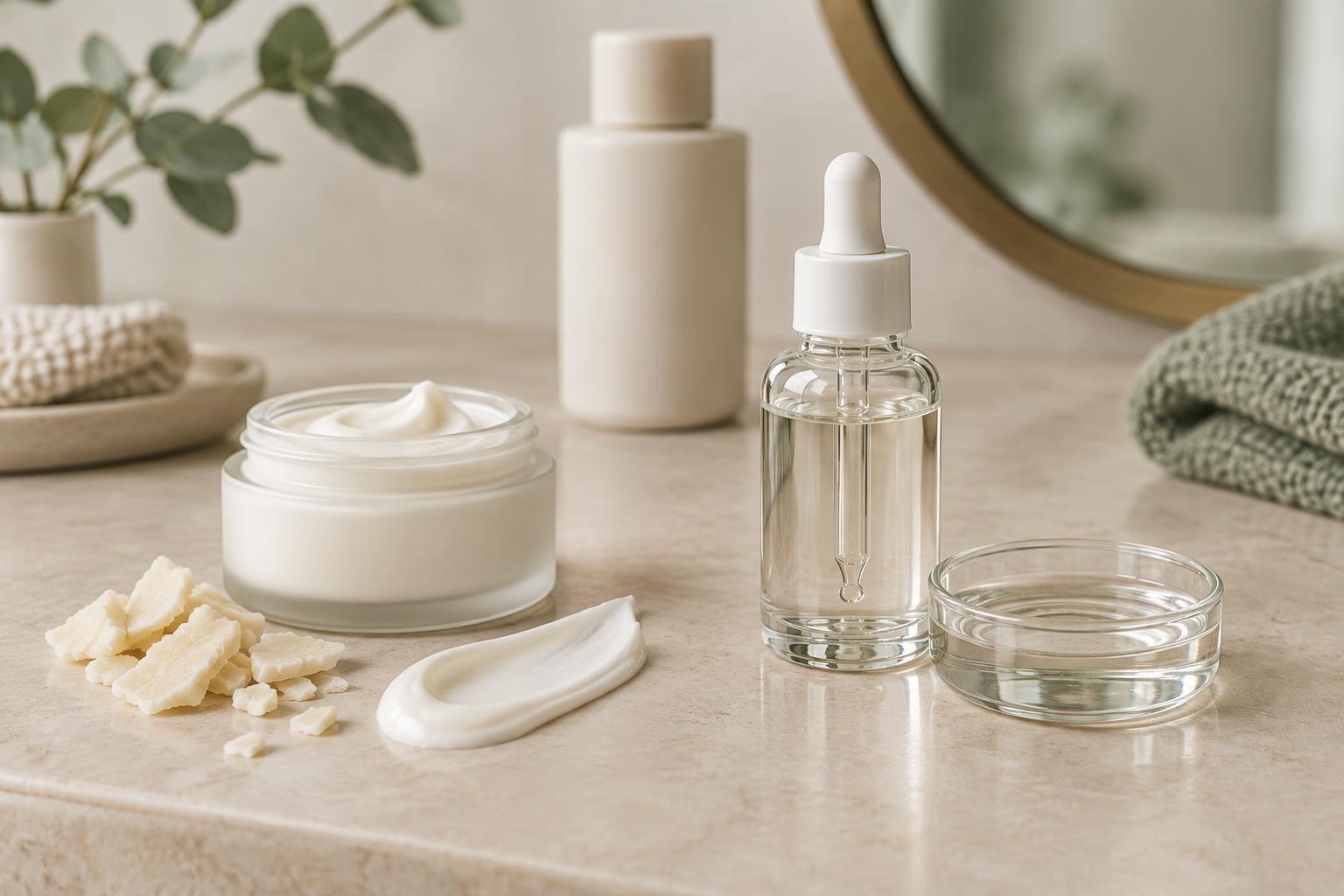
Formulators use fatty alcohols to thicken a product, help an oil-and-water mixture stay uniform and create a smoother feel as it spreads. They can also contribute to the softening feel of a moisturizer. That is why you may find them in creams, conditioners and cleansers designed to have a creamy texture. Their presence is not, by itself, a warning that a product will dry out skin.
A fatty alcohol is not a guarantee of a suitable product, either. A rich cream may feel pleasant to one person and too heavy to another. If a product does not suit you, consider its overall texture and performance rather than assuming that one familiar ingredient is responsible.
Why denatured alcohol appears in skincare
Denatured alcohol commonly appears as “Alcohol Denat.” on a cosmetic label. Related names you may encounter include ethanol, ethyl alcohol and SD alcohol, although labeling conventions vary. These are not fatty alcohols. They are used differently because they dissolve certain ingredients and evaporate relatively quickly after application.
That quick evaporation can help create a lightweight finish, reduce a sticky sensation or make a liquid product easier to spread. It can be useful in products designed to feel less oily. On the other hand, a formula with a substantial amount of this type of alcohol may feel tight or uncomfortable to some people, particularly if they already find their routine drying. A small amount in a well-balanced formula may be barely noticeable.
The ingredient list offers clues, but it does not usually reveal the exact concentration. An ingredient near the beginning generally deserves more attention than one near the end, yet its position alone cannot predict how the finished product will feel. A moisturizer containing oils or other conditioning ingredients may feel quite different from a lightweight liquid that also lists Alcohol Denat.
How to read the label without overreacting
Start with the full ingredient name rather than stopping at the word “alcohol.” Cetyl, stearyl, cetearyl and behenyl alcohol point to fatty alcohols. Alcohol Denat. points to denatured ethanol. Some other alcohol-named ingredients have separate roles: benzyl alcohol, for example, should not be treated as interchangeable with either cetearyl alcohol or Alcohol Denat.
Next, consider the product type and your reason for using it. A fatty alcohol in a thick cream may help explain the cream’s body. Alcohol Denat. in a light gel may help explain why it dries down quickly. Neither observation establishes whether the product is good or bad. If your goal is a more comfortable-feeling routine, pay attention to how your skin feels after using the complete product, not just to an isolated label term.
A practical way to choose
When comparing products, look beyond blanket claims such as “alcohol-free” or “contains alcohol.” Check which ingredient the claim appears to address, and remember that the same word can cover materials with different functions. If you prefer a richer moisturizer, fatty alcohols may be a welcome part of the texture. If fast-drying products tend to feel uncomfortable on your skin, you may prefer a different formula when Alcohol Denat. is prominent on the list.
The most useful question is not “Does this contain alcohol?” but “Which alcohol is present, what is it doing here, and how does this finished product feel when I use it?” That distinction makes ingredient lists more informative without turning them into a rigid set of ingredients to accept or avoid.