Start with what your skin is telling you
A routine that feels comfortable in warm weather may feel less satisfying when temperatures drop and indoor heating becomes part of daily life. Skin might feel tight after washing, look flaky under makeup or seem dry again a few hours after moisturizer. Those observations are more useful than a rule that everyone needs an entirely different set of products for winter.
Begin by identifying when discomfort appears. If your face feels tight immediately after cleansing, consider changing how you wash. If it feels comfortable at first but dry later, you may want to change how you moisturize. Adjust one step at a time and give yourself a chance to notice whether it helps. This makes it easier to keep products that still work well and avoid building an unnecessarily complicated routine.
Make cleansing gentler, not necessarily less thorough
Cleansing should remove what needs to come off without leaving your skin feeling stripped. In colder months, very hot water, vigorous scrubbing or a cleanser that leaves a squeaky-clean feeling may make an already uncomfortable routine feel harsher. Try lukewarm water, light pressure and a cleanser you can rinse away without repeated washing. Pat your face dry rather than rubbing it.
You do not have to skip evening cleansing if you wear makeup or sunscreen. Instead, focus on removing them gently. In the morning, consider whether a full cleanse is necessary for you or whether a simpler wash feels better. There is no single schedule that suits everyone: the aim is to finish cleansing with skin that feels clean but not notably tight.
Use moisturizer where it makes the biggest difference
Moisturizers can combine ingredients that attract water, soften the skin’s surface and help limit moisture loss. You do not need to memorize every ingredient name to choose one. Texture and the way a product feels after application are useful guides. If a lightweight lotion no longer feels sufficient, a richer cream may be more comfortable, especially on areas that tend to feel dry.
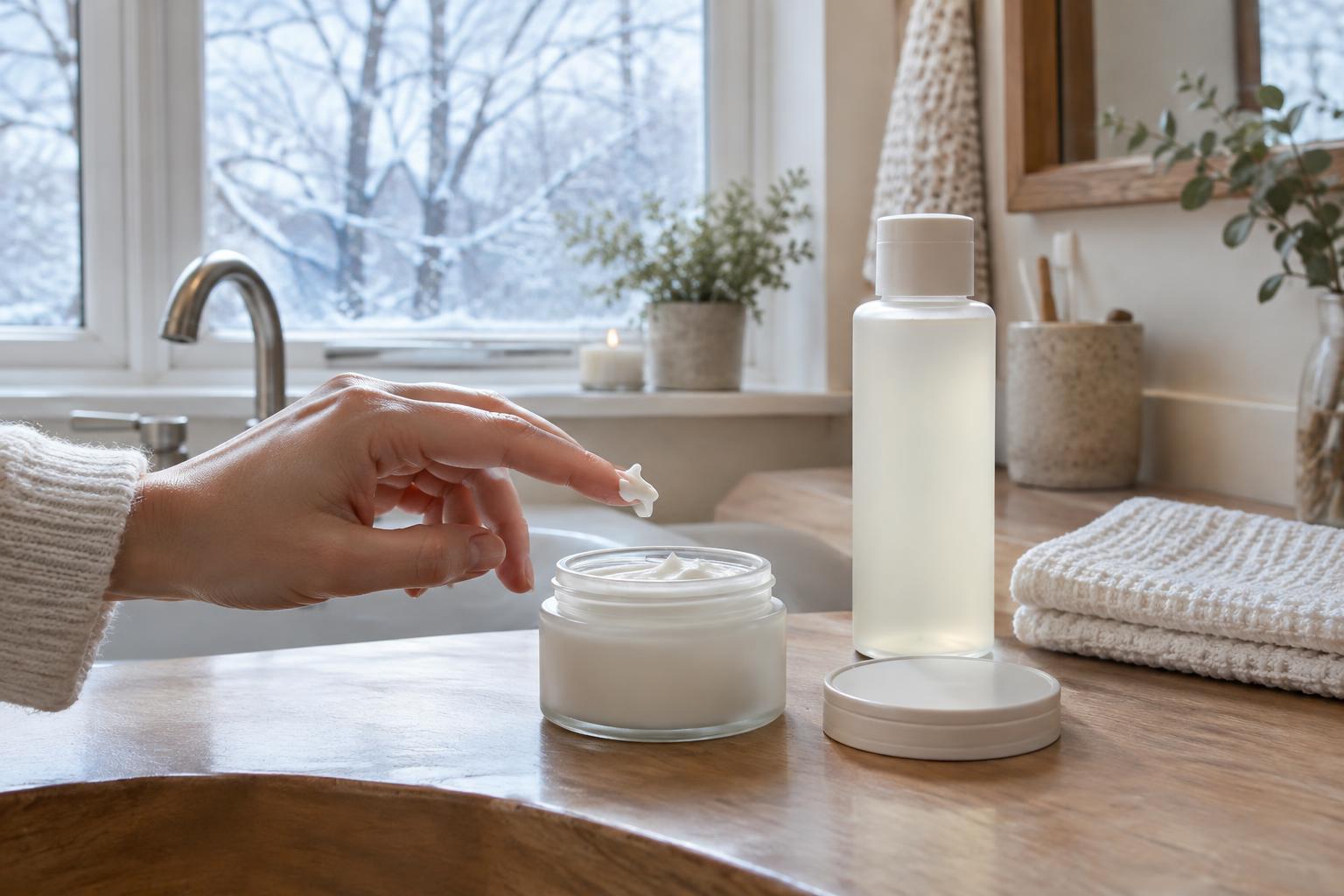
Apply moisturizer after washing, while your skin is still slightly damp, rather than waiting until it feels completely dry. Use enough to cover the area comfortably, then let it settle before adding makeup. If your cheeks need more support than your forehead, you can use a little extra cream there instead of coating your whole face heavily. Hands and lips may also need attention because washing, outdoor exposure and dry air can leave them feeling uncomfortable.
A richer product does not have to replace everything you own. You might keep a lighter moisturizer for mornings when you want an easier base under makeup and use a creamier one at night. The better choice is the one you can use consistently and comfortably.
Reconsider strong-feeling steps before adding more products
When skin feels dry, it can be tempting to exfoliate away every visible flake. Frequent exfoliation or using several active products at once, however, may make a routine feel less comfortable. If you use an exfoliating product, consider whether its frequency still suits you. A gentler schedule may be more helpful than adding another step to compensate for tightness.
Introduce new products gradually, particularly if you are changing your cleanser and moisturizer as well. This gives you a clearer sense of which change affects how your skin feels. If a product repeatedly causes stinging or discomfort, stop using it rather than trying to work around it with extra layers. Persistent or significant symptoms are a reason to seek individualized advice from a qualified professional.
Adapt the routine to your day
A practical cold-weather morning can stay simple: cleanse as needed, moisturize, and apply sunscreen when appropriate for your daytime plans. Cold weather does not make sun exposure irrelevant. If you wear makeup, allow your moisturizer and sunscreen to settle before applying foundation. If makeup catches on dry-looking areas, try a smaller amount of makeup and a more comfortable base rather than repeatedly adding product over flakes.
In the evening, gently remove the day’s products and moisturize. You can also pay attention to your surroundings: indoor heating and long, hot showers may contribute to that dry feeling. Small adjustments, such as choosing a less-hot shower and keeping moisturizer within easy reach after washing, can make the routine easier to follow. The goal is not a perfect seasonal product lineup; it is a manageable routine that leaves your skin feeling comfortable.