Start with the finish you want
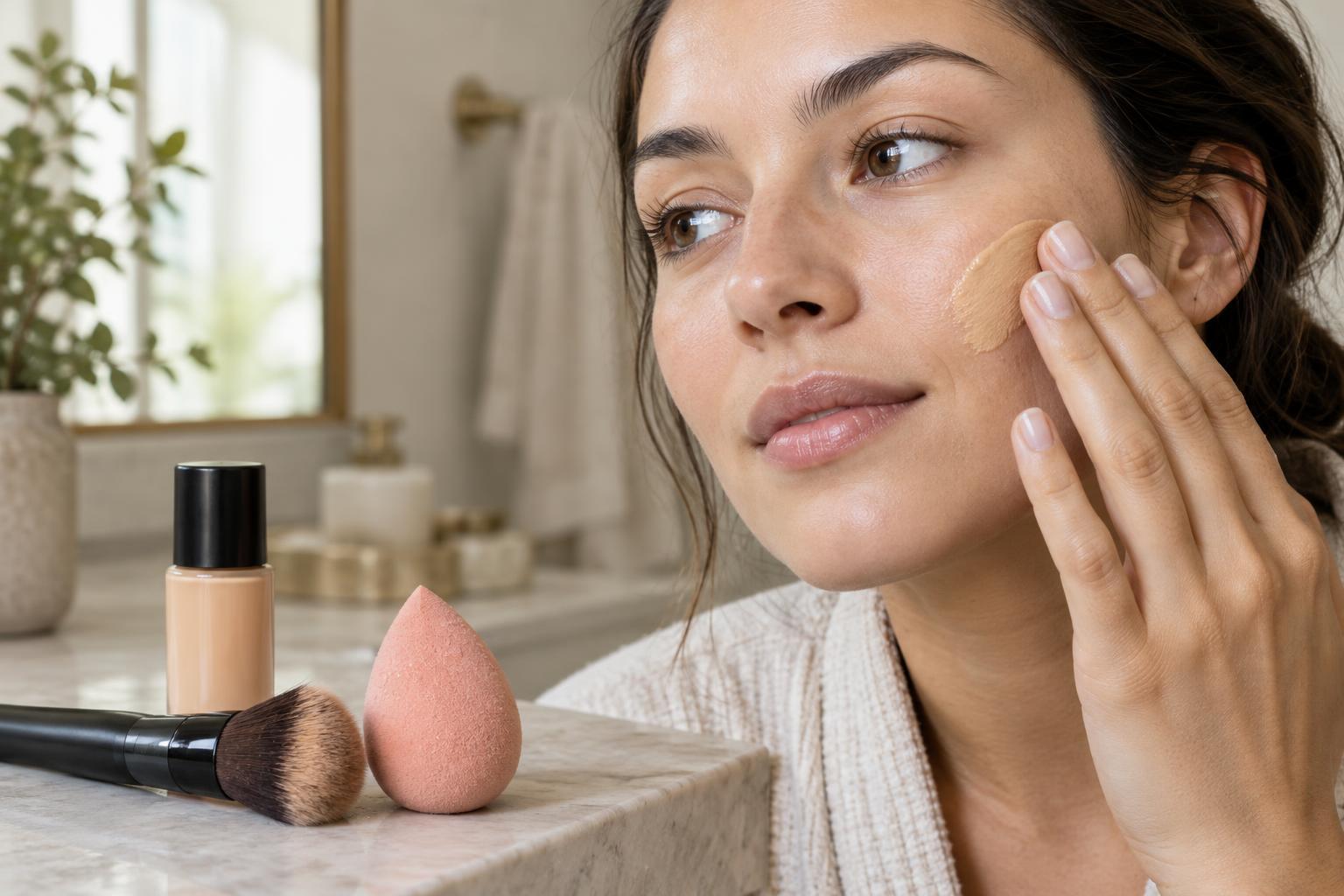
A foundation tool does more than move product around. It affects how thinly you can spread the formula, where you can add coverage and how much product remains on your face rather than in the tool. None of the three main options—a brush, sponge or clean fingers—is automatically best. The useful question is which one helps you apply your particular foundation in a way you like and can repeat.
Before choosing, consider the formula and your goal. A fluid foundation may spread readily with any tool, while a thicker cream may take more work to blend evenly. If you want a quick, sheer-looking layer, fingers may be enough. If you want to build coverage in selected areas, a brush may offer more control. If you prefer a softened look, a sponge may make edges easier to diffuse. These are starting points, not fixed rules.
Brushes: control where the product goes
Brushes come in many shapes, but a dense brush generally gives you more control over placement than a loose, fluffy one. Put a small amount of foundation on the back of a clean hand or directly on the brush, then work in thin layers from the center of the face outward. Short, gentle strokes can spread product; light tapping can help settle it where you want more coverage.
A brush can be useful around the nose and jawline, where it is easy to leave a visible edge. It can also apply foundation without your fingers touching your face repeatedly. The trade-off is that some brush-and-formula combinations leave streaks, particularly if you load on too much at once. If that happens, use less product, switch from sweeping to tapping, or lightly blend the finished layer with another tool.
Brushes need regular washing because makeup builds up among the bristles. Clean them according to the maker’s care guidance, rinse thoroughly and let them dry fully before storing them.
Sponges: soften edges and build gradually
A makeup sponge works well for pressing foundation into a thin, even-looking layer. Many reusable sponges are designed to be dampened first: wet the sponge, squeeze out the water and blot it so it feels damp rather than dripping. Then bounce it gently over the skin instead of dragging it. Check the directions for your sponge, as materials and recommended use can differ.
Sponges are especially handy when you want to blend the edge of foundation near the hairline or add a little coverage without disturbing the whole layer. They may absorb some product, however, so you might use more foundation than you would with fingers or certain brushes. Start with a small amount and add only what you need.
Because a damp sponge holds moisture, upkeep matters. Wash reusable sponges as directed and allow them to dry completely in an airy spot before putting them away. Replace a sponge when it no longer cleans well, develops an odor or begins to break down.
Fingers: simple, quick and easy to feel
Clean fingers can be a practical foundation tool, especially when you want to spread a small amount over a limited area. The warmth of your hands may make some formulas feel easier to move, though the result depends on the product. Dot on a little foundation, smooth it outward, then tap over any lines left by your fingertips.
Fingers make it easy to notice where a layer feels heavy, but they can be less precise for blending around the nostrils or reaching the edge of the hairline. A mirror check in even lighting can help you spot areas that need another pass. Wash your hands before applying makeup, and avoid dipping unclean fingers into a jar or pot. If you want a sheer base with more coverage in just a few places, you can also apply the first layer with your fingers and finish those areas with a small brush.
Try the same foundation two ways
The simplest comparison uses a foundation you already know. Apply a similar amount to each side of your face, using a different tool on each side. Give both sides a few minutes to settle, then look at them in ordinary lighting as well as close to a mirror. Notice the edges, any streaks or patches, how much product you used and which method felt easier—not just which side looked smoother at first glance.
Your preferred tool may change with the foundation, the amount of coverage you want or the time you have. It is fine to combine methods: a brush for placement, a sponge for blending, or fingers for a quick touch-up. Work in small amounts, keep reusable tools clean and choose the approach that gives you a result you can achieve comfortably.