Why lip prep is a balancing act
Lipstick tends to show the texture underneath it. Loose flakes can catch pigment, while a heavy coat of balm can keep lipstick from gripping the lips. The goal is not to make lips perfectly smooth or completely dry. It is to leave them comfortable, with no loose bits that can be removed gently and no slippery film sitting on top.
The right amount of preparation depends on how your lips feel and which lipstick you plan to wear. A creamy lipstick may glide over minor texture more easily than a matte formula. A glossy product already supplies shine, so adding balm beneath it may be unnecessary. Think of lip prep as a quick check and adjustment rather than a routine that must include every step each time.
Start with gentle smoothing, not scrubbing
Begin with clean lips. If you see a little loose, softened skin, try pressing a damp, soft washcloth against the lips and wiping lightly once or twice. Stop if the skin does not lift easily. Scrubbing until the surface looks smooth can leave lips feeling tender, and lipstick may emphasize that irritation rather than conceal it.
Lip scrubs are optional, not essential. Coarse particles and repeated rubbing can be too much for delicate lip skin, especially when lips already feel tight or uncomfortable. On those days, skip exfoliation and choose a comfortable lip product instead of trying to force a flawless matte finish. Preparation should make makeup easier to wear, not turn it into a test of how much friction your lips can tolerate.
Moisturize, then remove what has not absorbed
If your lips feel dry, apply a thin layer of a lip balm you find comfortable. A small amount is easier to control than a thick coating, and you can add more if needed. Give it a few minutes while you finish another part of your makeup. This pause lets you judge whether your lips feel comfortable without leaving all the product on the surface.
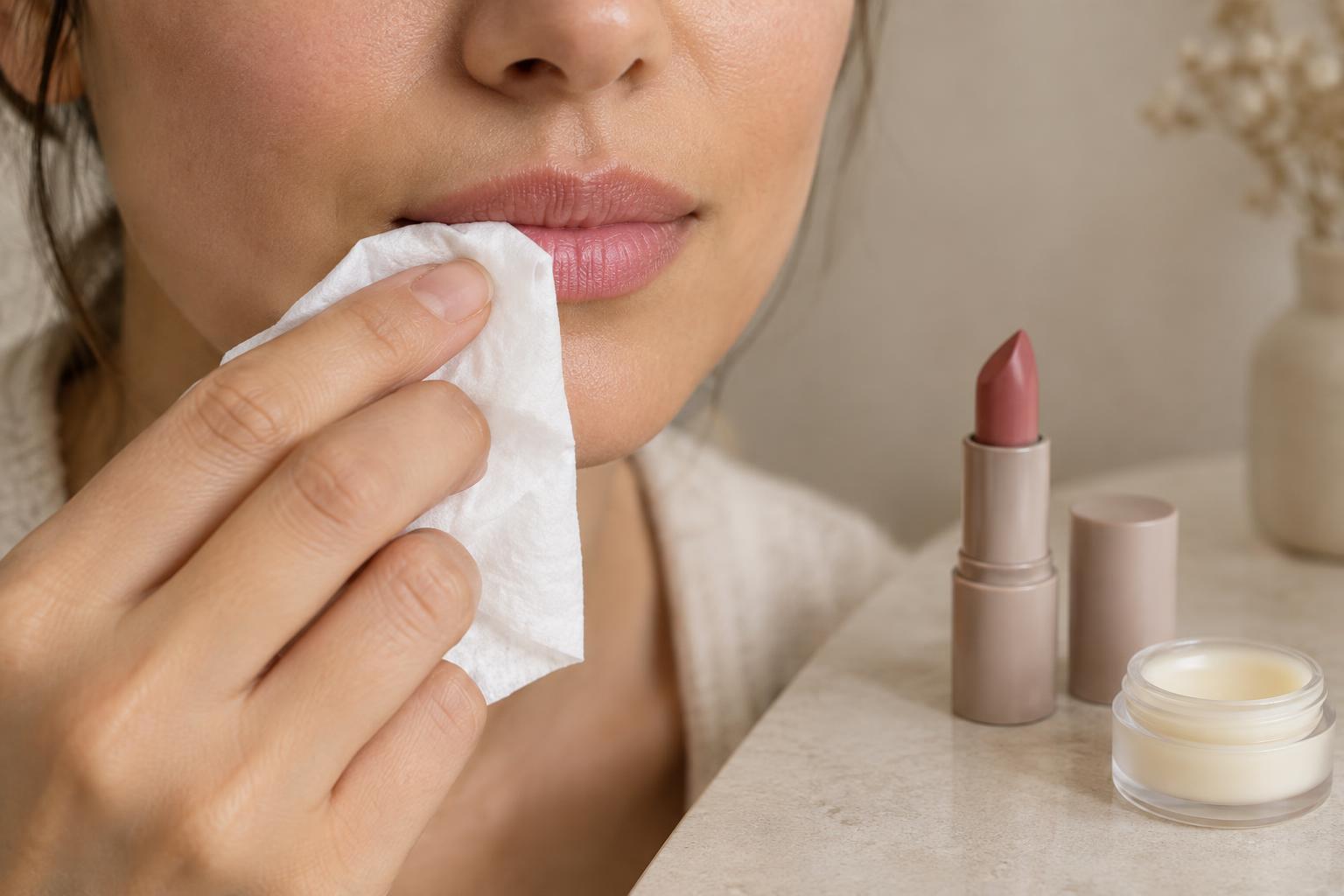
Before lipstick, press a tissue gently over your lips to pick up excess balm. Do not rub the tissue back and forth; you want to remove the slick layer, not undo the comfort you have added. Touch your lips together afterward. If they slide easily or look very glossy, blot once more. If they feel tight, add the smallest amount of balm and blot again. The aim is a supple feel with a relatively dry-looking surface.
Very thick balms or glossy oils can be useful at other times, but they may interfere with lipstick placement when applied immediately beforehand. You do not need to avoid them altogether. You can use a richer product earlier in your routine, then blot thoroughly before color.
Apply color in thin, controlled layers
Once the surface feels comfortable rather than slick, apply lipstick in a light first layer. Work from the center of the lips toward the edges so you can see where the color is going. Press your lips together gently, then check for uneven areas instead of adding a heavy second coat straight away. Thin layers give you more control and are less likely to collect around dry patches.
If you want a sharper outline, a lip pencil can help define the edges before lipstick. It can also give color something to sit over, but it will not fix a slippery layer of balm underneath. For a softer look, you can skip pencil and tidy the edge with a clean fingertip or a small brush. Blotting the finished lipstick once with a tissue may reduce excess product; add another thin layer only if you want more color.
Adjust the routine to the lipstick and the day
Matte and long-wearing lip colors often look best when lips are comfortable but free of surface oil. If your lips are noticeably flaky, consider a more forgiving satin or creamy finish rather than adding more exfoliation. For sheer lipstick or gloss, you may need little preparation beyond checking that the lips feel comfortable and removing any obvious excess balm.
There is no need to chase a perfectly bare, powder-dry surface. If lipstick catches, looks patchy or moves around, notice which part of the routine might be responsible: loose skin, too much balm, or too much color applied at once. Change one thing the next time you apply it. A gentle clean-up, a brief wait after balm and a thorough blot are often enough to make lip color easier to place without sacrificing comfort.