What a humectant actually does
Glycerin and hyaluronic acid are humectants: ingredients that attract and hold water. In a skincare product, they can help the outermost layers of skin feel more hydrated and comfortable. Neither ingredient is a complete moisturizer on its own, though. A formula may also contain ingredients that soften skin and help limit water loss.
The two are often presented as rivals, but there is no need to choose a winner. A serum, lotion or cream can contain either one or both. How well the finished product suits you depends not just on its featured humectant, but also on its other ingredients, texture and how it fits into your routine.
Glycerin: a versatile everyday ingredient
Glycerin, sometimes called glycerol, is a small molecule used in many types of cosmetics, from cleansers to creams. It helps bind water and can make a product feel smoother as it spreads. Because it works in a wide range of formulas, it may be present even when it is not mentioned on the front of the package.
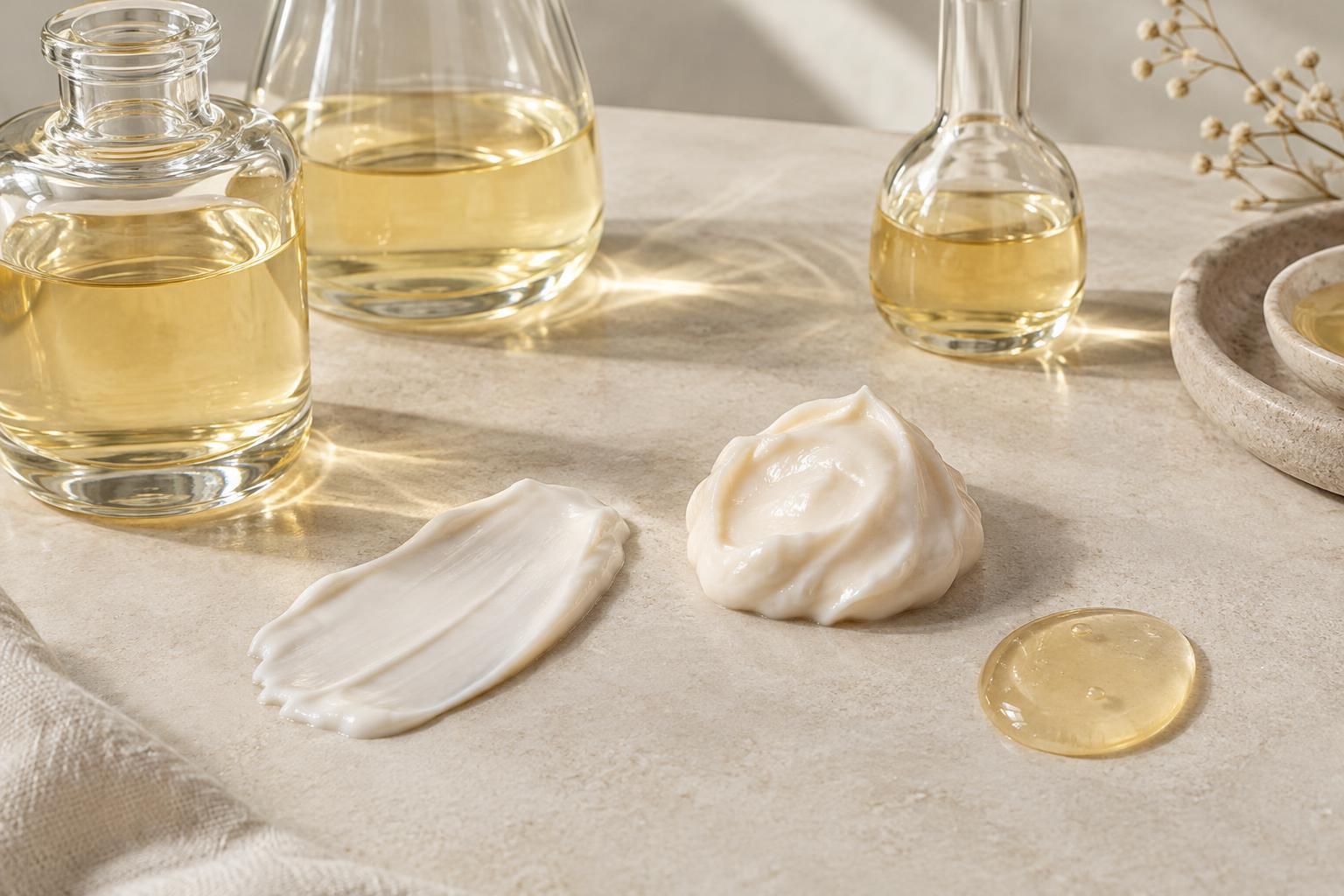
A generous amount of glycerin can feel tacky in some products, while a well-balanced formula may feel barely sticky at all. That difference is a property of the finished product, not a reliable reason to avoid glycerin as an ingredient. If you prefer a lighter feel, compare textures rather than assuming every glycerin-containing product will feel the same.
Hyaluronic acid: one name, several forms
Hyaluronic acid is a larger molecule that helps hold water. Cosmetic formulas may use it in different forms and molecular sizes; an ingredient list might say hyaluronic acid, sodium hyaluronate or hydrolyzed hyaluronic acid. These names describe related ingredients, but they do not tell you by themselves how hydrating or pleasant a product will feel.
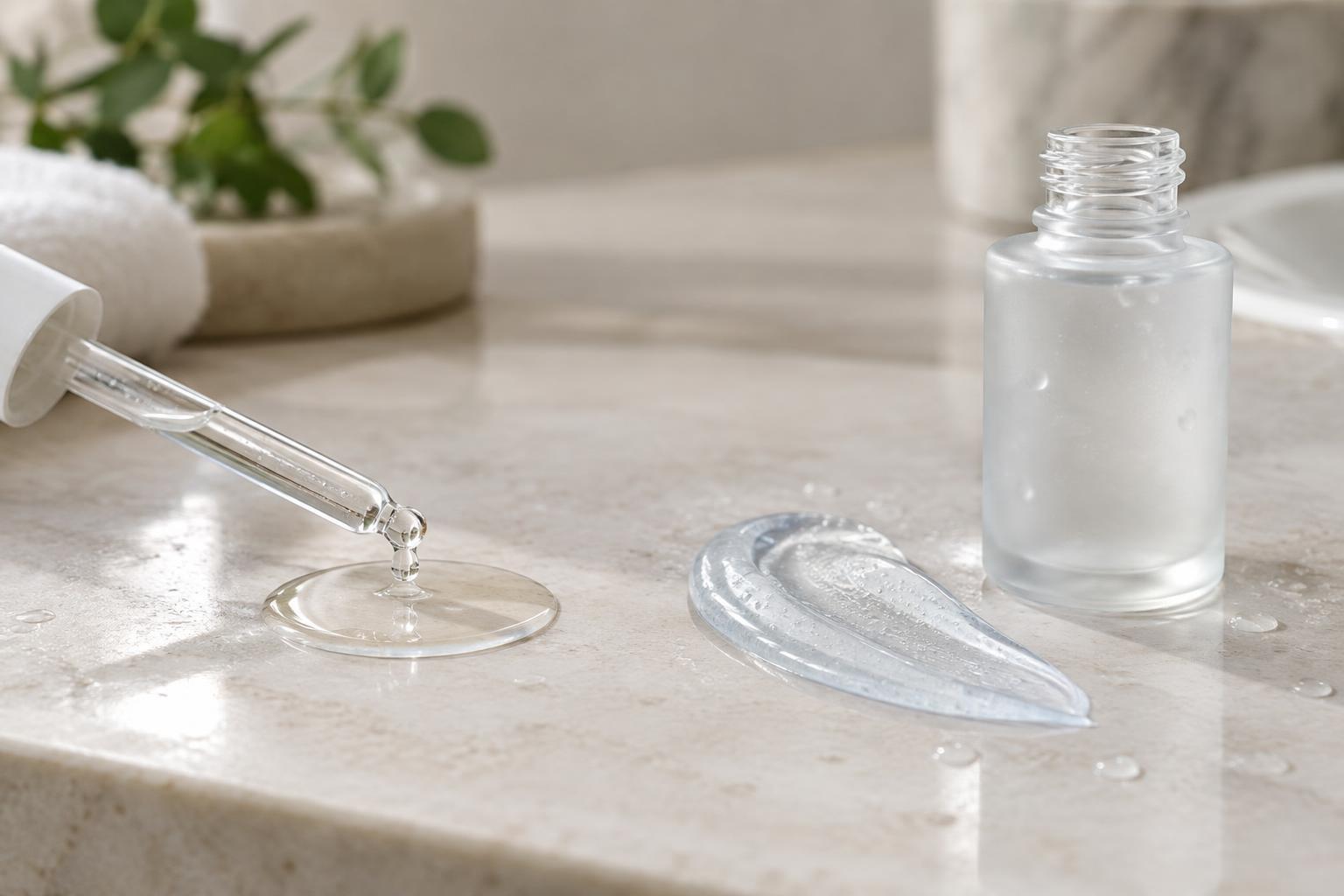
Some forms can leave a light film on the skin’s surface, which may give a serum a slippery or slightly tacky feel. Products advertised as having multiple sizes of hyaluronic acid may have different textures, but the number of forms is not a simple measure of quality. Claims that one version reaches a particular skin depth or delivers dramatic results are worth treating cautiously unless the claim is clearly explained.
How to compare products in practice
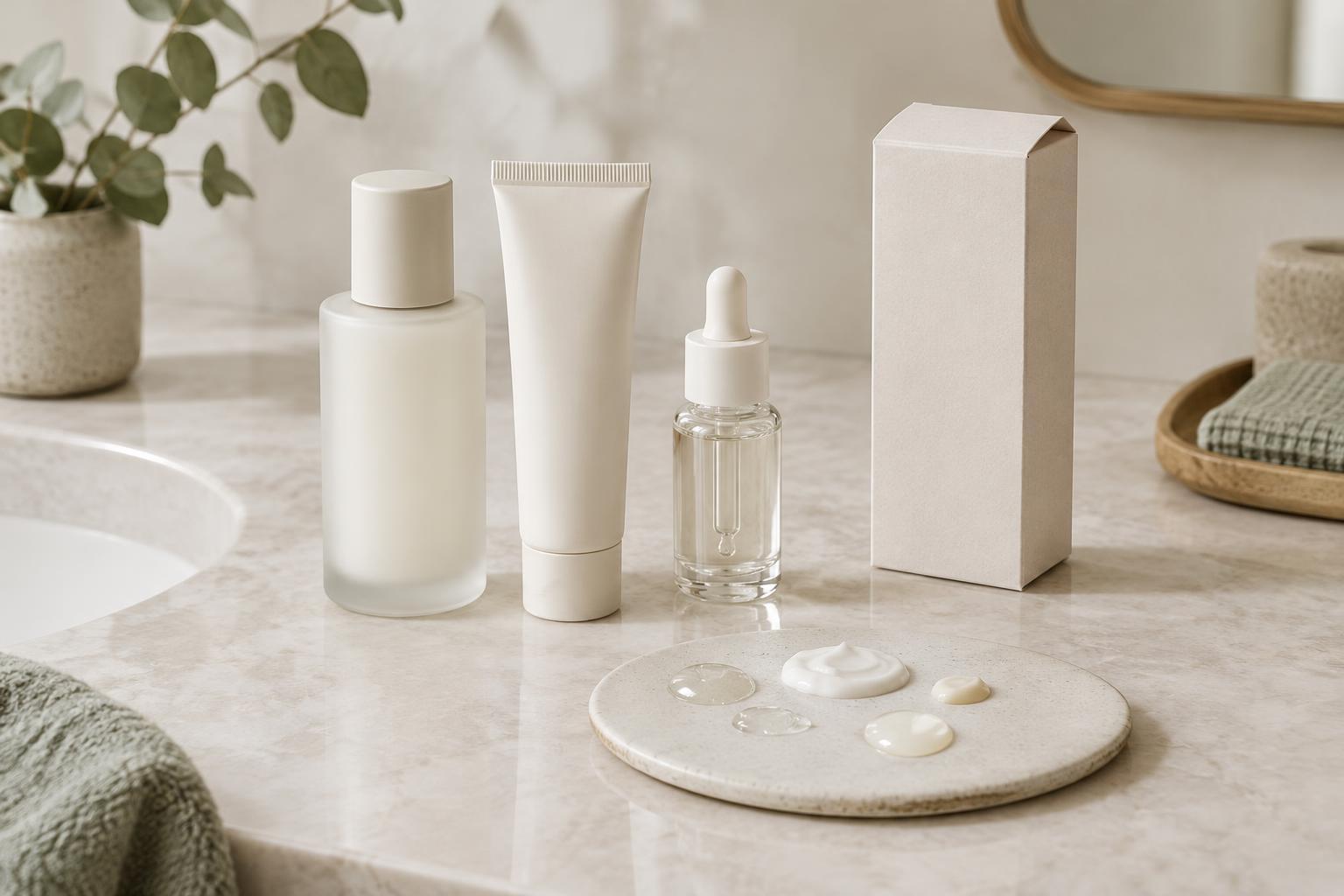
Start with the product type. A hyaluronic acid serum and a glycerin-rich cream serve different roles, so comparing their headline ingredients alone will not tell you which is more useful. If you want one simple moisturizing step, a lotion or cream containing humectants alongside softening ingredients may be more convenient than a standalone serum.
Next, consider how the formula feels after several minutes, not just when first applied. A product that pills under makeup, remains tacky or feels too heavy may be difficult to use consistently, regardless of its ingredient list. Fragrance and other components may also influence whether you enjoy using it.
Ingredient lists provide clues, not a complete recipe. Ingredients generally appear in descending order until low concentrations, where ordering rules allow more flexibility. Seeing glycerin near the top can be informative, but a lower-listed hyaluronic acid ingredient is not automatically ineffective. The overall formula matters more than a single ingredient’s position.
Using either humectant in a routine
Apply a humectant-containing product according to its directions, often after cleansing. You can use it on slightly damp skin if that feels comfortable, then follow with a moisturizer if the first product does not provide enough softness. The idea is to combine water-binding ingredients with a formula that helps your skin feel comfortable over time; applying more layers is not necessarily better.
If a product leaves your skin feeling tight, sticky or uncomfortable, try a different texture or simplify the routine rather than blaming one humectant. Glycerin and hyaluronic acid are both useful, common options. The better choice is usually the product you like using, at a texture and price that make sense for your everyday routine.