What a patch test can and cannot tell you
When you buy a new cleanser, moisturizer, serum, or makeup product, it can be tempting to apply it everywhere right away. Testing it on a small area first gives you a chance to notice an unwanted response before exposing your whole face. This is especially useful when the formula contains ingredients you have not used before or when you are changing several parts of your routine.
An at-home cosmetic patch test is a practical screening step, not a way to diagnose an allergy or prove that a product is safe for you. Skin may respond differently depending on where you apply a product, how much you use, what else is in your routine, and how often you apply it. A comfortable test area is encouraging, but it does not guarantee that full-face use will feel the same.
Choose a small area and keep the test simple
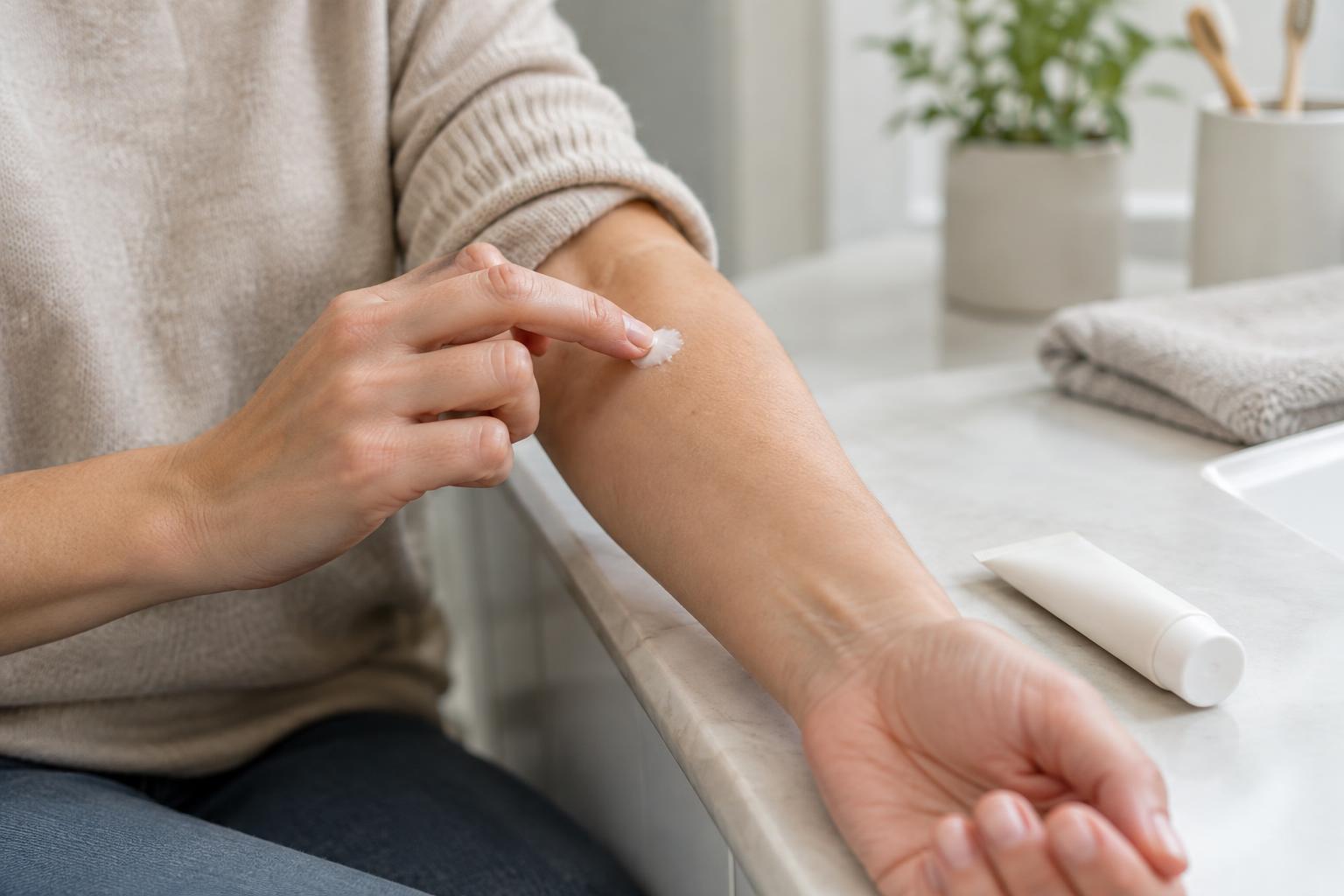
Start with the product’s directions. Choose a small, clean area near where you intend to use it, such as along the jawline for a face product. Avoid skin that is already irritated, broken, or freshly exfoliated. Keep the product away from your eyes and lips unless it is specifically meant for those areas. If the label gives patch-testing guidance, follow it.
Apply a modest amount to one spot. Use a leave-on cosmetic as you normally would, but only on that small area; rinse off a cleanser or mask according to its directions rather than leaving it on. Do not cover the spot with a bandage or apply extra layers to make the test “stronger.” Testing one new product at a time makes it easier to tell which product you may be responding to.
Observe the area before moving on
Notice how the area feels during application, shortly afterward, and over the next day or two. You can also repeat the small-area use over several days, following the product’s normal directions, to see how your skin responds with continued use. Checking in good light may help you spot changes you might otherwise miss.
Look for changes such as redness, itching, swelling, a rash, or discomfort that persists or increases. A brief sensation is not always a clear sign of a problem, but you do not need to push through discomfort to complete a test. If the area reacts, stop using the product and gently wash it off if it is still on your skin. If symptoms are severe, widespread, or concerning, seek appropriate medical care.
Introduce the product gradually if the test feels comfortable
If the small area remains comfortable, you can try the cosmetic more broadly while still following its directions. Introducing it gradually gives you another opportunity to notice how it fits into your routine. Try not to start multiple new products at once: even after a patch test, a reaction is harder to make sense of when several formulas change together.
Pay attention to the rest of your routine, too. A product may feel fine alone but become uncomfortable alongside frequent exfoliation, vigorous cleansing, or other products that already leave your skin feeling dry. You can simplify your routine while evaluating the new addition. If discomfort develops with broader use, stop and reassess rather than assuming the patch test ruled out a problem.
Make the test useful, not a hurdle
Patch testing does not require a complicated setup or a long list of products. A small spot, the product’s normal method of use, and time to observe are the essentials. Keeping a brief note of the product, where you applied it, and what you noticed can be helpful if you are comparing cosmetics or tend to forget when you started something new.
Think of the test as one step in making a considered choice, alongside reading the label and using the product as directed. You do not have to continue with a cosmetic that feels uncomfortable simply because it suits someone else or makes an appealing claim. Your experience with the formula matters more than a promise on the packaging.