Two claims, two different questions
Vegan and cruelty-free are often placed side by side on cosmetic packaging, but they describe different aspects of a product. A vegan claim concerns what goes into the formula: it generally means the product contains no animal-derived ingredients. A cruelty-free claim concerns animal testing: it generally means the product and, depending on the standard being used, its ingredients were not tested on animals.
Neither claim automatically guarantees the other. A vegan moisturizer could contain no animal-derived materials yet fail to meet a particular cruelty-free standard. A cruelty-free lipstick could be made without animal testing under a stated standard yet contain an animal-derived ingredient. Treat the two terms as separate pieces of information rather than interchangeable labels.
What to look for in a vegan claim
Some animal-derived cosmetic ingredients are recognizable, such as beeswax, lanolin, honey and carmine. Others are harder to assess from a name alone because an ingredient may be produced from different sources. Glycerin and squalane, for example, can have different origins. An ingredient list tells you what a formula contains, but it may not tell you how every ingredient was sourced.
If avoiding animal-derived materials matters to you, look for a clear statement about the finished product and its ingredients, not just a prominent word on the front of the package. You can ask a brand about the source of an ambiguous ingredient or whether it uses a vegan verification standard. A vegan claim describes ingredient origin; it does not, by itself, tell you whether a product will suit your skin, how it will perform or how it was packaged.
What a cruelty-free claim may cover
Cruelty-free wording is less useful when it does not explain whose testing practices it covers. A statement that a company does not test its finished products on animals may leave questions about individual ingredients, suppliers and testing performed by third parties. Policies can also differ in how they address testing that might be required in a market where a product is sold.
For a fuller picture, look for a company policy that explains whether it covers both ingredients and finished products, whether suppliers must meet the policy, and whether there are exceptions. Independent certification can provide an additional check, but programs do not necessarily apply identical criteria. If you rely on a particular logo, it is worth learning what that program verifies rather than assuming all cruelty-free symbols mean the same thing.
Why packaging can leave questions unanswered
Space on a label is limited, and short claims can make complicated supply chains look simple. A product might display “vegan” prominently while saying nothing about animal testing. Another might say “not tested on animals” without clarifying whether the statement covers its ingredient suppliers. Neither gap proves that the product fails your preferred standard; it means the package alone may not answer your question.
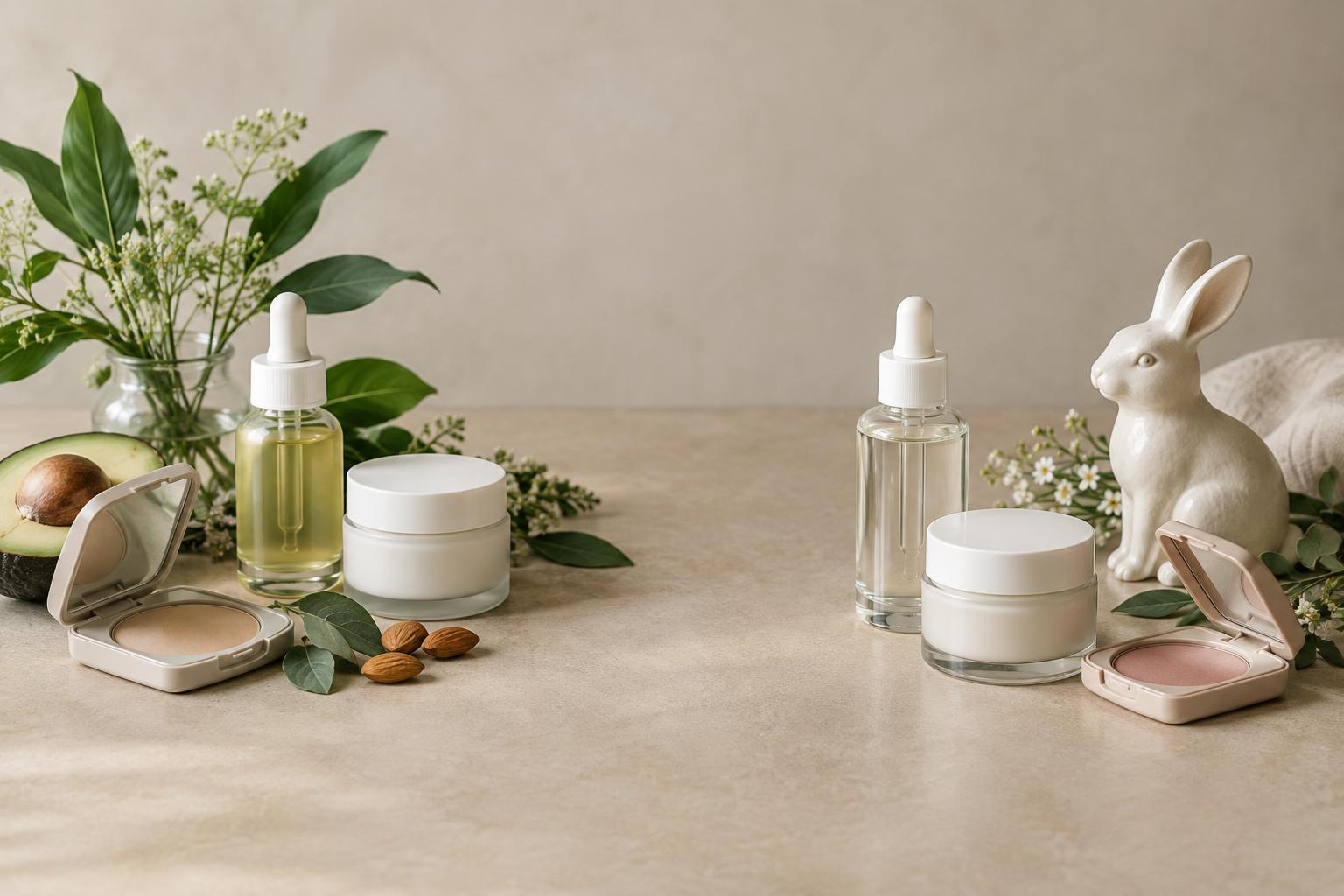
Be wary of drawing conclusions from a product’s appearance or category. Plant imagery is not proof of a vegan formula, and a simple ingredient list is not proof of a particular testing policy. Likewise, a certification mark should be understood in the context of the standard behind it. The most useful information is specific: what is covered, who is responsible and whether any exceptions are disclosed.
A practical way to choose
Start by deciding which question you want answered. If your priority is avoiding animal-derived ingredients, check for a vegan claim and clarify ingredients whose sources are unclear. If your priority is avoiding animal testing, read the brand’s testing policy and, if relevant to you, the criteria of any certification it displays. If both matter, check both claims separately.
You do not need to resolve every detail at the shop shelf. Comparing a product label with a brand’s fuller policy can be more informative than relying on a single phrase. When a claim remains vague, you can ask the company a specific question, such as whether its cruelty-free policy includes ingredient suppliers. Clear answers make it easier to choose products that match your preferences without assuming that one label tells the whole story.