Give sunscreen its own step
Apply sunscreen before foundation, following the amount and application directions on its label. Spread it evenly over the areas you want protected, including the edges of the face where makeup blending often begins. Let it settle before moving on. There is no universal waiting time: the aim is to start makeup when the sunscreen no longer feels wet or moves easily under a light touch.
Avoid mixing foundation and sunscreen in your hand to save a step. Mixing can make it harder to know whether you have applied an even amount of sunscreen. Likewise, foundation with an SPF label is not a reason to skimp on your separate sunscreen step; makeup is often applied in a thinner layer than a sunscreen label calls for.
Keep the layers underneath simple
Foundation is easier to apply gently when the skin beneath it is comfortable and not overloaded with products. If you use moisturizer, give it a chance to settle before sunscreen. You may not need a separate primer if your sunscreen already leaves a finish you like. Adding another layer is optional, not a requirement for making foundation work.
Pay attention to how products feel together rather than relying on a rule that certain formula types must always be paired. A combination that looks smooth on one person may pill or slide on another. When trying a new foundation, test it over your usual sunscreen on an ordinary day so you can see how the layers behave before relying on the pairing for an event.
Use small amounts and a light touch
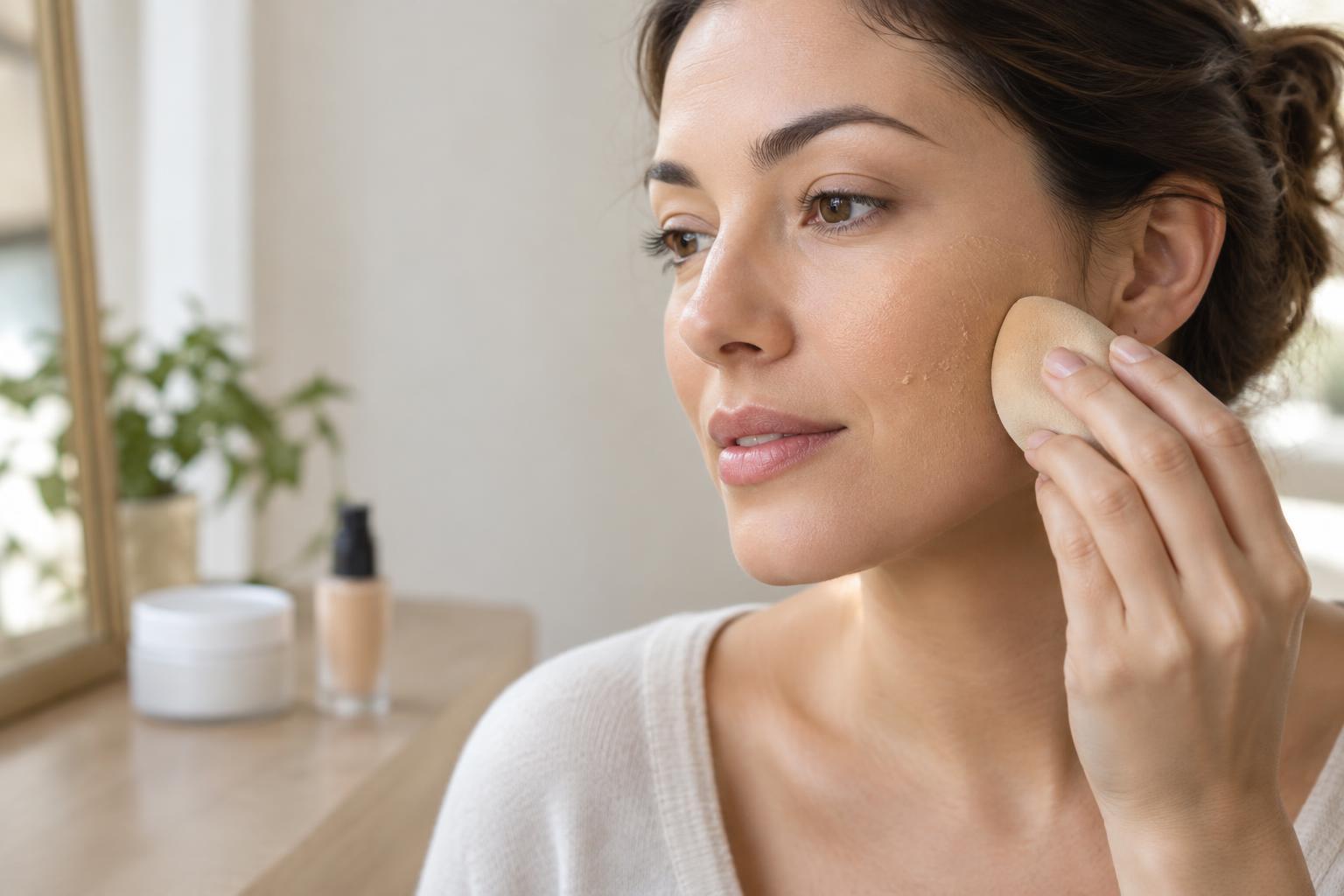
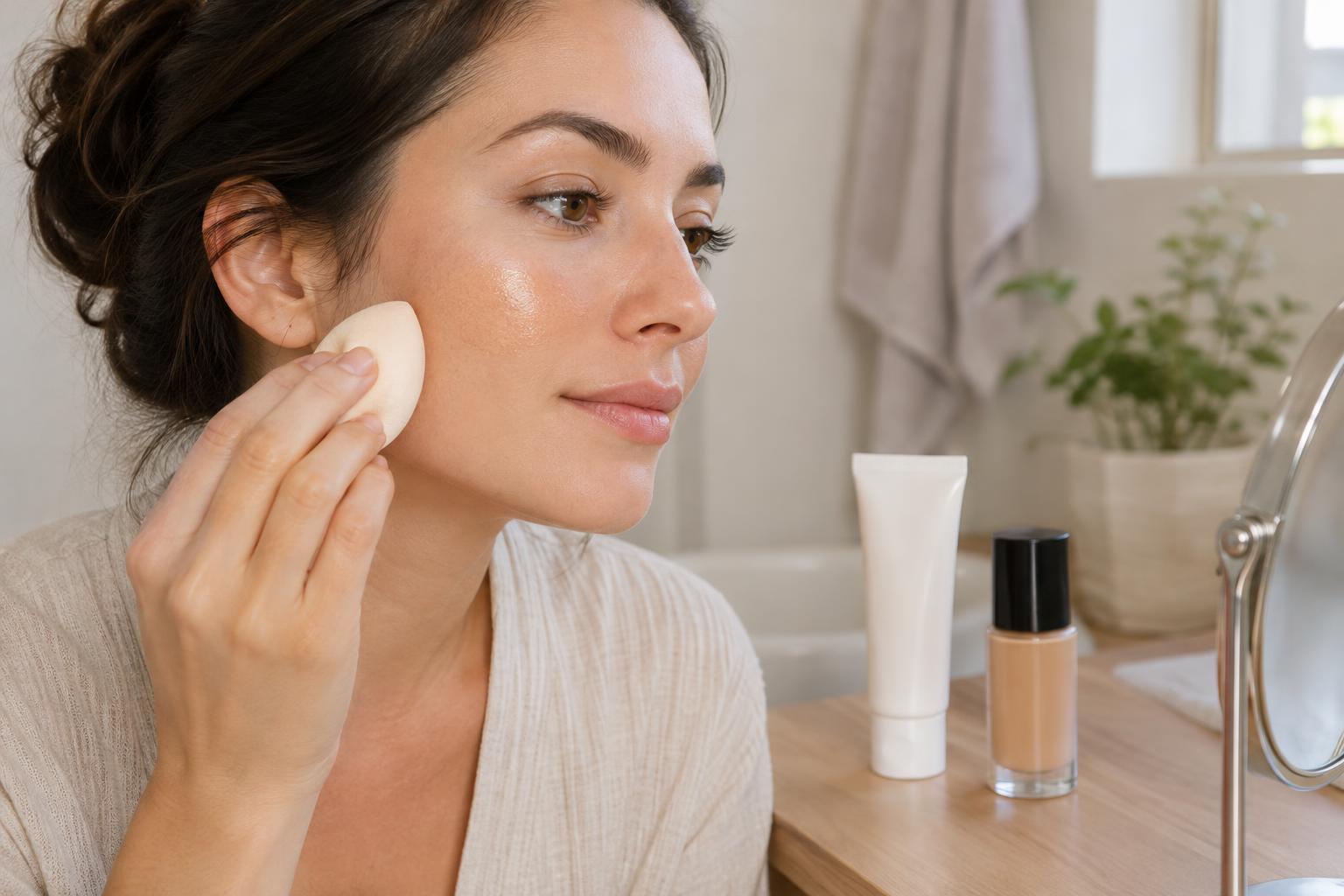
Place a small amount of foundation on the areas where you want coverage, then build only where needed. Light, brief motions are less likely to shift the sunscreen underneath than repeatedly sweeping a tool across the same spot. With a brush, use soft strokes rather than firm buffing. With a sponge, use gentle pressing motions rather than dragging it over the skin.
Fingers can also work, especially for a thin layer, but try tapping and short smoothing motions instead of prolonged rubbing. Start around the center of the face and blend outward without repeatedly working over the hairline or sides of the nose. If you need more coverage, add a little foundation to that area rather than trying to spread a nearly dry layer farther.
Troubleshoot pilling and patchiness
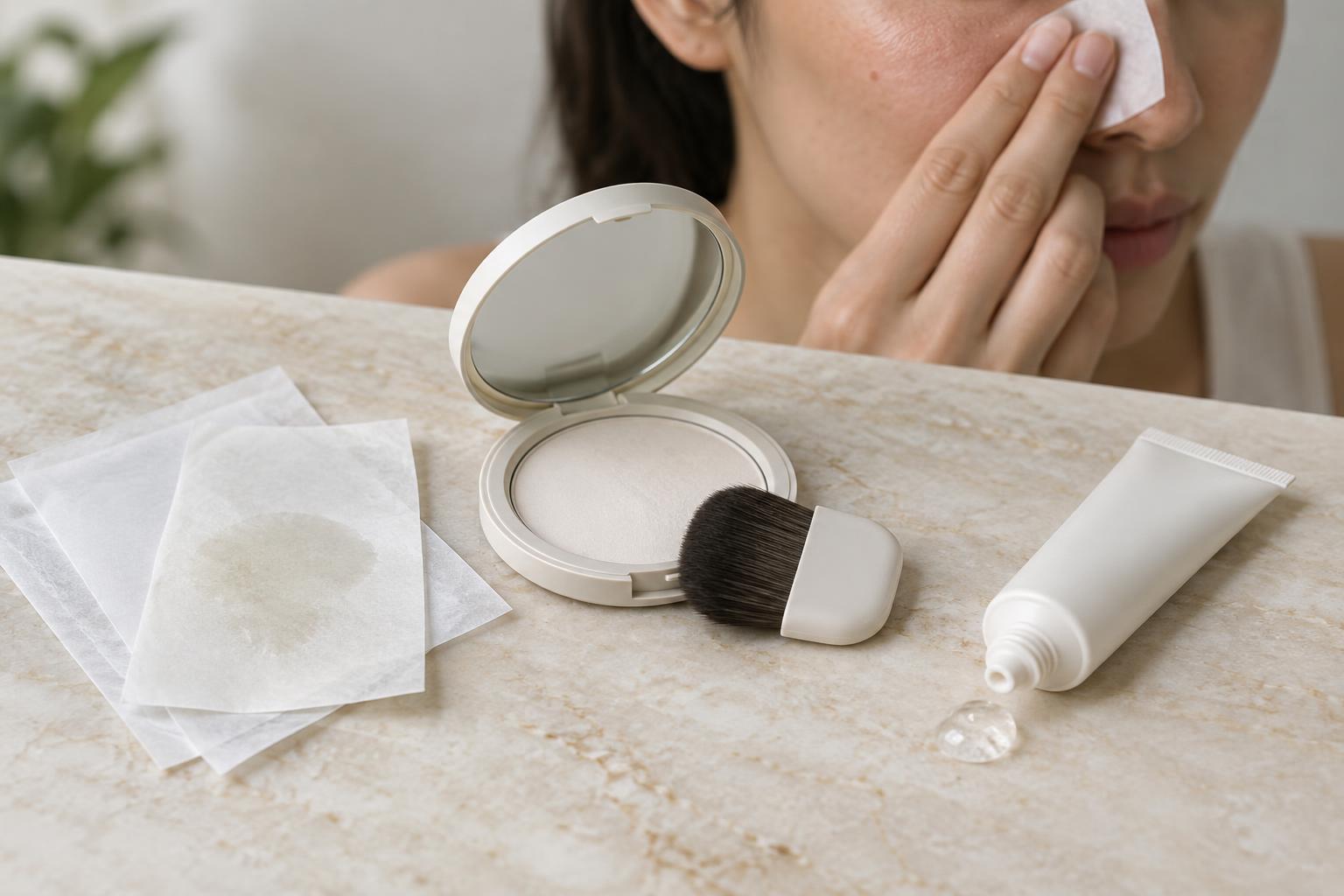
Pilling—the small rolls of product that appear as you blend—can happen when layers have not settled, when too much product has been applied or when blending creates a lot of friction. It does not, by itself, tell you exactly how much sunscreen remains in place. If it happens often, try allowing more time between steps, using less foundation at once or changing your blending motion. Change one thing at a time so it is easier to tell what helps.
If a patch lifts while you are applying makeup, avoid scrubbing it back into place. Gently remove the loose product from that area, then reapply sunscreen according to its directions before adding makeup again. This may take longer than covering the patch with more foundation, but it avoids treating foundation as a substitute for the sunscreen layer.
Plan for protection beyond the first application
A careful morning application does not eliminate the need to follow your sunscreen’s reapplication directions, particularly during extended time outdoors or after activities that remove product. Foundation can make reapplication less convenient, so it helps to decide in advance whether you would rather touch up over makeup or remove some makeup and rebuild the layers.
For a small area, you can gently lift excess makeup before reapplying sunscreen and then touch up foundation once it settles. For a larger area, a fuller reset may be simpler. Whichever approach you choose, prioritize applying sunscreen as directed rather than preserving a flawless makeup finish. The most useful foundation technique is one that works with your sunscreen routine, not one that makes you reluctant to maintain it.