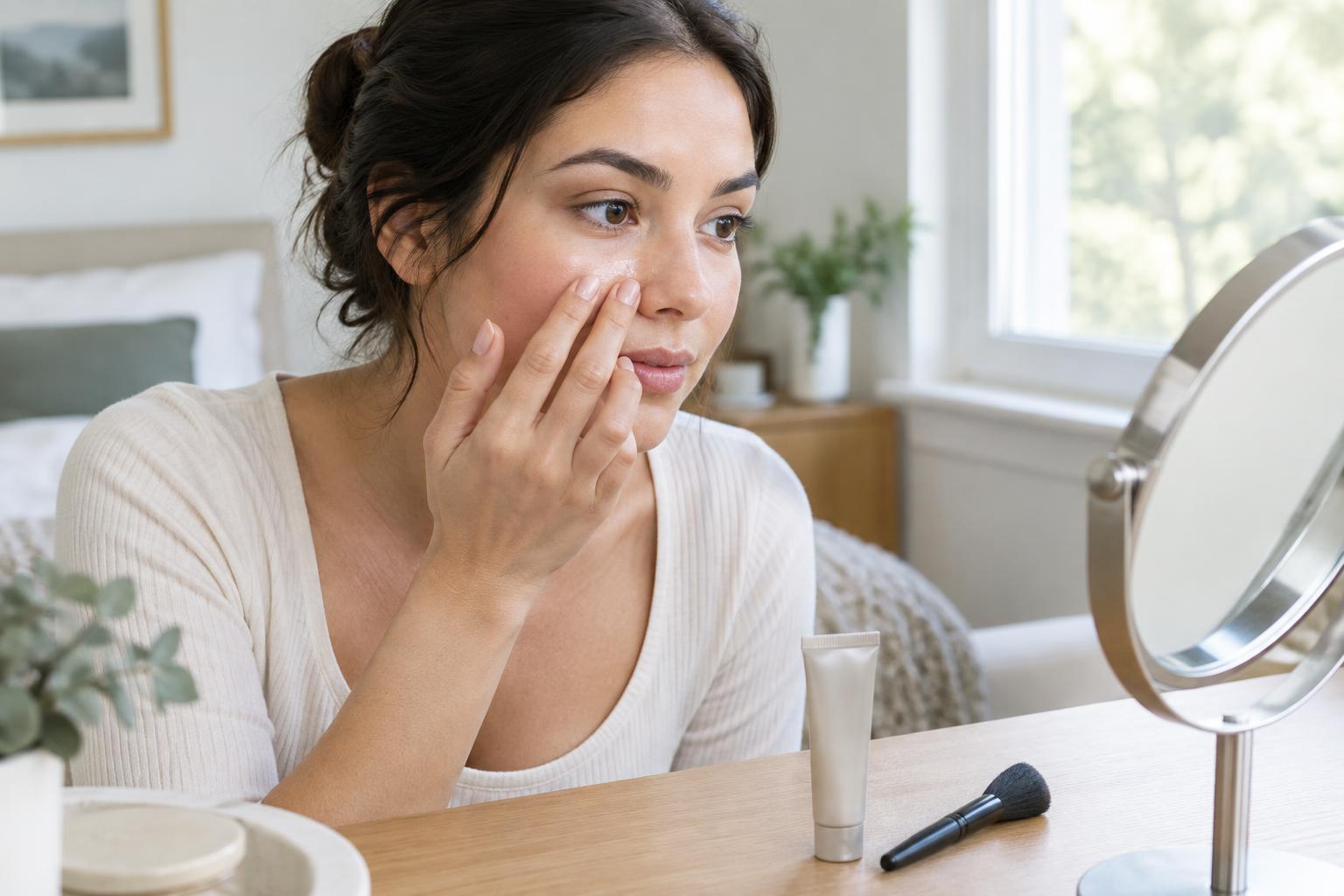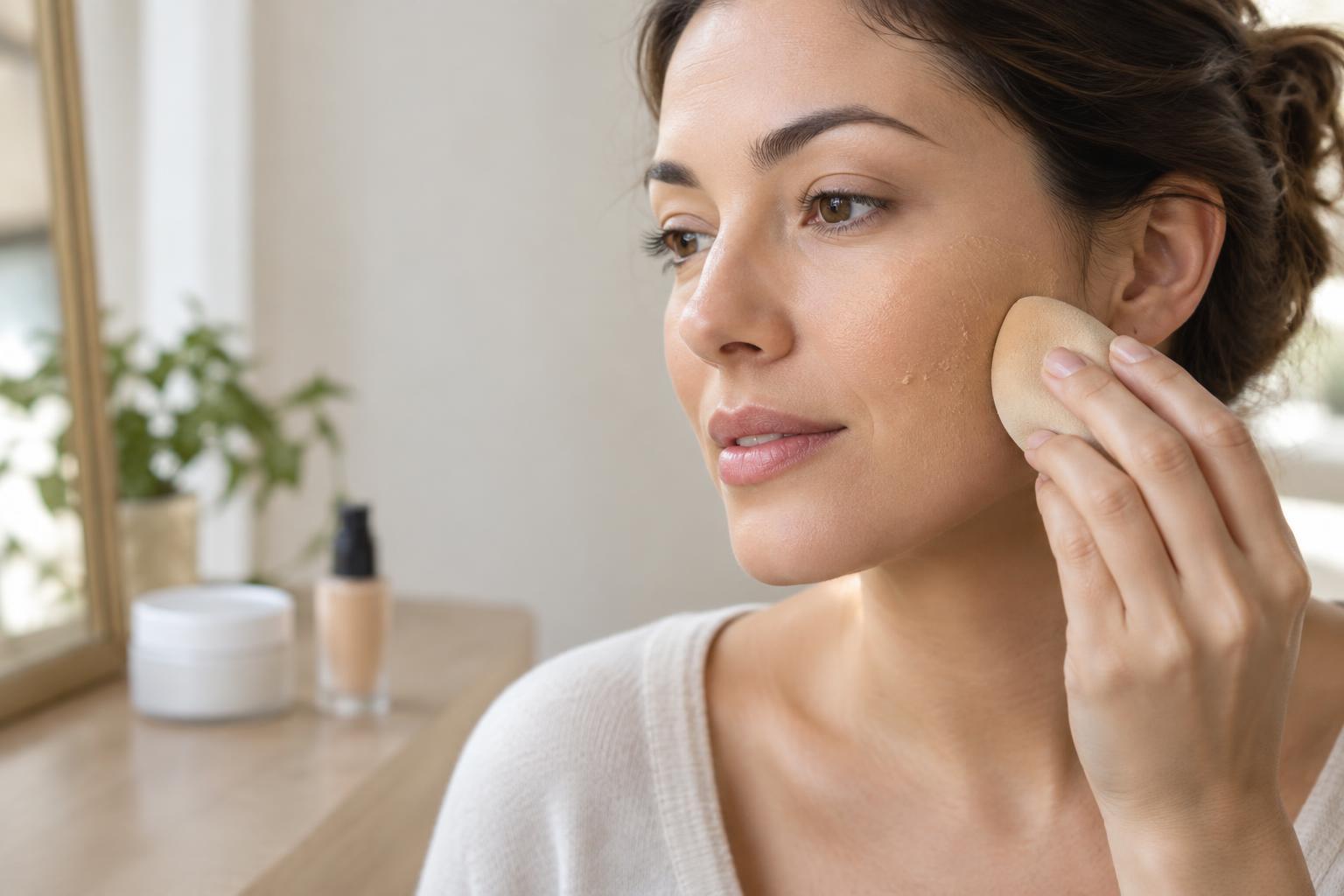
What pilling looks like
You smooth on foundation and notice tiny rolls gathering around your nose, jaw or cheeks. That is pilling: product on the surface is clumping and lifting as you work over it. It can happen with moisturizer, sunscreen, primer or makeup, and the layer you can see is not necessarily the one that started the problem.
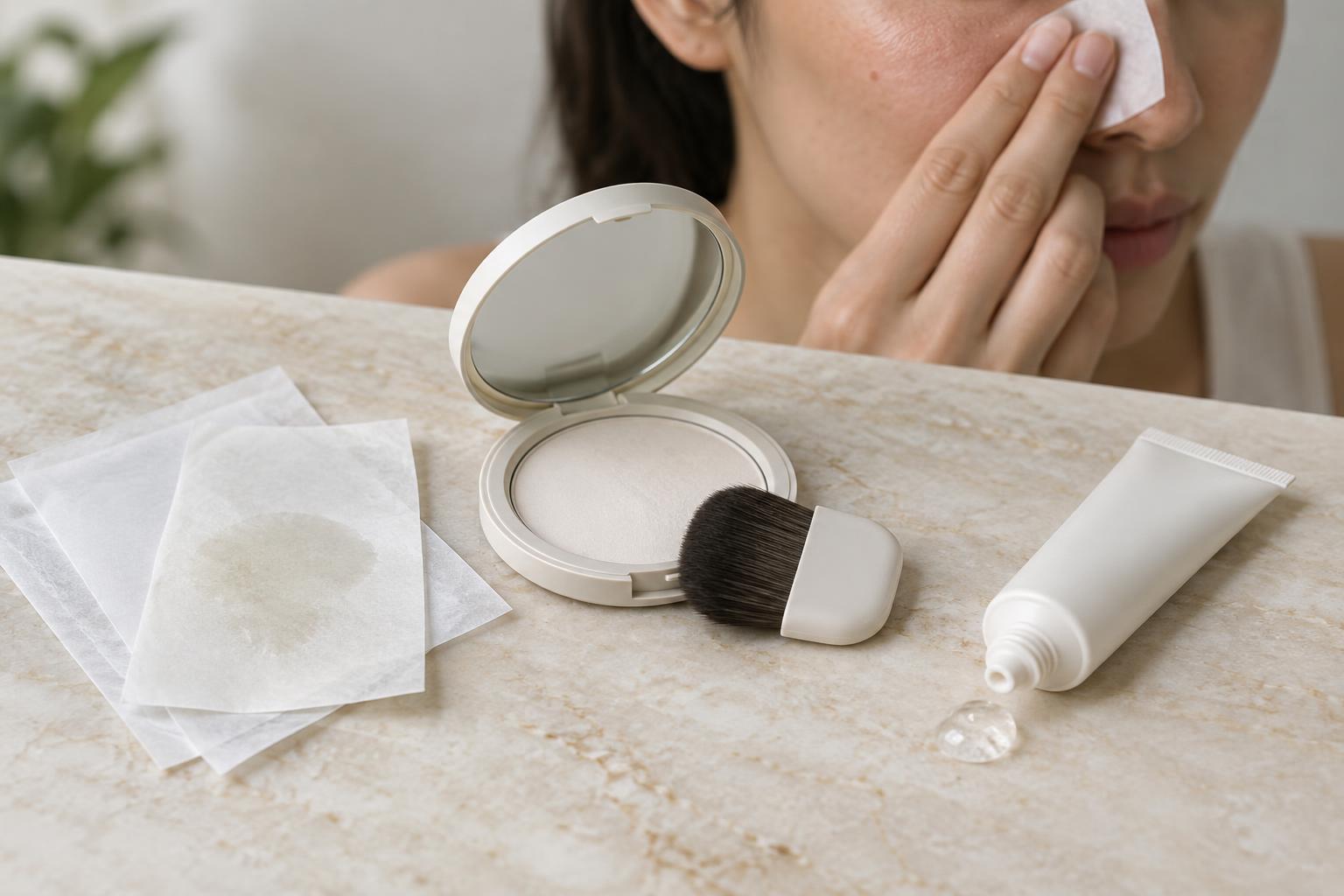
Pilling is different from makeup separating later in the day. Separation may look patchy or shiny, while pilling produces small bits you can often brush away. The distinction matters because pilling usually calls for a change to what you apply before makeup, how much you use or how you apply the next layer.
Why layers roll up
Each product leaves a different film on the skin. Some formulas feel slick; others dry down with a more grippy finish. When several films sit on top of one another, rubbing can make a layer move instead of staying evenly spread. A generous amount of moisturizer, sunscreen or primer may make that more noticeable. A skincare product can pill by itself, too, especially if it is repeatedly worked over after it has begun to set.
Texture and timing also play a part. Applying foundation while a previous layer still feels wet can shift that layer around. Waiting until it feels settled may help, but there is no universal drying time: follow the product’s directions and use the feel of your skin as a guide. Even products that work well separately may not layer neatly together.
Start with a simpler base
To find the source, simplify rather than replacing everything. On a day when you have time to observe the result, use your usual cleansing step, moisturizer if needed, sunscreen as directed for daytime wear, and makeup. Leave out optional serums and primer. If the makeup applies smoothly, add one optional product back on another day. This gives you a clearer idea of which combination creates trouble.
Use only as much of each optional product as you need for an even layer. For sunscreen, keep to its label directions rather than reducing the amount to avoid pilling; instead, try changing the optional layers around it. Spread products gently and give each layer a chance to settle before adding the next. If a film has already started rolling, more rubbing is unlikely to smooth it back into place.
Change how you apply makeup
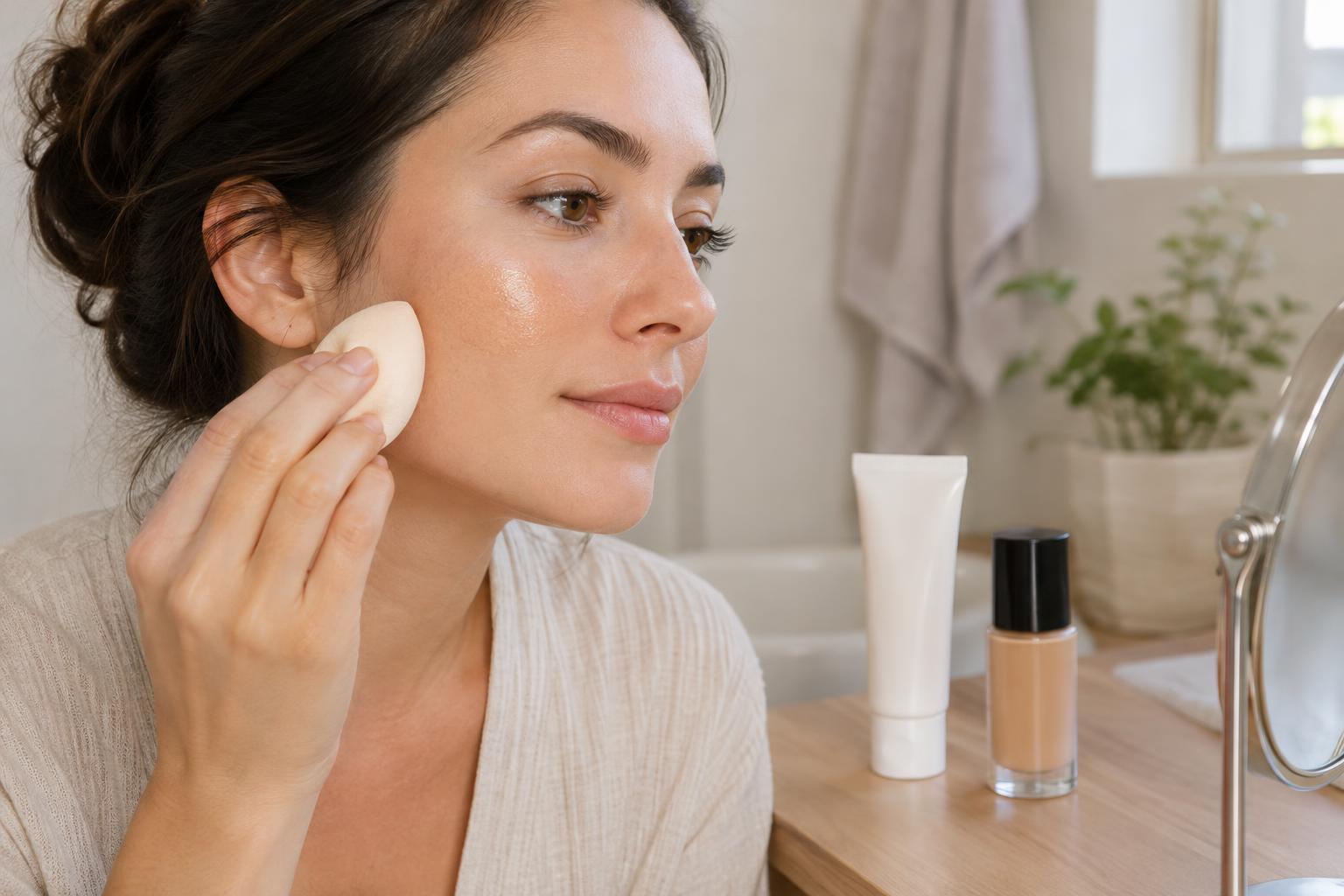
Application technique can turn a barely noticeable layering issue into visible pilling. Repeated sweeping with a brush or fingers creates friction, particularly over areas where several products overlap. Try placing a small amount of foundation on the skin and pressing or lightly tapping it into place. Build coverage in thin passes rather than moving a thick layer back and forth.
If you use a sponge, gentle pressing may disturb the base less than dragging it across the skin. Keep tools clean so old product is not mixed into fresh layers. When pilling appears in only one spot, pause before adding more makeup. Remove the loose bits gently, then use a light touch if you need to reapply.
Decide what to keep and what to swap
A product is not automatically poor quality because it pills in one routine. It may work well on its own but clash with another layer or with a particular application method. If simplifying and changing technique do not help, compare your routine with and without one optional product at a time. The most useful swap is often the layer that consistently changes the result, not the newest product on your shelf.
Aim for prep that feels comfortable and gives makeup an even surface, rather than a long sequence of steps. There is no need to force primer, a serum and a rich cream into the same routine if fewer layers work better for you. Keep any products you rely on for their intended purpose, use them according to their directions, and adjust the optional steps until application feels straightforward.