Start by looking, not layering
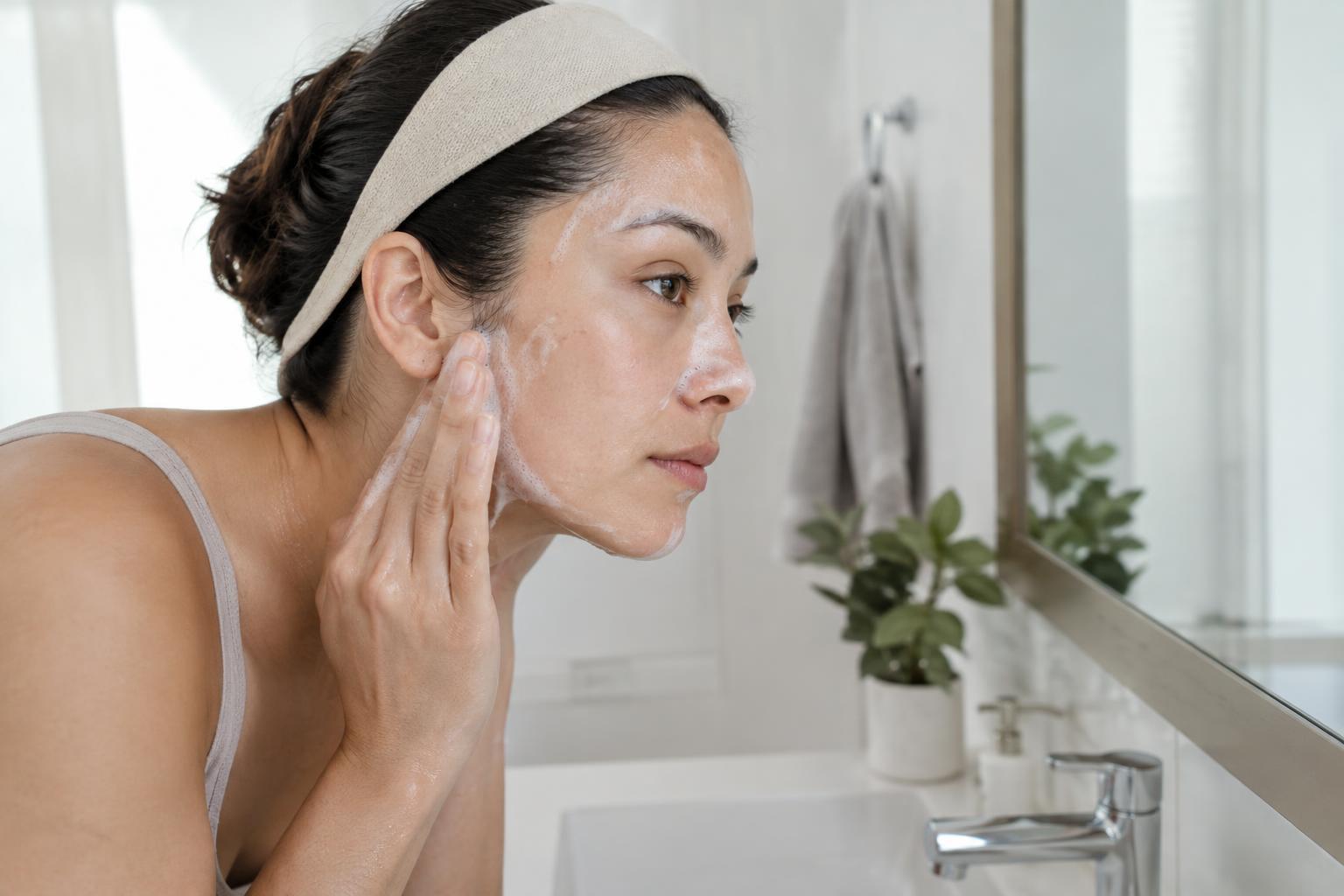
Makeup rarely wears away evenly. By midday, one area may look shiny while another feels tight, and concealer may have settled differently from foundation. Before reaching for a product, check your face in ordinary light. Notice where makeup is still sitting well, where it has faded and where it has collected in lines or around the nose.
The goal is to refresh only what needs attention. Adding foundation or powder across the whole face can make intact areas look heavier without improving the places that have worn away. A small mirror is useful for close work, but step back afterward to judge whether the touch-up looks balanced at a normal viewing distance.
Remove excess oil before adding product
If an area looks shiny, gently press a clean blotting sheet or tissue against it. Avoid rubbing, which can move the makeup you want to keep. Give the area a moment, then decide whether it needs anything else. Blotting alone may restore the finish you wanted.
If you prefer powder, apply a small amount after blotting rather than using powder to absorb all the shine. Focus on the spots that need it, such as the center of the forehead or around the nose. Pressing powder on lightly is less likely to shift the base underneath than sweeping a loaded brush back and forth. You can always add a little more; removing excess powder is harder.
Refresh worn foundation in small areas
Where foundation has rubbed away, first check whether the surrounding makeup has a visible edge. Lightly tap along that edge with a clean finger, sponge or brush to soften it. If product has gathered in a crease or around the nose, lift away the buildup with a clean tissue or cotton swab before replacing it. Putting fresh foundation over a clump usually makes the texture more noticeable.
Use a small amount of foundation or concealer only where coverage is missing. Tap it into the bare area, then blend the perimeter into the makeup that remains. A thin touch-up is easier to blend than a full new layer. If the area still looks uneven, inspect it from a little farther away before adding more: close-up texture is often more apparent in a mirror than it is at a conversational distance.
Handle tight or dry-looking patches gently
A patch that looks dry may not benefit from more powder or a thick layer of foundation. If loose makeup is sitting on the surface, gently remove only that uneven portion. You may then try a very small amount of moisturizer on the exposed area, allowing it to settle before tapping on makeup. Keep it localized so you do not disturb the rest of your base.
Not every patch needs to be covered again. If the area looks smoother after you remove the buildup, leaving it alone may give a better result than trying to recreate the morning finish. Take care not to scrub at skin that feels uncomfortable; a touch-up should be gentle, not an attempt to force products to sit perfectly.
Keep the touch-up kit simple
A useful kit might contain a clean tissue or blotting sheet, a small amount of your base product, one application tool and powder if you use it. You do not need to carry every product from your morning routine. Choose items that address the changes you actually notice during the day, and keep tools reasonably clean so old product does not transfer back onto your face.
If you have been wearing sunscreen, remember that a cosmetic touch-up is not automatically a sunscreen reapplication. Follow the directions on your sunscreen for maintaining protection, and consider how that step fits with your makeup. Treat makeup touch-ups as small corrections rather than a second full application: remove what is uneven, replace only what is missing and leave the rest undisturbed.