Why a cream needs help staying mixed
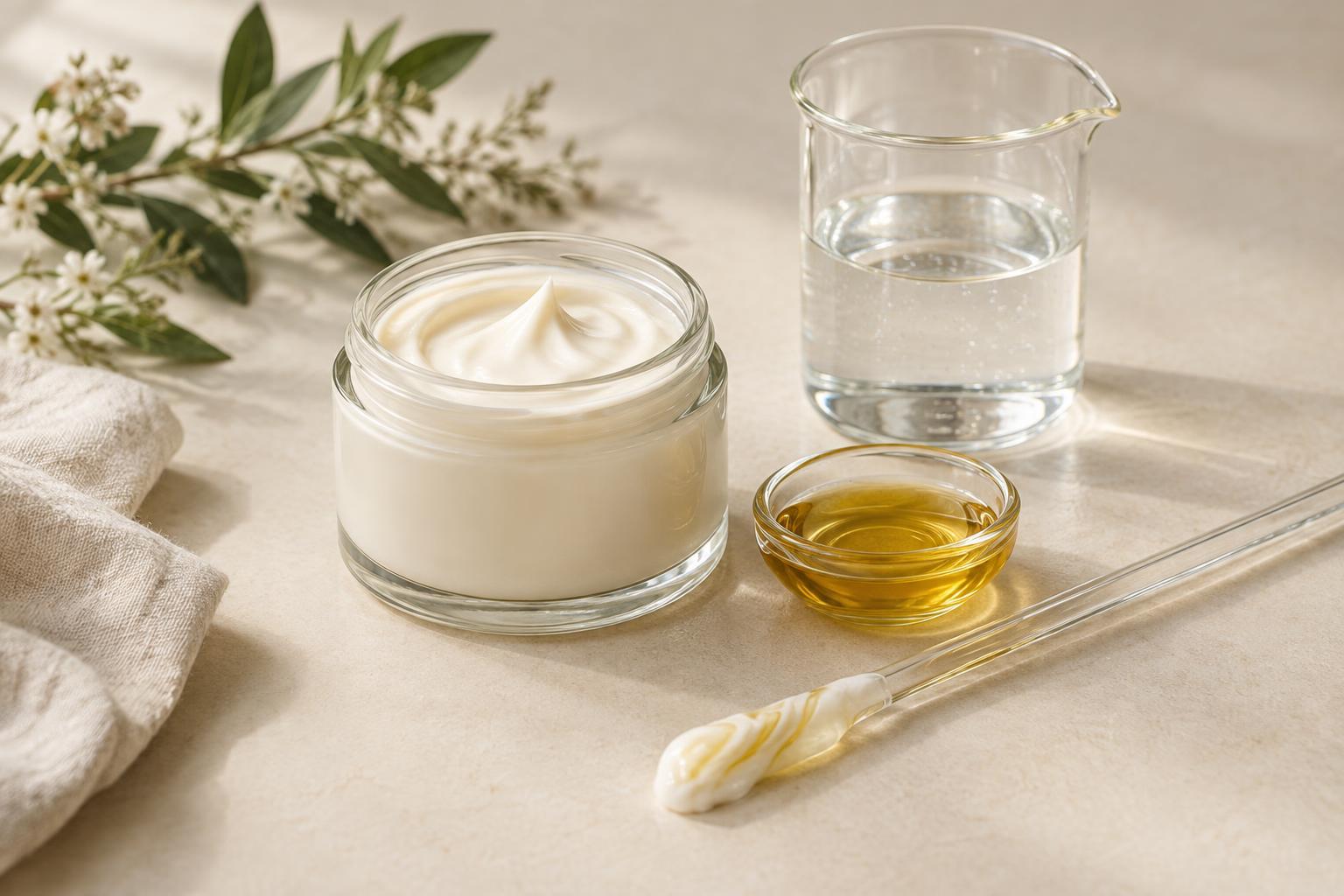
A lotion may contain water alongside oils, emollients and other ingredients that do not readily mix with water. If left to themselves, the water-loving and oil-loving parts tend to separate. An emulsifier helps bring them together in a more uniform mixture called an emulsion. This is one reason a finished cream can feel smooth instead of like separate layers of water and oil.
An emulsifier has parts that interact with water and parts that interact with oil. During manufacturing, mixing breaks one part of the formula into tiny droplets dispersed through the other. Emulsifiers help keep those droplets distributed. The result might be a light lotion or a rich cream; the emulsifier is only one part of what determines the final feel.
What emulsifiers do in a finished product
Keeping a formula mixed is the main job, but emulsifiers can also affect how it spreads, how quickly it seems to absorb and whether it feels slippery, creamy or waxy. Some formulas use more than one emulsifier because a combination can provide a texture or degree of stability that one ingredient alone does not.
A lotion’s thickness does not tell you how much emulsifier it contains. Waxes, fatty alcohols, gums and other thickeners can also change its consistency. Likewise, a thin fluid can still be an emulsion. Texture offers clues about how a product feels in use, not a reliable way to identify its complete formula.
How to recognize them on an ingredient list
Common emulsifying ingredients include glyceryl stearate, ceteareth-20, polysorbate 60 and certain forms of lecithin. You may also see ingredients described by suppliers as emulsifying waxes, though the ingredient list on a package typically names their individual components. These examples are not interchangeable: each behaves differently and may be chosen for a particular type of formula.
A name alone does not always reveal an ingredient’s only purpose. Glyceryl stearate, for instance, may contribute to both the structure and feel of a cream. Some substances used as emulsifiers are also surfactants, a broad term for ingredients that act at the boundary between materials such as water and oil. That does not mean a leave-on cream works like a cleansing product. Its overall formula and intended use matter more than a shared ingredient category.
Ingredient order can provide limited context, but it will not show exactly how an emulsifier was used or whether the finished product will suit your preferences. Formulators make choices about ingredient combinations, proportions and processing that a label cannot fully describe.
Does an emulsifier mean a product will be stable?
Emulsifiers help a product resist separation, but they do not guarantee it will look and feel unchanged forever. Temperature, storage conditions, packaging and the rest of the formula can all affect an emulsion. A product left in excessive heat, for example, may change texture even if its emulsifier system was well chosen.
Some products are designed to be shaken before use, while a cream that was previously uniform may separate unexpectedly. Follow the directions on the packaging rather than assuming every visible layer means the same thing. If a product’s appearance, smell or texture changes substantially from when you first used it, setting it aside is a sensible choice.
Choosing a texture that works for your routine
You do not need to identify every emulsifier to choose a moisturizer. Start with how you want the product to behave: a lighter lotion may be easier to layer under makeup, while a richer cream may feel more comfortable when you prefer a substantial finish. Those are preferences, not promises made by a particular ingredient name.
When comparing products, consider the full experience: how easily they spread, whether they leave a finish you like and how they fit with other steps in your routine. Emulsifiers make many familiar textures possible, but the finished product is the most useful thing to evaluate. An ingredient list can help you ask better questions; trying the product as directed tells you more about how it feels on your skin.