Why the edges are easy to miss
Face washing often starts at the cheeks and forehead, where the hands move easily. The edges take more attention. Hair can cover the forehead and temples, the curves beside the nose are small, and the jaw can sit just beyond where you usually look in the mirror. If you wear makeup or apply products close to those areas, it is worth including them in your normal cleansing motions.
The goal is not to make every wash more intensive. A longer, harder scrub can leave skin feeling uncomfortable without making the routine more useful. Instead, notice where your fingertips travel. Think of the hairline, sides of the nose and jaw as part of the face rather than as spots that need a separate deep clean.
Work around hair without rubbing the scalp
Before washing, move loose hair away from your face with your hands or a comfortable headband. This makes it easier to reach the temples and forehead without repeatedly pushing wet strands aside. If you use a headband, keep it far enough back that it does not cover the skin you intend to wash.
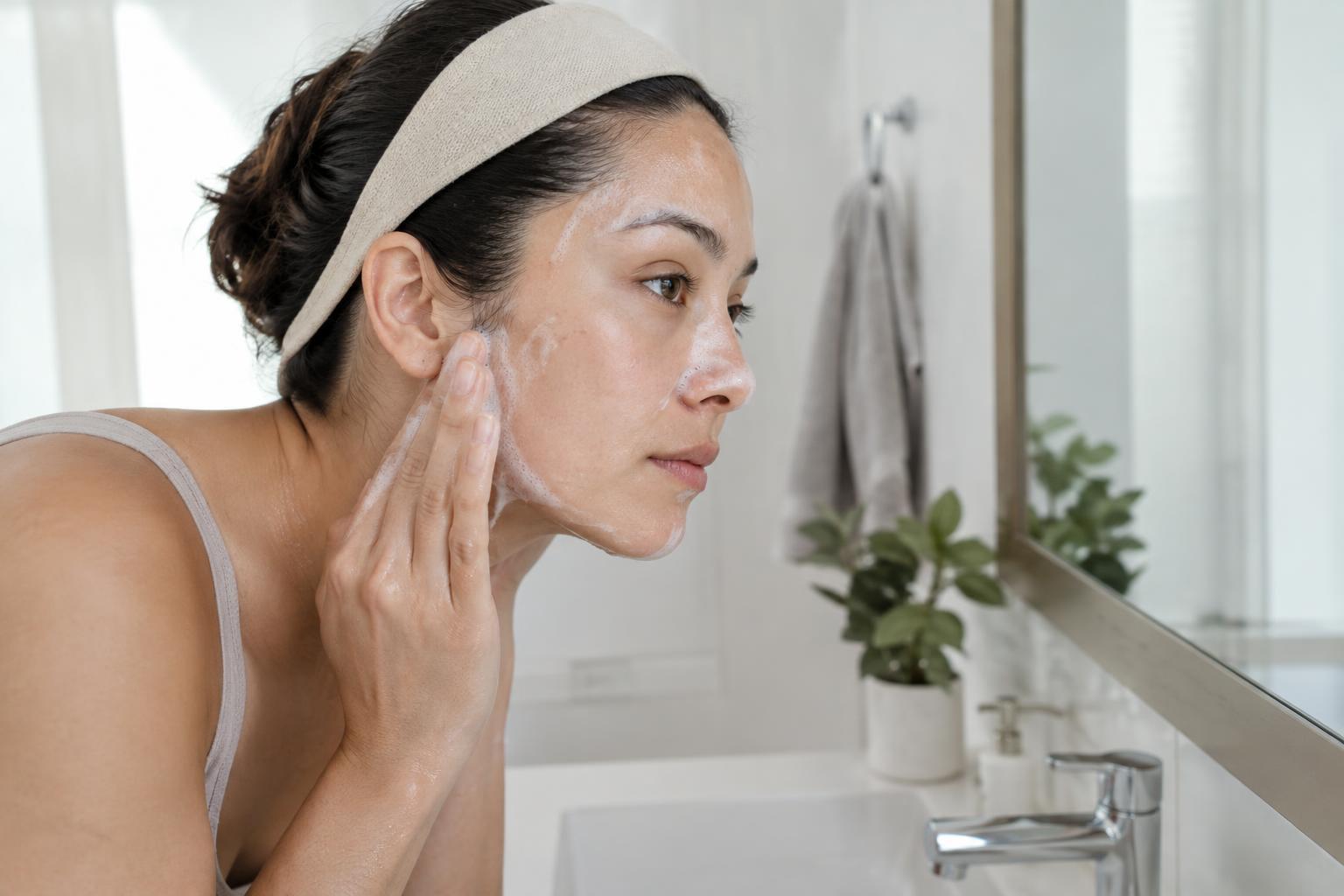
As you spread cleanser, take your fingertips up to the visible hairline, then move gently across the temples. There is no need to work cleanser deeply into the hair or scrub along the roots. That can make rinsing more cumbersome, especially if hair products are present. When you rinse, check that foam or slippery cleanser has not collected near the ears or under the edge of a headband.
Use small motions beside the nose and along the jaw
The area beside each nostril is easier to reach with a fingertip than with a broad sweep of the palm. Use light, short motions to distribute cleanser into the curves, then rinse the same area. You do not need to press into the creases or repeatedly rub them. If a particular spot feels sensitive, a lighter touch is more sensible than trying to polish it clean.
Follow the jawline from the chin toward the ears with your fingertips. If you apply makeup or moisturizer below the jaw, include that area in your wash too. Pay attention to where the face meets the neck, but avoid turning an ordinary face wash into a prolonged scrub of both areas. A consistent, gentle pass is easier to repeat than a complicated sequence.
Rinse, check and finish comfortably
Rinsing deserves as much attention as applying cleanser. Cup water in your hands and let it reach the spots you washed, including the hairline and jaw. You can gently move your fingertips over an edge while rinsing if water alone is not reaching it. A slippery feeling may be part of a cleanser’s texture, so it is not always a useful reason to keep rinsing indefinitely. Look instead for obvious foam or product left behind.
Pat your face with a clean towel rather than dragging it across the skin. If you use a moisturizer, you can apply it as part of your usual routine after washing; there is no need to wait until your face feels tight. If a product repeatedly leaves your skin uncomfortable despite a gentle approach, consider whether its texture or your washing frequency suits you.
Keeping this routine simple can make it easier to notice what works for you. If you also enjoy exploring how everyday objects function outside a beauty routine, browse Electronics Explained. For a more focused detour into devices and their components, explore Sensors and Devices · Electronics Explained.