What micellar water does
Micellar water is a water-based cleanser containing mild cleansing agents called surfactants. These help loosen oil, makeup and other residue so they can be lifted away with a cotton pad or reusable cloth. The name refers to micelles, small groupings that surfactants can form in water. You do not need to see or feel them for the product to work.
Its main appeal is convenience: micellar water can freshen the skin or remove light makeup without a sink. That does not make every formula identical, or mean it will remove every product equally well. Long-wearing makeup and water-resistant sunscreen may take more effort than a light layer of everyday makeup. How the product feels afterward also depends on its other ingredients and on your skin’s preferences.
How to use it without over-rubbing
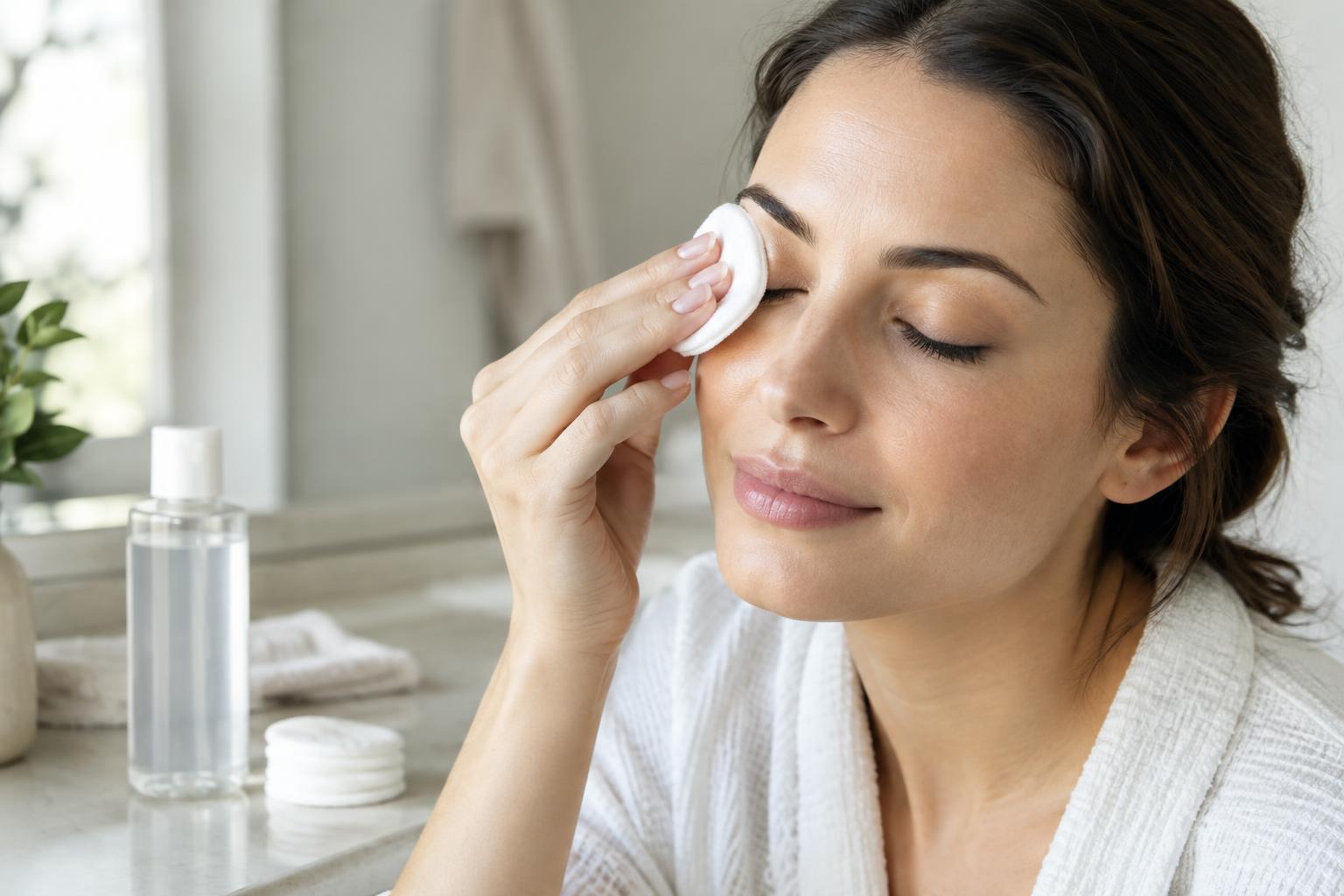
Saturate a soft cotton pad or clean reusable cloth with enough micellar water that it glides rather than drags. Sweep it gently over the face, turning to a clean area as it picks up makeup or residue. Use another pad if needed. Repeated hard rubbing is not a substitute for effective cleansing and can leave skin feeling uncomfortable.
For eye makeup, check that the particular formula is intended for use around the eyes. With the eye closed, hold a damp pad against the makeup briefly, then wipe gently rather than scrubbing back and forth. Avoid getting the liquid directly into the eye. If a product stings or leaves the eye area uncomfortable, stop using it there and choose another removal method.
Afterward, look at the result and how your skin feels. A pad that comes away cleaner is a useful sign, but it cannot confirm that every trace of sunscreen or makeup has been removed. If residue remains or you need several rounds of wiping, a different cleanser may be a better fit for that job.
When to rinse it off
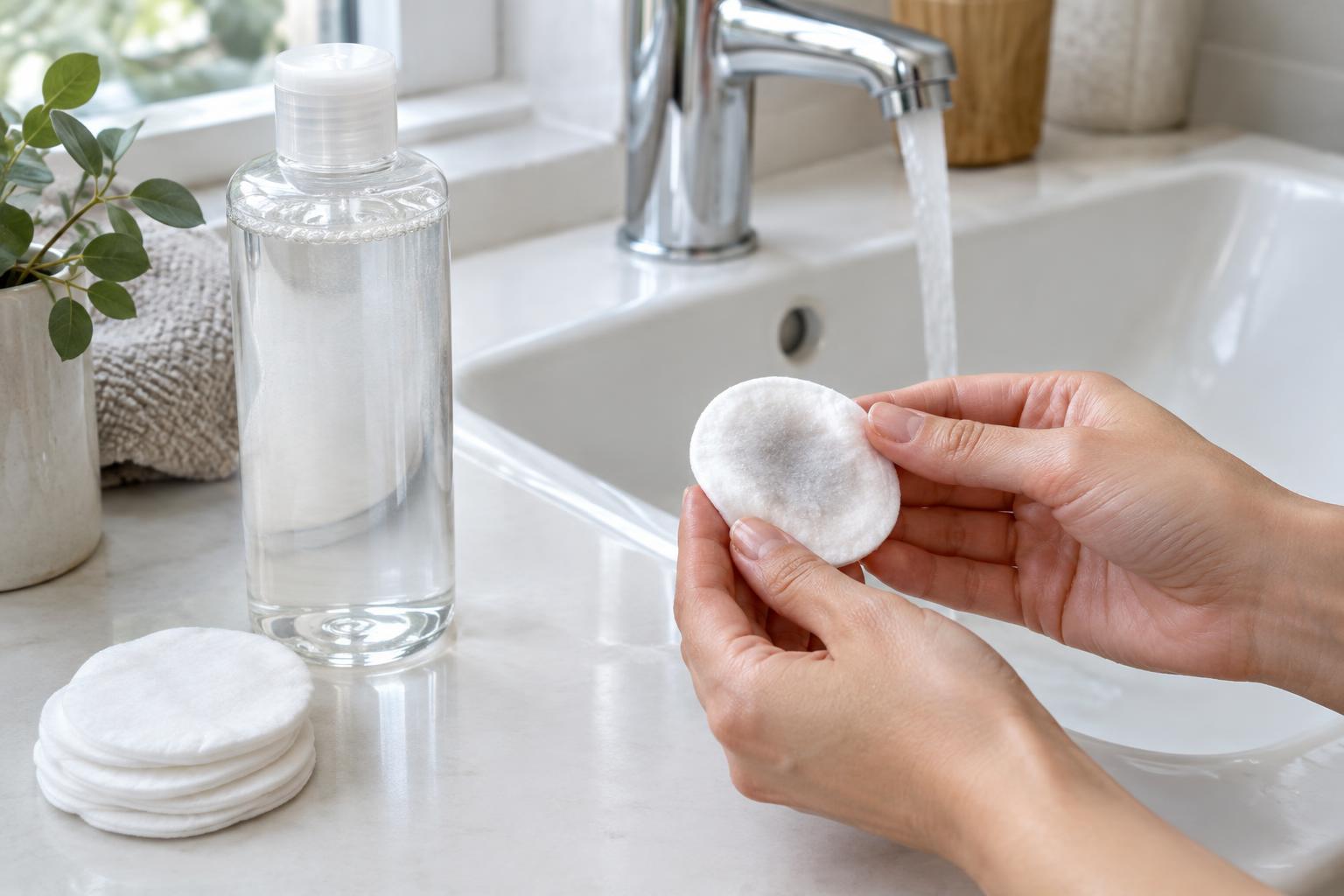
Start with the directions on your bottle. Some micellar waters are designed to be left on, while others instruct you to rinse. For a no-rinse formula, rinsing is usually a matter of preference rather than an automatic requirement. If your skin feels comfortable and you have removed what you intended to remove, you may be happy to continue with the rest of your routine.
Rinsing can still be sensible if the product leaves a sticky film, feels irritating, or seems to interfere with moisturizer or makeup. You can rinse with lukewarm water, or use a gentle cleanser if you want a more thorough wash. If you regularly find that a formula leaves your skin uncomfortable, changing products may be more helpful than trying to compensate for it at every use.
A leave-on label is not a reason to keep using a product that stings or causes persistent discomfort. Likewise, a rinse afterward does not guarantee that a formula will suit everyone. Pay attention to your own experience rather than treating “no-rinse” as a rule you must follow.
When a second cleanse makes sense
Micellar water can serve as a first step before washing your face, especially when you are wearing makeup or a substantial layer of sunscreen. Gently lifting some of that product first may make the follow-up cleanse easier. Wash afterward with a cleanser you find comfortable, then rinse it away according to its directions.
A second cleanse is optional, not a test of whether your skin is clean enough. On a low-makeup day, micellar water alone may be sufficient for your needs. On a day with long-wearing products, you may prefer a dedicated makeup remover or another cleanser rather than using pad after pad. The aim is to remove what you are wearing without excessive friction or a tight, stripped feeling.
Fit it into a simple routine
If you use micellar water in the morning, it can be a quick way to refresh the face before moisturizer and sunscreen. In the evening, use it to remove the day’s products, then decide whether to rinse or follow with a cleanser based on the formula, what you wore and how your skin feels. Apply moisturizer after cleansing while your skin is comfortable; there is no need to wait for it to feel completely dry.
The most useful routine is one you can repeat gently. Follow the product’s directions, avoid scrubbing to make a cleanser do more than it can, and treat rinsing as a practical choice rather than a universal rule.