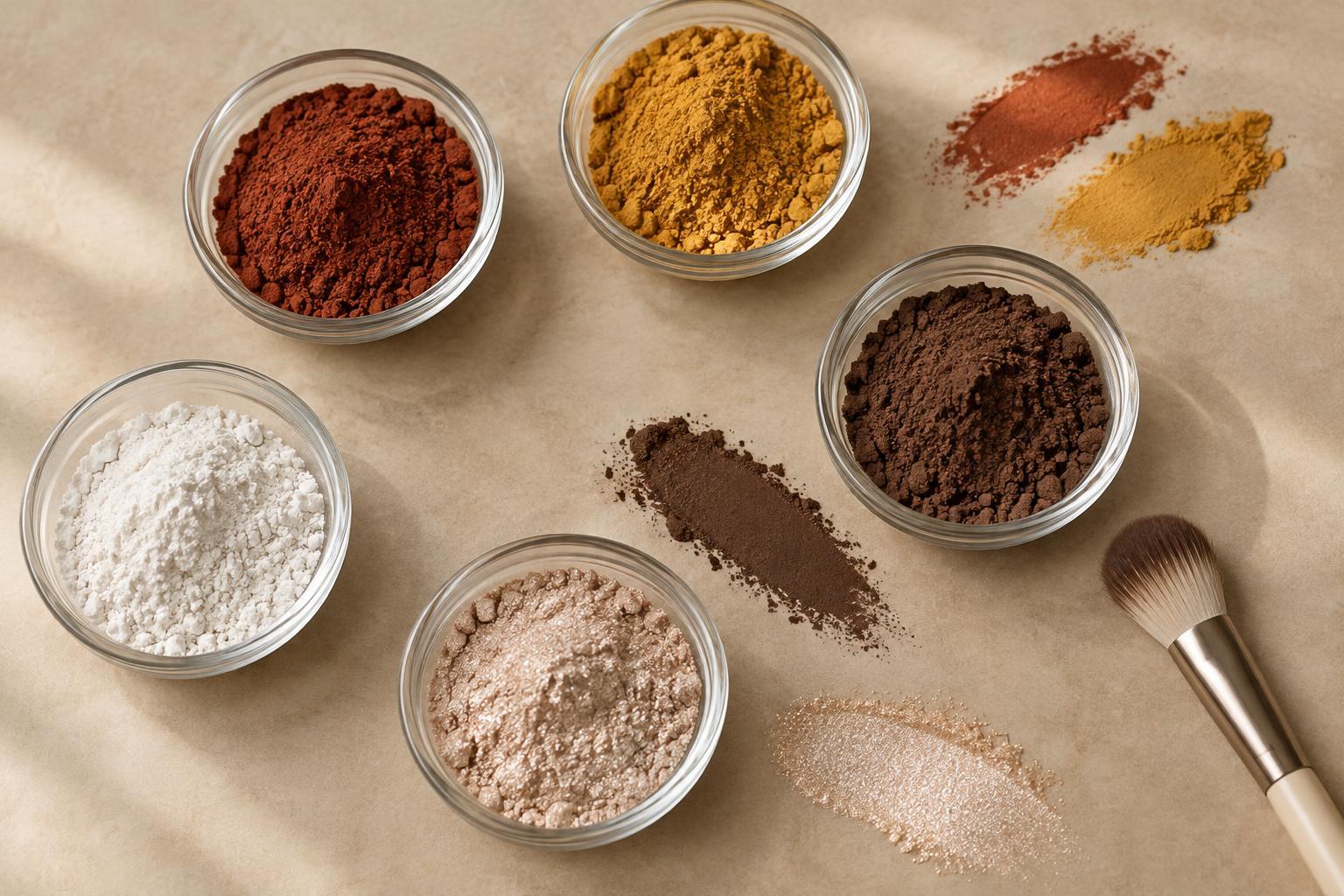
Why makeup needs more than one colorant
Makeup color is usually built from a blend rather than a single ingredient. A foundation may need several pigments to create its depth and undertone, while an eyeshadow may combine a base color with particles that add shimmer. The same colorants can look different depending on how much is used, how finely the particles are dispersed and what surrounds them in the formula.
Color and finish are related but not identical. An ingredient can provide a brown or red tone, make a product look more opaque, or reflect light for a pearly effect. That is why two products with similar-looking shades in the package may appear different once applied. The ingredient list offers clues about the materials used, but testing a product on skin is more useful for judging its actual shade and finish.
Iron oxides: building natural-looking shades
Iron oxides are common pigments in complexion products, brow makeup, lip color and eyeshadow. On many ingredient lists, they appear as iron oxides or under Color Index numbers: CI 77491 for red, CI 77492 for yellow and CI 77499 for black. Blending these tones allows formulators to make a wide range of browns, beiges and muted colors. Small changes in the balance can noticeably change whether a shade looks warmer, cooler or more neutral.
Despite their name, iron oxides in cosmetics should not be pictured as flakes of household rust. They are processed pigment materials used to provide color. Seeing them on a label does not, by itself, tell you whether a foundation will match your undertone or how much coverage it will provide. Those results depend on the entire formula and the amount of pigment applied.
Mica, titanium dioxide and the look of light
Mica is often used to give makeup a soft glow, sheen or sparkle. Its thin, plate-like particles reflect light, and they may be combined or coated with other materials to create different effects. Mica on a label does not guarantee that a product will look glittery: the particle size, concentration and surrounding formula all influence whether the result looks subtle or striking.
Titanium dioxide, often listed as CI 77891, is a white pigment that can add brightness and opacity. It may also appear alongside mica in materials designed to create a pearly effect. Although titanium dioxide has other uses in cosmetics, its presence in a foundation or powder does not establish that the finished product provides sun protection. For that, look for a product specifically labeled and intended as sunscreen rather than inferring protection from one ingredient.
Other pigment names you might encounter
Beyond iron oxides, labels may include ultramarines, chromium oxide greens, carmine, dyes and lakes. These materials help create colors that are difficult to achieve with iron oxides alone, such as vivid blues, greens or pinks. A lake is a colorant prepared in a form that can be used as a pigment; it is not a separate finish or a sign that the product contains water.
If avoiding animal-derived ingredients matters to you, carmine is worth recognizing because it is animal-derived. Mica and iron oxides alone cannot confirm whether an entire product is vegan, however: other ingredients and manufacturing choices matter too. Permitted colorants and labeling rules can vary by location and product use, so a pigment suitable for one type of makeup is not automatically suitable for every area of the face. Use products as directed on their labels.
How to read a colorant list without overreading it
Colorants may appear near the end of an ingredient list, and products sold in multiple shades may use a “may contain” or “+/-” list to cover the pigments used across the shade range. That means a listed colorant might not be present in the particular shade you hold. Names can also appear as descriptive ingredient names or CI numbers, depending on the label. Neither format is a shortcut to judging quality.
When choosing makeup, start with the result you want: a close shade match, an opaque finish, a soft glow or a vivid color. Use the ingredient list to identify materials you personally wish to include or avoid, then assess the finished product’s appearance and feel. A colorant name explains part of how a formula works; it is not, on its own, a promise about wear, comfort or suitability for everyone.