What does “peptide” mean?
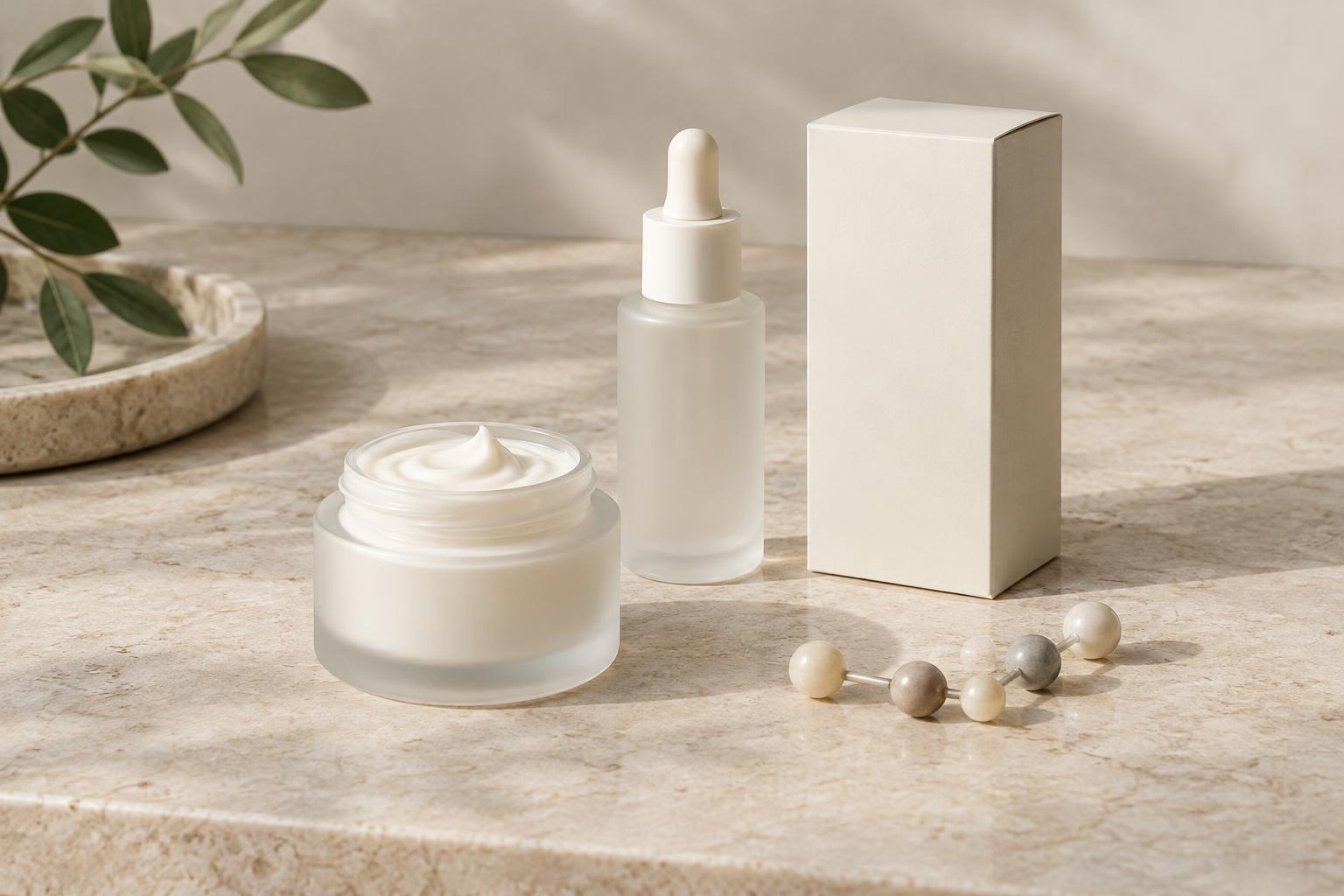
A peptide is a chain of amino acids, the building blocks that also make up proteins. Peptides vary in length and structure, so the word describes a broad family of ingredients rather than one substance with one predictable effect. In cosmetics, peptides may be included to support claims about the appearance or feel of skin. Those claims depend on the particular peptide and the finished formula, not simply on the presence of the word “peptide” on the package.
Some peptide names include an attached component, such as “palmitoyl,” or a prefix such as “acetyl.” These details identify different ingredients; they are not interchangeable versions of a single universal active. A product may also contain proteins or hydrolyzed proteins. Although related in chemical terms, those ingredients should not automatically be treated as evidence that the product contains a particular cosmetic peptide.
Finding peptides on an ingredient list
The front label may advertise a “peptide complex,” while the ingredient list uses individual ingredient names. Names such as palmitoyl tripeptide-1, acetyl hexapeptide-8 and copper tripeptide-1 are examples of what a shopper might encounter. The number and name help distinguish compounds, but they do not give a simple ranking of strength. A longer chain is not automatically better than a shorter one.
Ingredient lists are useful for checking whether a named ingredient is declared and for spotting other parts of the formula, such as humectants, oils and fragrance. They are less useful for judging performance. Label-order rules can vary by market, and ingredients present at low levels may not always appear in strict concentration order. Position on the list therefore should not be turned into an exact percentage or a verdict on whether enough peptide is present to matter.
Why the finished formula matters
A peptide does not act in isolation inside a bottle. Its behavior may depend on its stability, the surrounding ingredients, the product’s packaging and how the formula is used. A moisturizer that makes skin feel more comfortable, for example, may contain peptides alongside ingredients that attract or retain water. From the ingredient list alone, a shopper cannot separate the contribution of the peptide from the contribution of the rest of the formula.
It is also difficult to infer what happens after application. The surface of the skin is a barrier, and different peptides may interact with it differently. A name on a label does not establish how much of an ingredient remains intact during storage, how it is delivered, or whether it reaches a place relevant to a proposed effect. These questions call for information about the specific formulation rather than assumptions based on the ingredient category.
What a label cannot prove about results
An ingredient list cannot prove that a product reduces the appearance of lines, improves firmness or outperforms a simpler moisturizer. It does not show the exact amount of each peptide, the testing behind a claim, or whether the tested formula matches the one being sold. Even when a peptide has been studied as an individual ingredient, findings about that ingredient do not automatically transfer to every product that contains it.
Words such as “advanced,” “multi-peptide” and “clinically inspired” can make a product sound persuasive without explaining what was measured. When assessing a claim, look for clear language about the intended cosmetic outcome, the timeframe and whether any evidence relates to the finished product. An unclear claim is a reason to keep expectations modest, not a reason to assume the ingredient is ineffective.
A practical way to choose
Start with what you want the product to do in your routine. If your main goal is comfortable, moisturized skin, consider the whole formula and how it feels during regular use rather than choosing by peptide count. If you are interested in a specific appearance claim, check whether the brand names the peptide and explains the basis for its claim without treating an ingredient list as proof.
Peptides can be one reasonable feature to consider, but they need not be the deciding factor. Texture, fragrance preferences, compatibility with the rest of your routine and price are all relevant to whether you will use a product consistently. The most useful reading of a peptide label is a limited one: it tells you what has been declared in the formula, while leaving concentration, delivery and visible results as separate questions.