Start with what pH measures
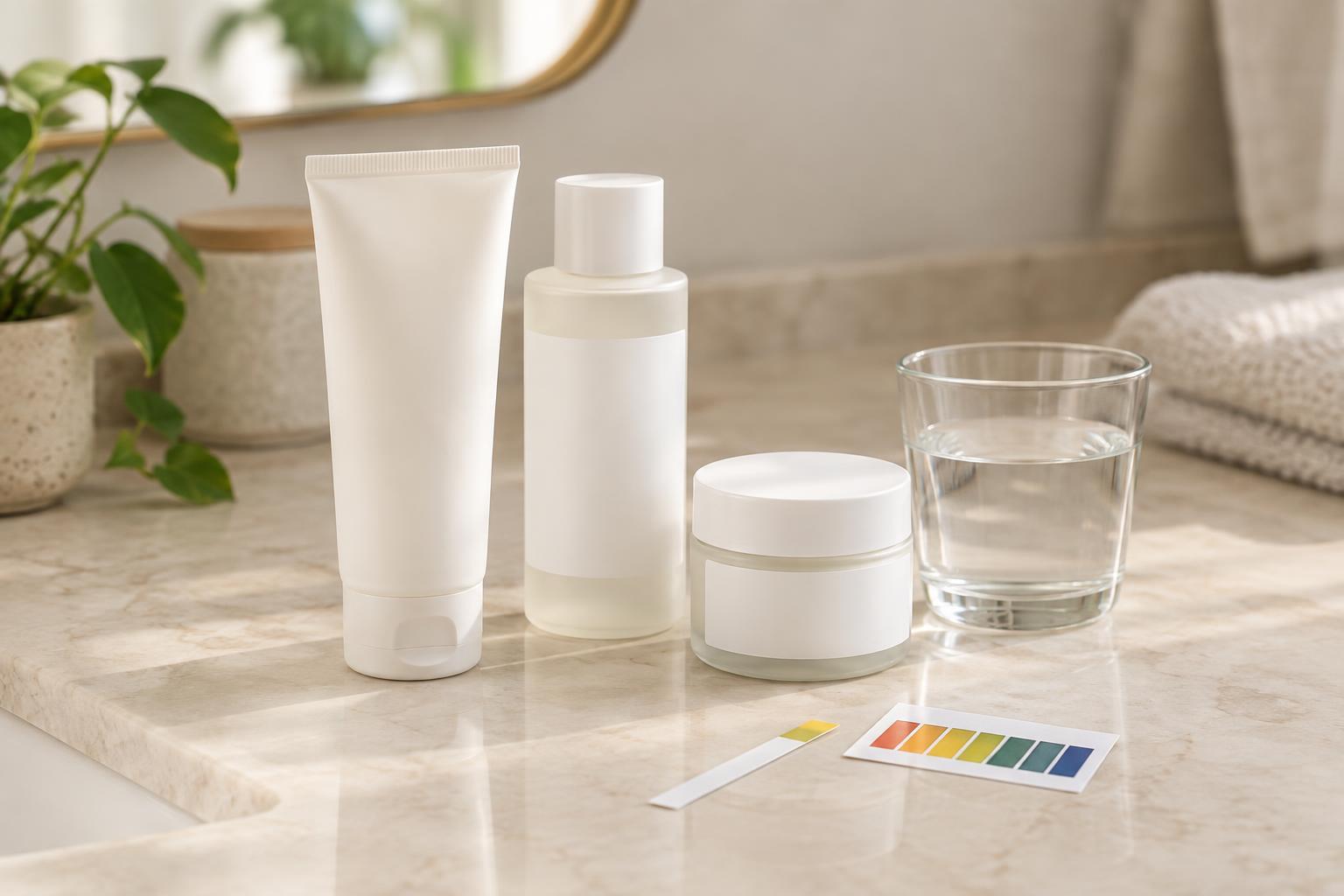
pH describes how acidic or alkaline a water-based solution is. A pH of 7 is neutral; values below 7 are acidic, and values above 7 are alkaline. The scale is logarithmic, so a difference of one pH unit represents a tenfold difference in acidity. That sounds dramatic, but a number alone cannot tell you how a skincare product will feel or perform. Its ingredients, their concentrations, and how long the product stays on skin also matter.
The skin’s surface is generally mildly acidic, though its pH is not fixed. It can vary across the body and change temporarily after washing or using a product. This is why “balanced” should not be read as a promise that a formula exactly matches every person’s skin. It is more useful to think of pH as one feature of a product’s design, not as a complete measure of its quality.
Why “pH-balanced” is not one universal number
On a label, “pH-balanced” usually suggests that a brand has adjusted a product’s pH with a purpose in mind. The label often does not say what that target is. One formula might be designed to be mildly acidic, while another might be adjusted to support the performance or stability of particular ingredients. Without a stated value or explanation, you cannot determine the finished product’s pH from the phrase alone.
Not every product can be discussed in the same way. pH is measured in a water-containing mixture, so an oil, balm, or other water-free formula does not have a straightforward pH value in its original form. A maker might measure a sample after mixing it with water, but that result depends on the testing method. For a water-based cleanser, toner, or moisturizer, a reported pH is easier to interpret—provided the maker is referring to the finished formula rather than an individual ingredient.
What pH can tell you about cleansers
Cleansers are where the claim often feels most relevant. Washing brings a product into contact with skin and then removes it, along with some surface oils. A cleanser’s pH may influence how it interacts with skin, but its cleansing agents, strength, and the way you use it are important too. A product described as pH-balanced can still feel too drying for someone, especially if they wash frequently or use more product than needed.
Rather than choosing by the claim alone, consider the whole experience. Does the cleanser remove what you need it to remove without leaving your skin feeling uncomfortably tight? Is it easy to rinse off, and does it fit with the rest of your routine? These observations can be more practical than comparing two labels that both say “pH-balanced” but provide no numbers or details.
Why a lower number is not automatically better
It is tempting to look for the most acidic product because skin’s surface is mildly acidic. That shortcut misses the role of formulation. Some ingredients are intended to work within particular pH ranges, and formulators may adjust a product accordingly. A lower pH does not guarantee better results, gentleness, or suitability for daily use. Likewise, a product is not necessarily harsh simply because its pH differs from that of the skin’s surface.
The distinction between rinse-off and leave-on products matters here. A cleanser remains on skin briefly, while a serum or moisturizer is meant to stay in place. The amount applied and the rest of the formula shape the experience in each case. If a product causes persistent discomfort, its “pH-balanced” label is not a reason to keep using it.
How to evaluate the claim while shopping
Treat “pH-balanced” as a prompt for questions rather than a seal of approval. If pH is central to your decision, look for a clear statement about the finished product’s pH or ask the maker what range it targets. A range is often more informative than a single number because measurements can vary with the test conditions. For water-free products, ask what was actually measured before comparing a reported value with one from a water-based formula.
You do not need to measure every product at home to build a sensible routine. Focus first on the product’s purpose, directions, and how it feels during ordinary use. The ingredient list can help you understand what kind of product it is, but it generally will not reveal its finished pH. In short, “pH-balanced” may describe a deliberate formulation choice; it does not, by itself, prove that the product is gentle, effective, or the right match for you.