Starting with skin that is not ready for makeup
Foundation can catch on dry areas, slide over oily areas or gather around visible flakes. It is tempting to solve every uneven patch with more makeup, but the first step is to notice what is happening before foundation goes on. If skin feels tight after cleansing, a harsh or overly thorough cleanse may be leaving it uncomfortable. If it feels coated, leftover product may be making the next layer harder to spread.
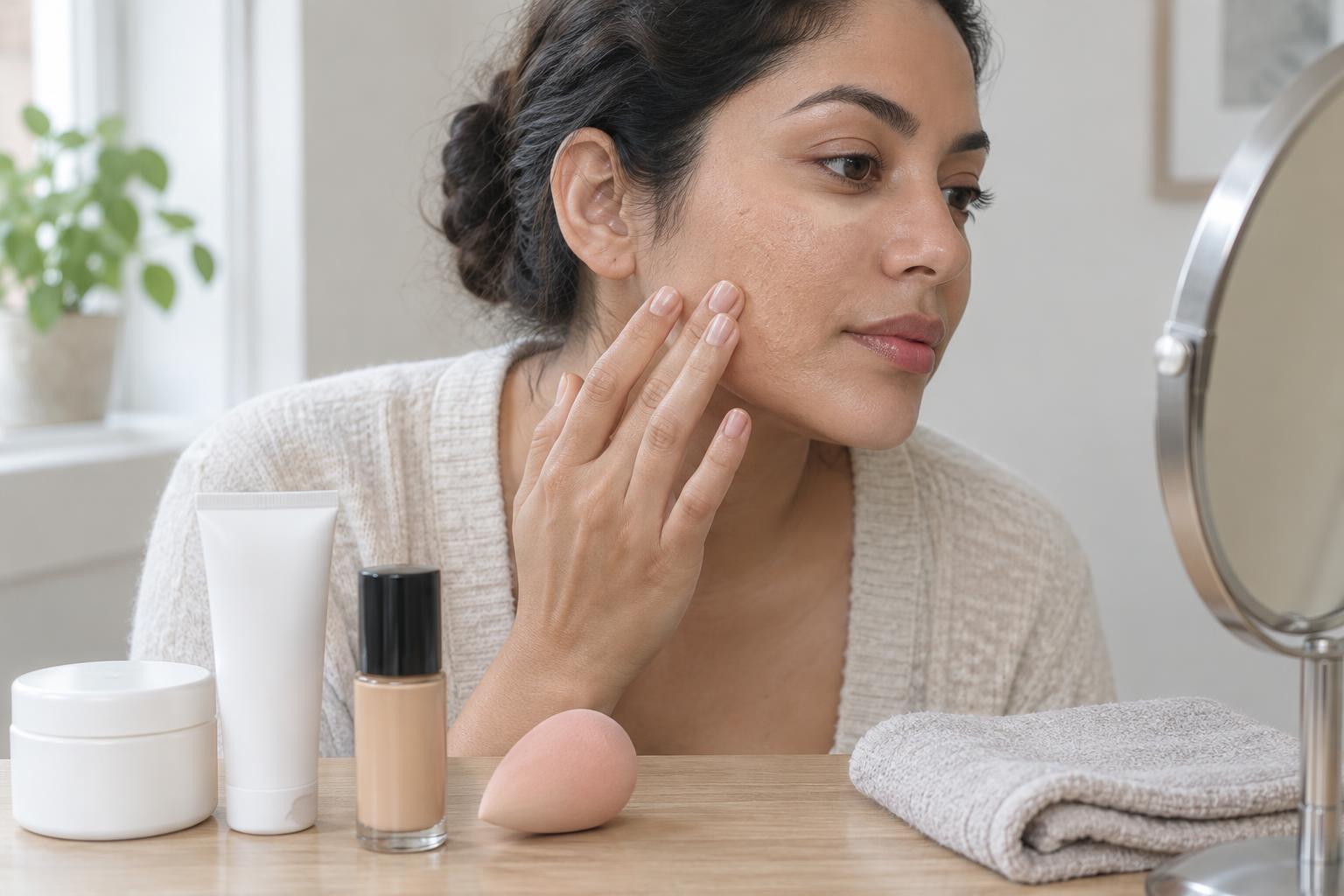
Aim for a clean, comfortable starting point rather than a perfectly matte one. Use a cleanser that suits your usual routine, rinse it away as directed and pat skin dry instead of rubbing. If you notice a flaky area, avoid scrubbing it immediately before makeup; friction can make the surface look rougher. A gentle, consistent routine is usually more useful than trying to transform skin texture in a few minutes.
Using too much moisturizer, or skipping it altogether
Moisturizer can help foundation spread across skin that feels dry, but a thick layer may leave some formulas slipping or gathering in creases. Skipping moisturizer because you want makeup to last can create the opposite problem if foundation clings to dry-looking spots. The useful amount depends on your skin, the product and the finish you want.
Apply a modest amount and pay attention to where you need it. Drier areas may benefit from more, while areas that already feel comfortable may need less. Give the moisturizer time to settle before moving on. If your fingers still pick up a noticeable layer when you touch your face, consider using less next time rather than trying to cover it with extra foundation. The goal is skin that feels comfortable, not slippery.
Rushing through sunscreen and other layers
A pre-makeup routine can include serum, moisturizer, sunscreen and primer before foundation even appears. When several layers are applied quickly, products may move around instead of forming an even base. Rubbing foundation repeatedly over them can also cause pilling: small rolls of product that look like flakes but are not necessarily dry skin.
Keep the routine as simple as it needs to be. Apply each product according to its directions and allow it to settle before adding the next. Do not reduce the amount of sunscreen you use just to make foundation easier to apply; instead, look for a sunscreen texture you are comfortable wearing under makeup. If pilling keeps happening, try changing one step at a time. Using less of a nonessential layer, such as primer, may tell you more than replacing the entire routine at once.
Expecting primer to fix every texture issue
Primer can change how foundation glides, grips or appears on the skin, but it is optional. Applying a generous layer everywhere may add to the buildup beneath makeup. It can also make it harder to tell whether an uneven finish comes from the primer, the foundation or the way the two are applied.
If you use primer, start with a thin layer in the areas where it serves a clear purpose. Let it settle, then test your foundation over it. Products do not always behave the same way together, even when both work well separately, so a small trial can be more helpful than a rule based only on ingredient labels. You may find that moisturizer and sunscreen provide enough preparation on their own.
Applying too much foundation before checking the result
Heavy application can turn a minor difference in texture into a more noticeable one. Instead of starting with a full layer, apply a small amount from the center of the face outward, adding coverage only where you want it. This leaves less product to collect around the nose, mouth or other areas that move throughout the day. Avoid repeatedly blending a spot that has started to look patchy; that can lift the layers underneath.
Your tool matters less than using it gently and keeping it clean. A brush, sponge or fingers can each work, depending on the formula and your preference. Check the result in more than one type of light when possible, since a finish that looks smooth in a dim mirror may appear different near a window. Skin has natural texture, and foundation will not erase it. A comfortable base with a little visible texture may look more even than an overloaded attempt to cover every detail.