Start with a few likely shades
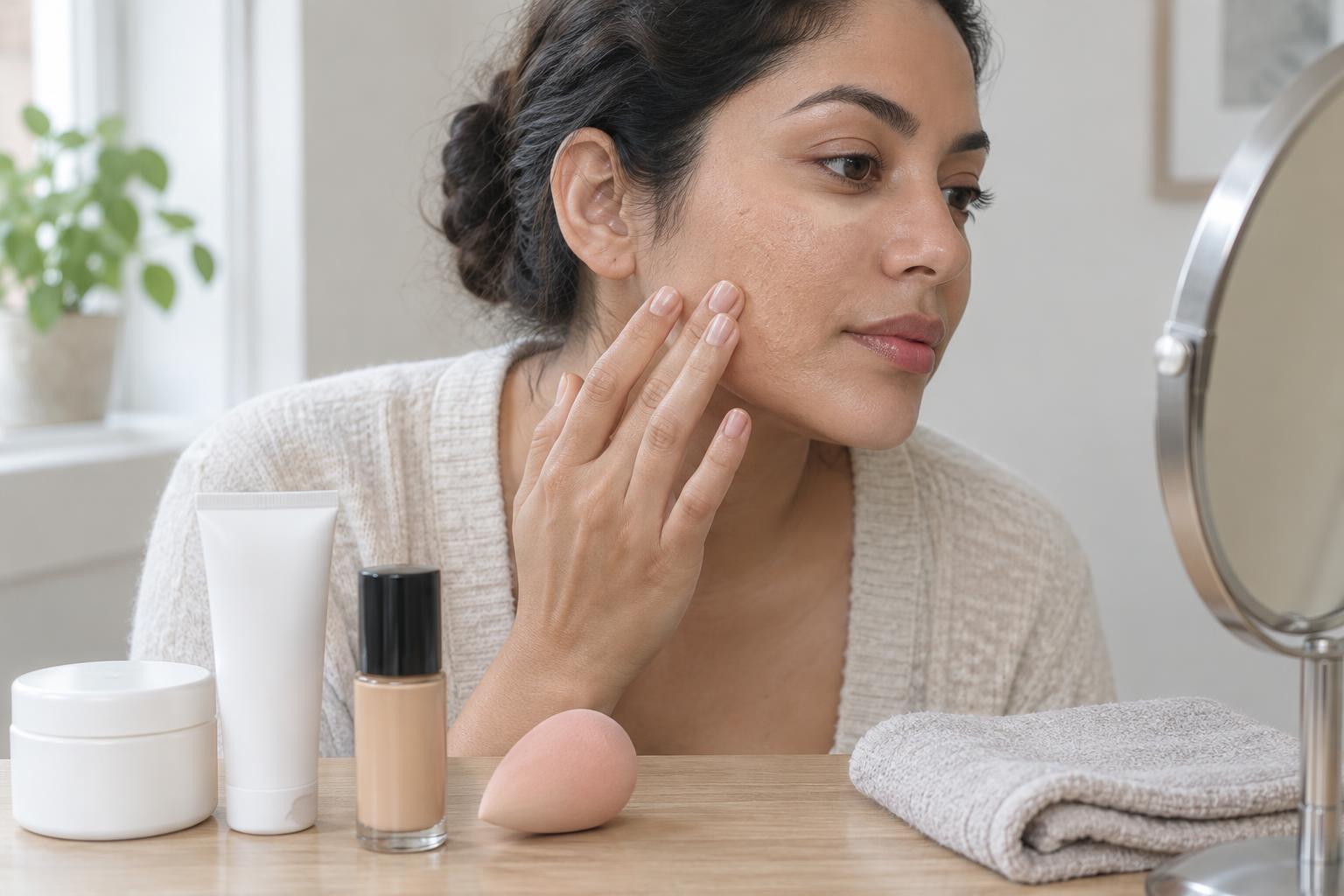
Testing foundation is easier when you narrow the options before opening a bottle or applying a sample. Look for two or three shades that seem close to your skin depth: how light or deep the color appears. Then consider undertone, which describes whether a shade leans more pink, golden, olive, or relatively neutral. These labels are useful starting points, but they are not standardized across brands, so the color on your skin matters more than the name on the package.
If you are comparing products in a store, use a clean applicator where available and follow the store’s sampling practices. For samples at home, put a small amount on a clean fingertip or tool rather than applying directly from a shared container. You need only enough for a few narrow swatches. Save your usual concealer, bronzer, and blush for later; they can make a mismatched foundation harder to notice.
Swatch where the foundation will need to blend
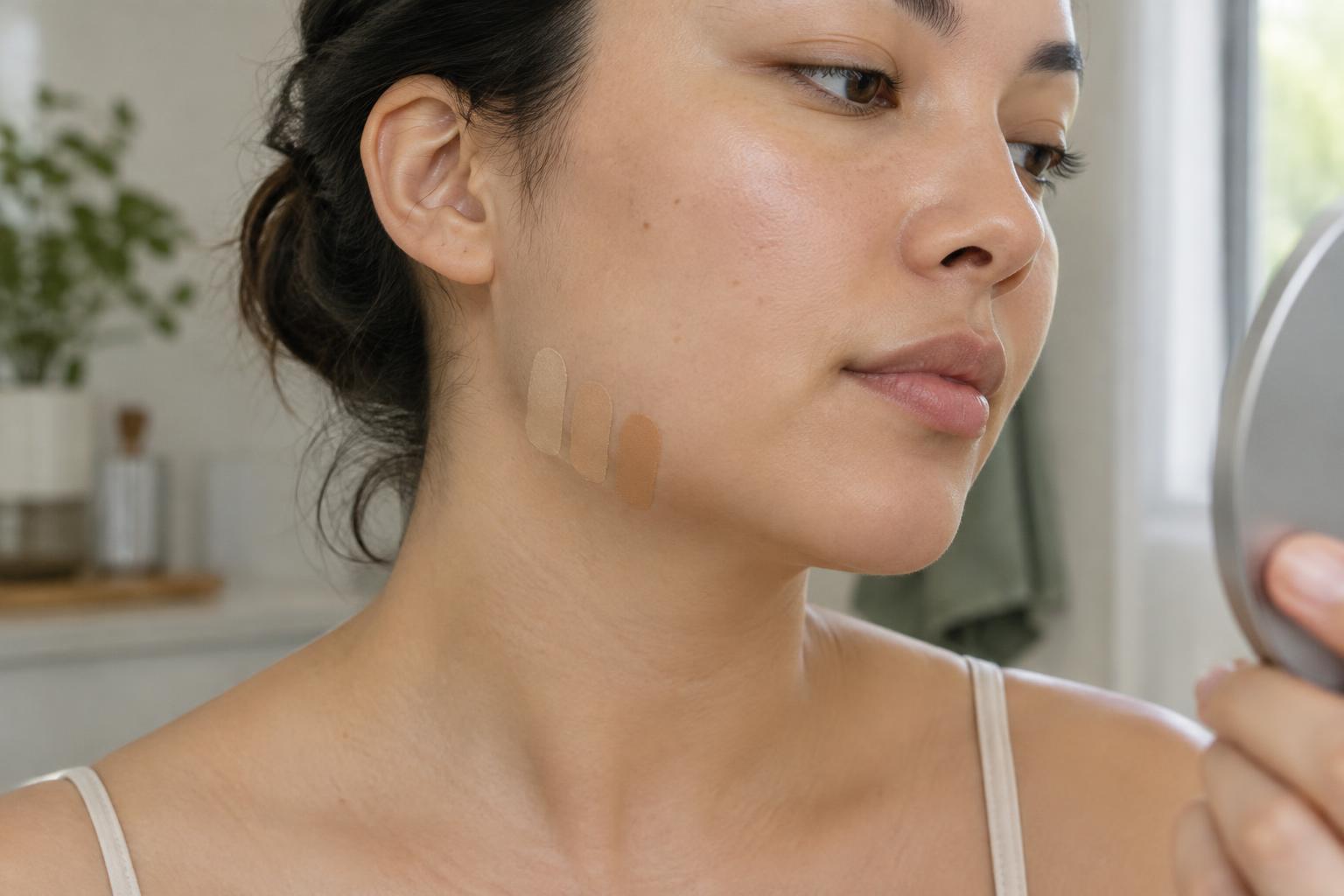
The back of your hand is convenient, but it may not match your face or neck. Instead, place short swatches along your lower cheek and jawline, extending each one slightly toward your neck. Put the candidate shades beside one another with a little bare skin between them. This lets you compare how each color connects your face to your neck without covering a large area.
Give each swatch a light blend at its edges, but leave enough product in the center to judge its color. A close match should look unobtrusive at the jaw rather than forming a visible stripe. Your face, neck, and chest may not be identical in color. If they differ, choose the overall effect you want: many people aim for a shade that looks natural on the face while making the transition toward the neck less obvious.
Check the color in more than one light
Lighting can change what you think you see. Warm indoor bulbs may make a foundation look more flattering than it does in daylight, while harsh overhead light can exaggerate differences in texture. After applying your swatches, look near a window in indirect daylight if possible, then check them in the lighting where you usually get ready. Avoid judging solely from a phone photo, since camera settings and screens can shift colors.
Step back from the mirror as well as looking closely. Up close, you may focus on a tiny difference in undertone; from a normal conversational distance, one shade may clearly blend better with your face and neck. If two shades look equally close, compare whether one appears noticeably orange, pink, gray, or pale beside your bare skin. The best choice is not necessarily the shade that looks most appealing in the bottle.
Let the swatches settle before deciding
Foundation can look different immediately after application than it does once it has spread, dried down, or mixed with products already on your skin. Leave the swatches in place long enough to see how they settle, then check them again in the same lighting. If a shade seems to deepen or shift noticeably, judge the settled color rather than the fresh stripe.
Color is only part of a useful test. Notice whether a swatch sits evenly over your usual moisturizer or sunscreen, gathers around dry-looking areas, or separates where you tend to get shiny. A shade that matches well but behaves poorly with your everyday preparation may call for a different application method or formula. Keep the rest of your routine as typical as possible so the test reflects how you would actually wear the foundation.
Try a small-area wear test before a full face
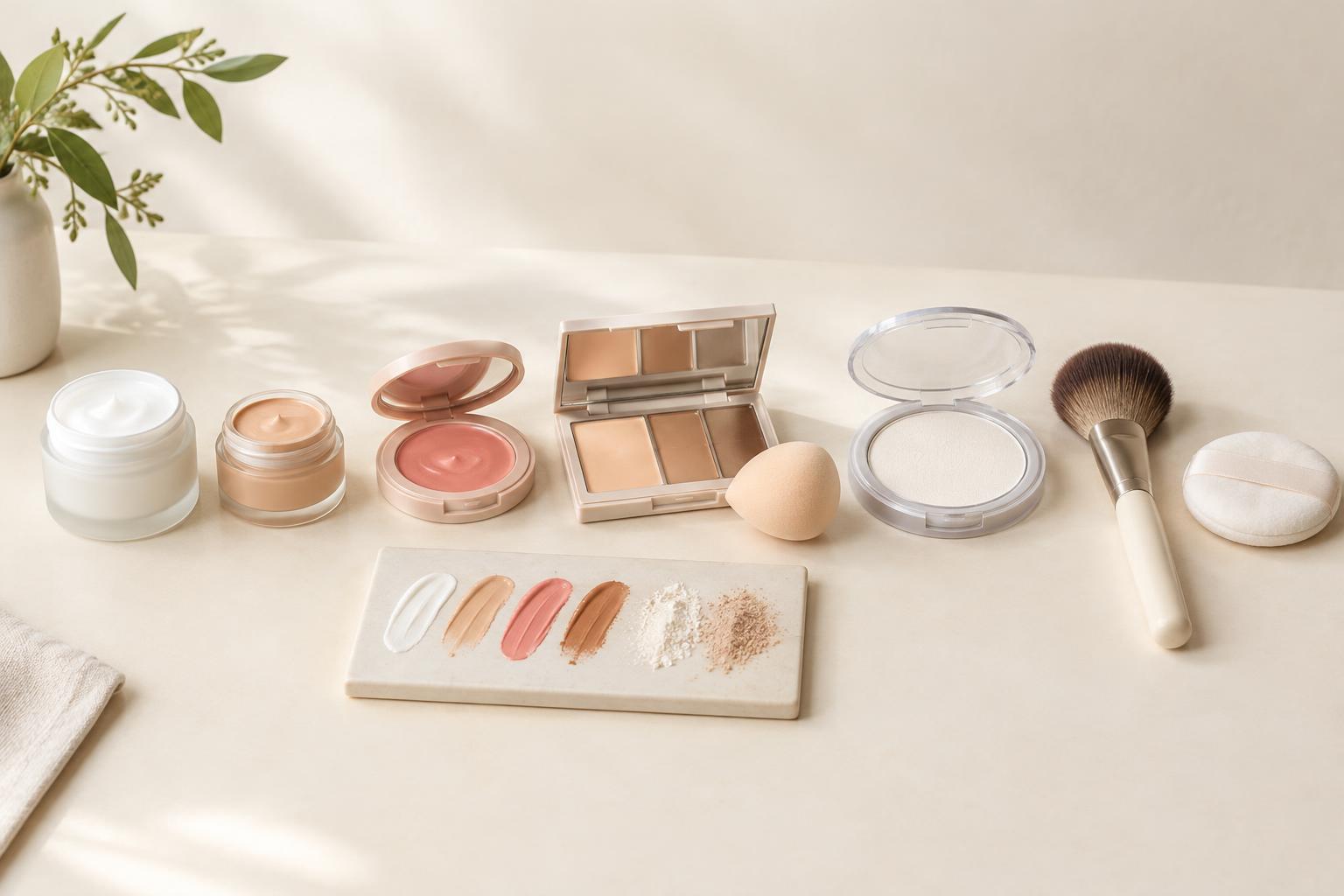
Once you have picked a likely shade, apply it to one small area of your face at the coverage you normally prefer. A thin swatch can look convincing even when a heavier layer appears too light or deep. Check the area again later for both color and finish. If you use a primer or setting powder regularly, you can repeat the small-area test with those products to see how the combination looks.
A shade test is about appearance, not a guarantee that a product will suit your skin. If a new product causes discomfort, remove it and stop the test. Otherwise, there is no need to build a complete look just to make a decision. A few careful comparisons at the jaw, followed by a small wear test, can help you choose with more confidence and less wasted makeup.