Start with the two different claims
A recyclable package is one that may be collected, sorted and processed into material for another use. A recycled-content package contains material recovered from an earlier use or manufacturing process. The first claim concerns what might happen after you finish the product; the second concerns where some of the packaging material came from. A container can have recycled content without being recyclable where you live, and a recyclable container can be made entirely from new material.
On a cosmetic product, a claim may describe only one part of the pack. A cardboard carton, plastic bottle, pump, cap and label can each have a different material and a different end-of-use route. Before taking a symbol or short phrase at face value, look for wording that identifies the part it describes: for example, “carton made with recycled paper” is narrower than “packaging made with recycled material.”
Check what “recyclable” means in your area
A recycling symbol or material code can help identify a material, but it does not confirm that your local collection service accepts that particular item. Rules vary by location and may distinguish between a bottle and its pump, or between a paper carton and a coated paper insert. If the label says only “recyclable,” check which components the statement covers and compare them with your local collection guidance.
Shape and construction matter as well as material. A small cap may be handled differently from a larger container; a pump can combine plastic, metal and other parts. Dark colors, sleeves, adhesives and mixed-material packaging may also affect sorting. These details do not automatically make an item unrecyclable, but they are reasons to check rather than assume. If a brand gives disposal instructions, use them as a starting point, then follow the rules of the service that will actually collect the package.
Read recycled-content percentages closely
A statement such as “30% recycled plastic” is more useful when it specifies what the percentage measures. Does it refer to the bottle, the cap, all plastic components or the entire pack? The difference can be substantial when a product comes in a carton with a pump and several plastic pieces. If the basis is not clear, avoid interpreting the figure as a percentage of everything you hold.
You may also see the term “post-consumer recycled,” often shortened to PCR. It generally describes material recovered after consumer use, rather than leftover material from a manufacturing process. Both descriptions tell you something about the material’s origin, but neither tells you on its own whether the finished package can go in your recycling bin. Look for a clear material name, a percentage and the component covered by the claim.
Look for specifics, not just reassuring language
Words such as “eco-friendly,” “green” or “sustainable” are broad. They do not tell you which packaging feature is being described or how to handle the empty product. A more informative claim names a component and a measurable attribute, such as a stated recycled-content percentage for the bottle or a statement that the outer carton is accepted in a particular collection stream. Clear instructions about separating components can also make a claim easier to act on.
A logo or certification mark may offer additional context, but its meaning depends on what it covers. It could relate to material sourcing, recycled content or another feature, rather than the recyclability of the finished package. Read any nearby explanation instead of assuming that a mark applies to every component. When the wording remains vague, it is reasonable to treat the claim as limited information, not proof that the whole package has a particular environmental outcome.
Use a simple check before disposal
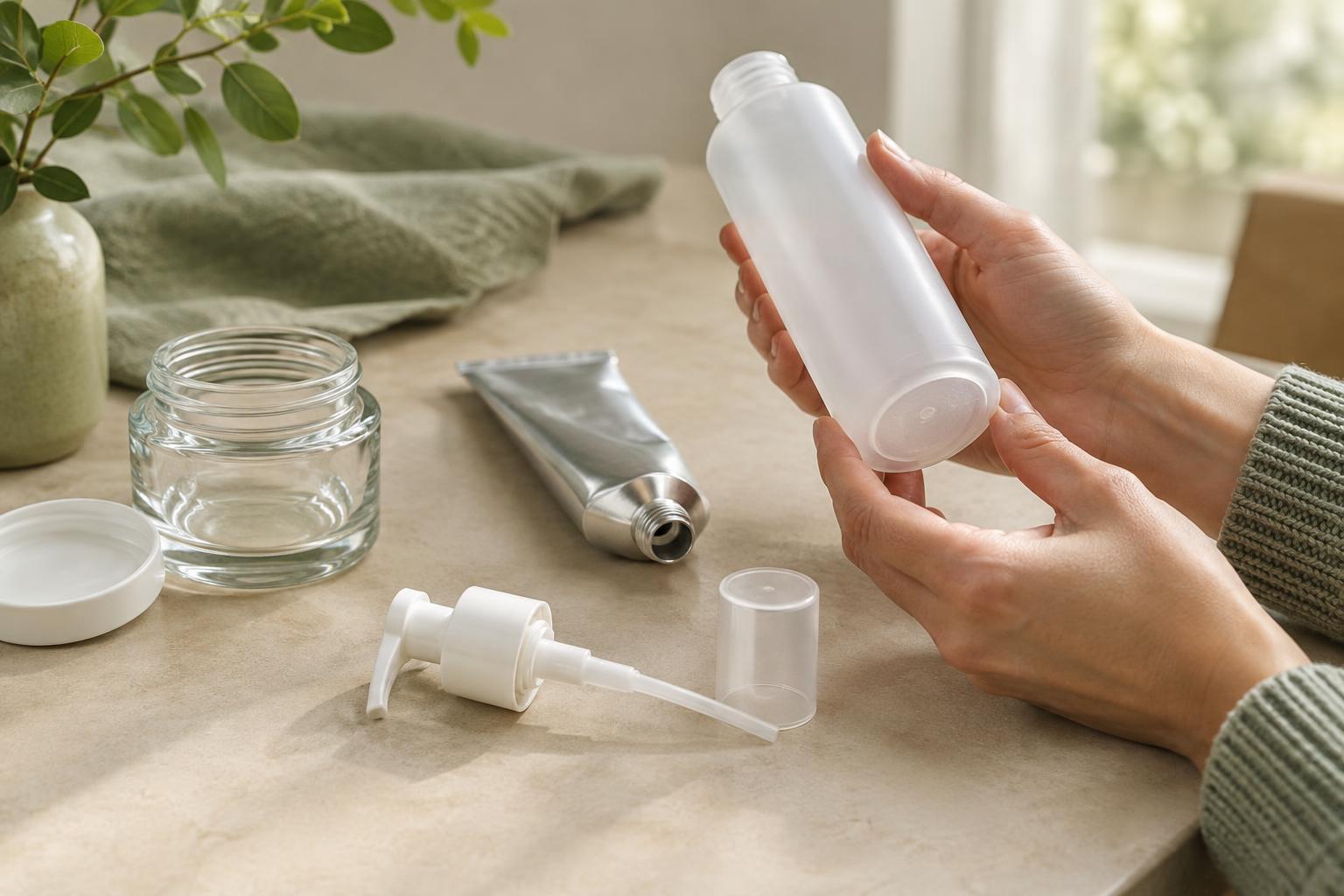
Once a cosmetic product is empty, identify its separate parts: carton, jar or bottle, lid, pump, insert and any removable sleeve. Check your local guidance for each material and form. Where required, empty containers and remove excess product; follow local instructions on rinsing and whether lids should stay attached. Do not put an item in a recycling bin solely because it displays a recycling symbol. If your service does not accept a component, look for an appropriate collection option if one is available.
When comparing products, keep the packaging claim in proportion. A precise claim helps you understand a specific feature, but it does not describe every environmental effect of making, using and disposing of the pack. The most practical approach is to ask three questions: Which component is the claim about? What exactly is being claimed? And can you act on the disposal instructions where you live? Those checks turn a quick impression into a more informed choice.