Start with what the label can—and cannot—tell you
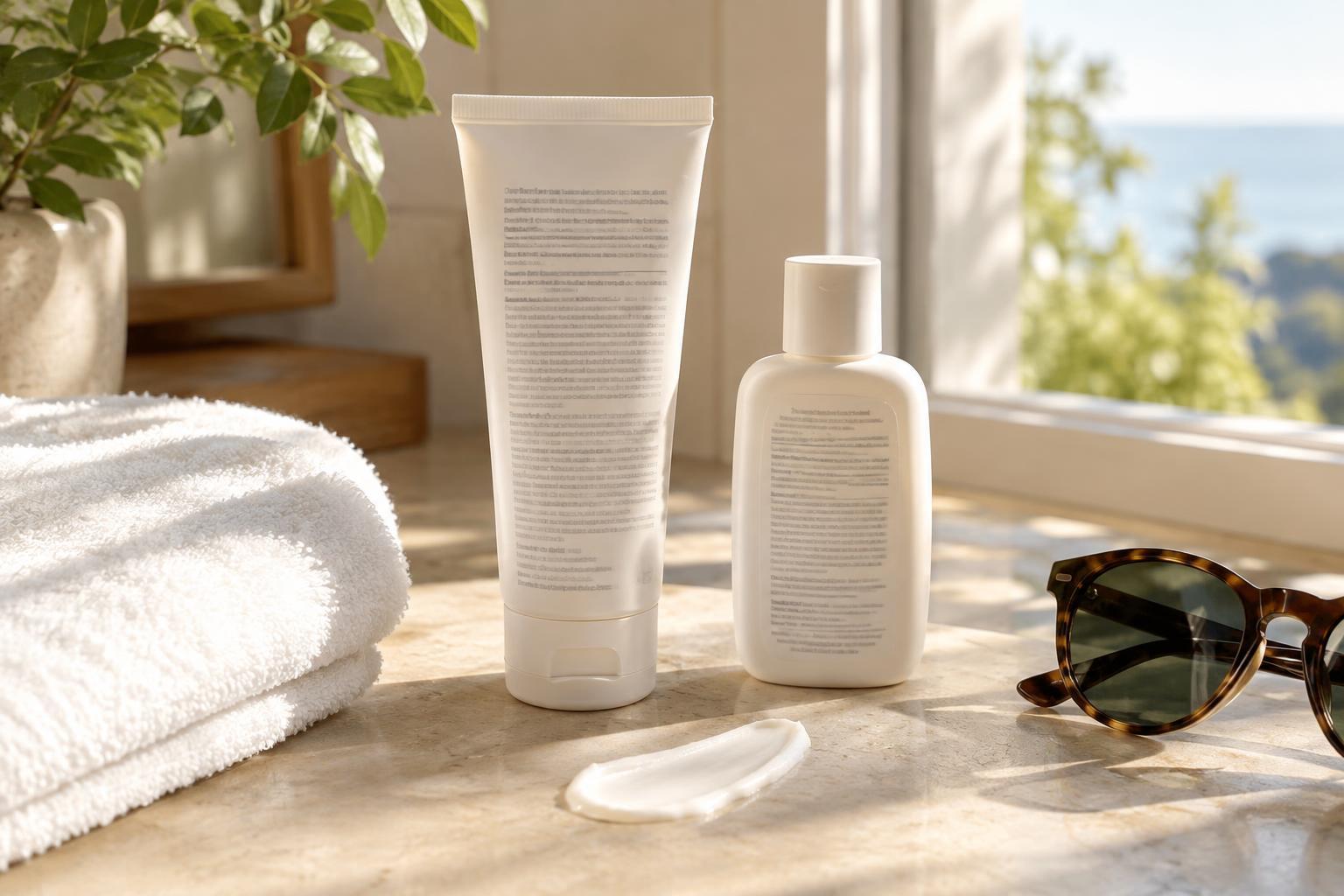
Sunscreen labels summarize results from defined tests. They are useful for comparing products, but they do not promise a fixed amount of protection in every situation. How much you apply, whether you cover every exposed area, and whether the product rubs or washes off all affect its performance.
Three claims are especially useful to read together: SPF, broad spectrum and water resistance. Each answers a different question. SPF describes tested protection against UVB rays, the rays most closely associated with sunburn. Broad spectrum indicates that the product also meets a standard for UVA protection. Water resistance tells you how long the product maintained its tested SPF during a specified water-exposure test.
What the SPF number means
SPF stands for sun protection factor. It compares the amount of UV exposure needed to produce a specified degree of skin reddening with sunscreen applied to the amount needed without it, under test conditions. Because that test measures reddening, SPF mainly reflects UVB protection. A higher number indicates greater tested protection, but no SPF blocks all UV rays.
SPF is not a timer. SPF 30 does not mean you can stay in the sun 30 times longer without concern: UV intensity changes, and sunscreen can wear away or be applied unevenly. Nor does a higher number make coverage less important. A generous, even layer on all exposed skin matters more than relying on a small amount of a high-SPF product.
What broad spectrum adds
UVA and UVB are both types of ultraviolet radiation, but an SPF number alone does not fully describe a sunscreen’s UVA protection. A broad-spectrum claim means the product has met the applicable test for protection across both UVA and UVB wavelengths. The precise rules for making that claim can differ by country, so follow the labeling system where you buy the product.
Broad spectrum is a helpful feature to look for, but it is not a promise that UVA and UVB protection are identical, or that every wavelength is blocked completely. Some labels also display a separate UVA rating or symbol. Read that information according to its local labeling rules rather than treating it as interchangeable with SPF.
How to interpret water-resistance claims
Water resistant does not mean waterproof. In labeling systems that specify 40 or 80 minutes, those numbers describe how long the sunscreen maintained its tested SPF during a standardized water-exposure test. They do not mean the product stays fully in place for that long during every swim, and they are not a schedule for reapplication during ordinary dry wear.
If swimming or sweating is likely, check whether the product has a water-resistance claim and follow its directions. Reapply as directed after water exposure, sweating or towel drying; toweling can remove sunscreen even if the water-resistance period has not passed. If a product makes no water-resistance claim, do not assume it is suited to those conditions.
Put the claims together for everyday use
When comparing labels, look first for a broad-spectrum product with an SPF appropriate to your plans, then check water resistance if you expect to swim or sweat. The label’s directions matter too: a product tested at a particular application amount may offer less protection when spread too thinly. Remember areas that are easy to miss, such as ears, the back of the neck and exposed feet.
For extended time outdoors, sunscreen works best as one part of a broader approach that can include shade, clothing and a hat. Follow the product’s reapplication instructions, commonly at least every two hours while outdoors and sooner after swimming, sweating or towel drying. The most useful label is one you understand well enough to use the product consistently and as directed.