Why they can feel similar
A facial oil and a moisturizer may leave skin feeling smoother immediately after application. That overlap can make the products seem interchangeable, especially when a moisturizer is rich or an oil is marketed as “hydrating.” The useful distinction is not which one feels more luxurious. It is what the formula contains and what you want it to do.
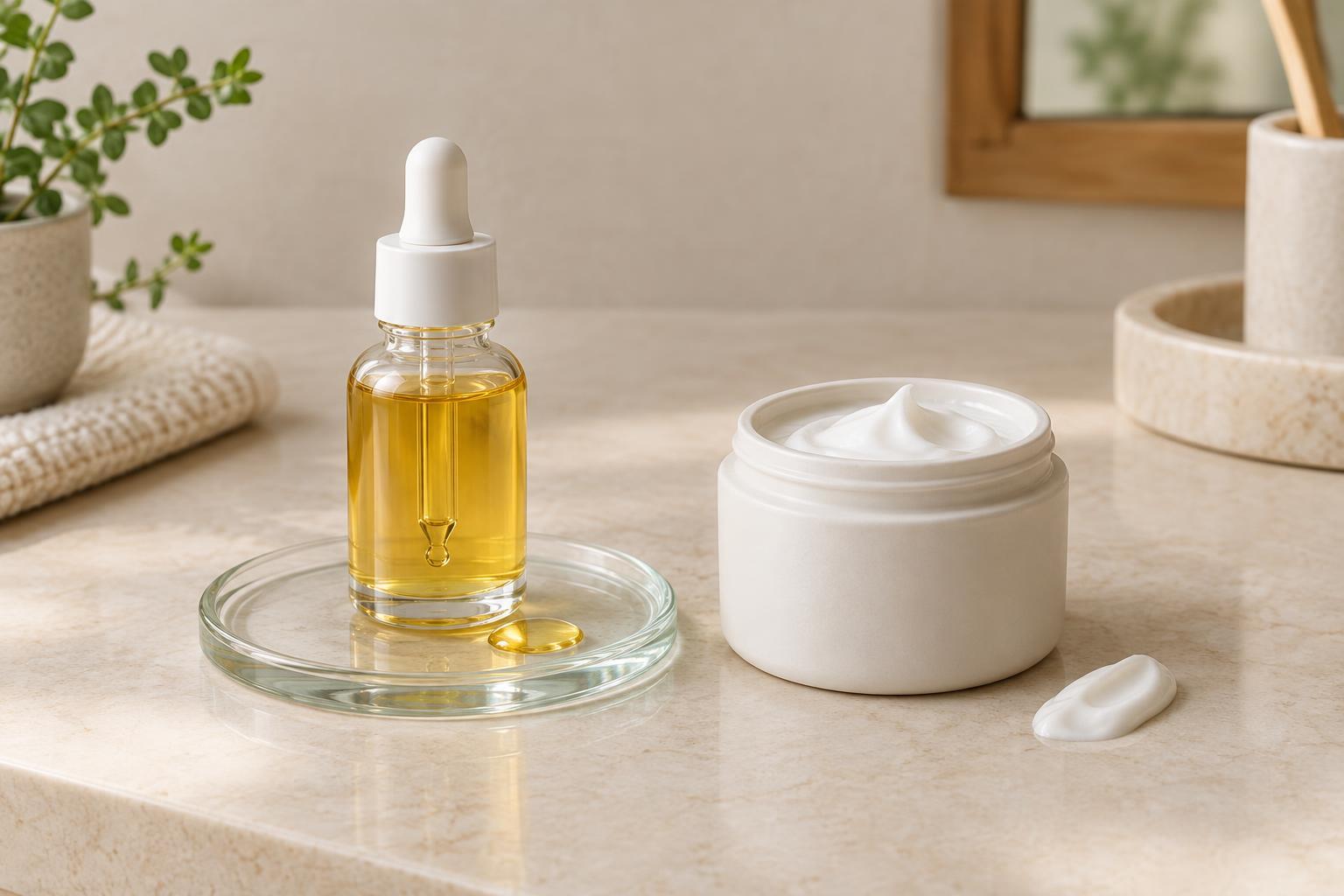
A facial oil is typically made mainly of oils or other oil-like ingredients. It helps soften the skin’s surface and can reduce the feeling of dryness by leaving a protective film. A moisturizer is a broader type of product: it may be a gel, lotion, or cream, and it usually combines several kinds of ingredients to help skin feel comfortable and retain moisture. Many moisturizers already contain oils, so using a separate facial oil is optional rather than an essential step.
What facial oil does
Facial oils primarily add emollience, meaning they help skin feel supple and smooth. Depending on the blend, they can also help slow moisture loss by coating the surface. This may be appealing when skin feels tight or when a lightweight cream does not feel quite comfortable enough. Oils vary in weight and finish: some spread thinly and absorb with little shine, while others leave a more noticeable layer.
Oil is not the same thing as water, however. Applying oil alone does not supply the water that people often mean when they say their skin feels “dehydrated.” An oil may make skin feel better by reducing moisture loss, but it cannot replace every function of a well-rounded moisturizer. Nor is the richest oil necessarily the best choice. A heavy or fragranced blend may simply be unpleasant on skin that prefers lighter textures.
What moisturizer does
Moisturizers commonly bring together humectants, emollients, and ingredients that help limit moisture loss. Humectants, such as glycerin, help attract and hold water near the skin’s surface. Emollients smooth rough-feeling areas. Ingredients that form a more protective layer help slow the escape of water. The balance differs from product to product, which is why a gel moisturizer can feel very different from a thick cream.
The word “moisturizer” on a label does not guarantee one specific texture or ingredient list. If a product leaves your skin comfortable without feeling greasy or tight, it may be doing what you need on its own. If it feels pleasant at first but your skin soon feels dry again, you might prefer a richer formula or an additional layer. Packaging terms can be a starting point, but the ingredient list, texture, and your experience are more useful than a promise that a product suits everyone.
Choosing one, both, or neither
Start with the simplest routine that feels comfortable. After gentle cleansing, apply a moisturizer if your skin benefits from one. If you want a little more softness or a less dry-feeling finish, try a small amount of facial oil as the final step of your moisturizing routine. You can also mix a drop into your moisturizer if the formulas combine well in your hands. There is no need to add oil merely because a routine says you should.
If your skin tends to feel shiny, a light moisturizer may be enough; adding an oil could make the finish heavier than you want. If it often feels dry, a richer moisturizer may be more useful than oil alone because it can provide several types of moisture support in one product. Preferences can change with weather, cleansing habits, and the other products you use, so the best combination need not stay the same year-round.
When trying either product, introduce it gradually so you can tell how your skin responds. Notice comfort, texture, and how well it sits under sunscreen or makeup, rather than expecting a dramatic transformation. If a product causes persistent stinging or irritation, stop using it. Facial oil and moisturizer are tools for everyday comfort; the right choice is the one that meets your needs without making your routine more complicated than it has to be.