The simple answer: moisturizer, then sunscreen
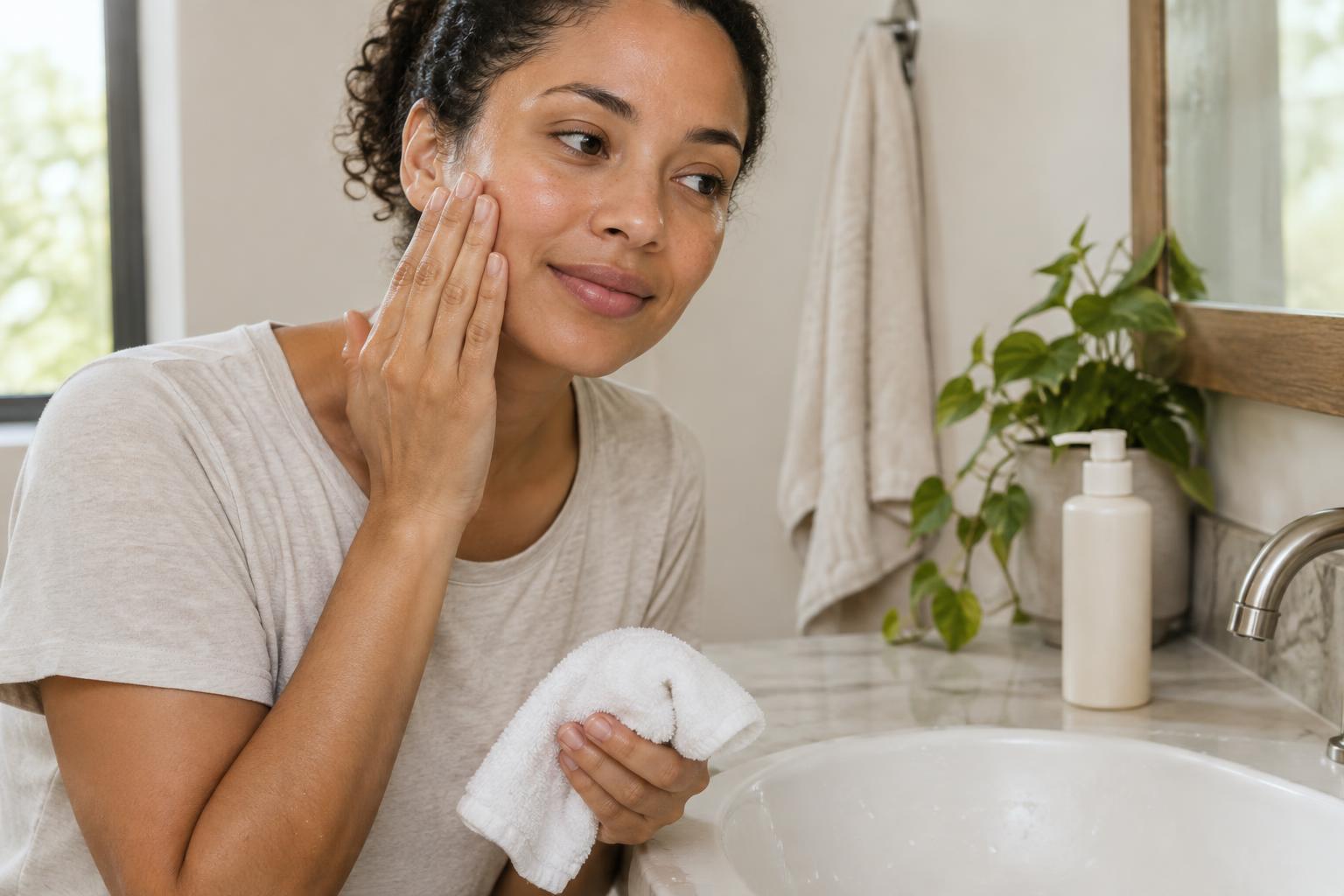
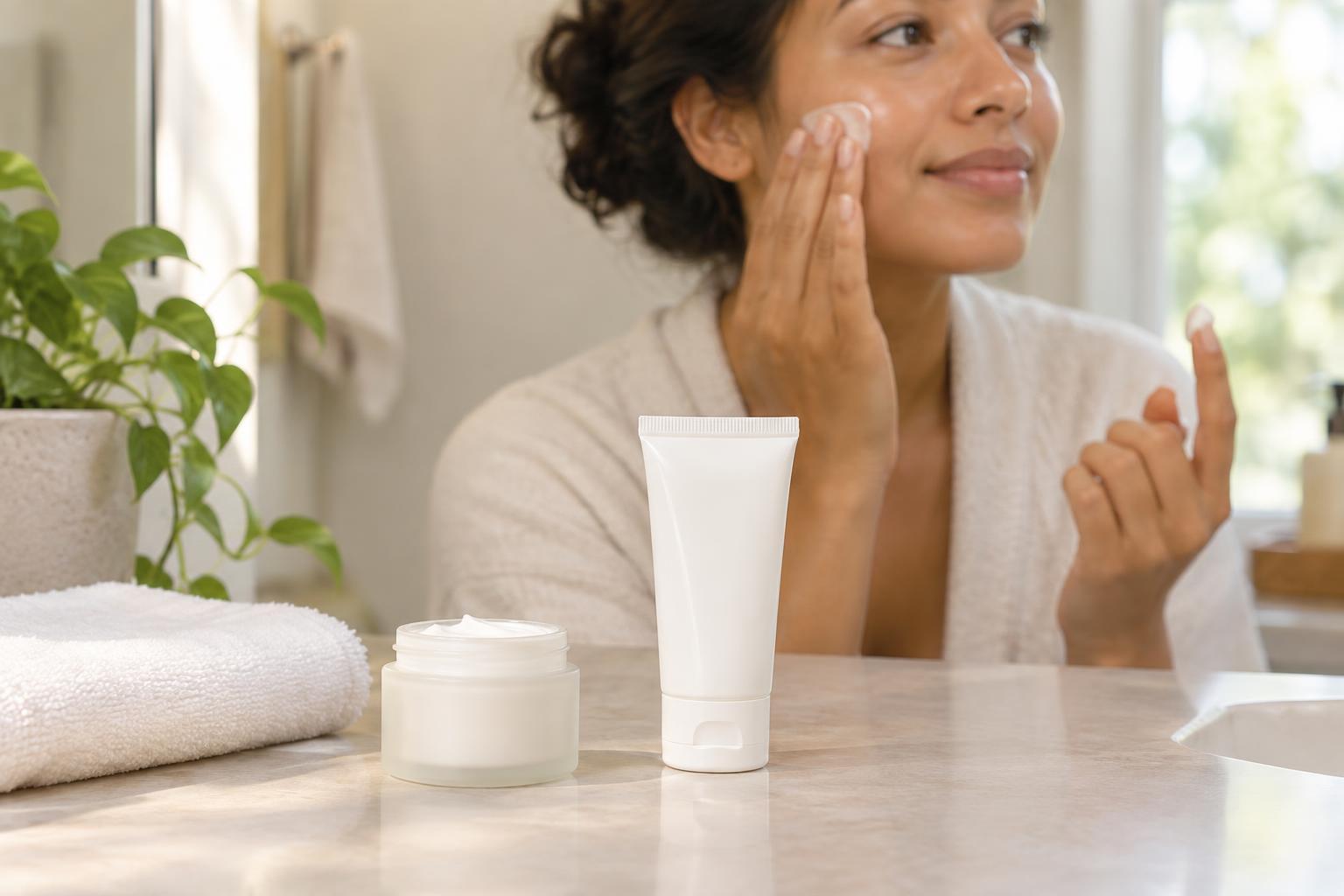
For most morning routines, apply moisturizer first and sunscreen afterward. Moisturizer is a skincare step that helps your skin feel comfortable and reduces the feeling of dryness. Sunscreen is the final skincare step because it needs to be applied as directed to provide the protection stated on its label. If you wear makeup, that generally comes after sunscreen.
A basic order is cleanse, apply any other skincare products you choose to use, moisturize, and then apply sunscreen. You do not need a complicated routine to follow this principle. If your skin feels comfortable without a separate moisturizer, you may be able to go straight from cleansing to sunscreen, particularly if your sunscreen feels moisturizing on its own.
Why the order matters
Putting moisturizer on first lets you address dryness without having to spread another skincare product over your sunscreen afterward. The goal is not to make every layer disappear completely; it is to give each product a chance to settle enough that the next one can be applied evenly. If your moisturizer and sunscreen pill or roll into small flakes, try using less moisturizer, allowing a little more time between steps, or choosing textures that work better together.
Both mineral and chemical sunscreens generally belong at the end of your skincare routine. Their ingredient types do not require opposite layering orders. More important than memorizing a special rule is applying your chosen sunscreen according to its label and using enough for the areas you want to cover. A thin, uneven layer may not provide the labeled level of protection.
Avoid blending moisturizer and sunscreen together in your hand as a shortcut. Mixing can make it harder to know whether you have applied sunscreen evenly or in the amount directed. Layering them separately is simpler: smooth on moisturizer, then apply sunscreen across exposed skin.
What if your moisturizer already has SPF?
A moisturizer with SPF can serve as your sunscreen step if it is labeled as a sunscreen and meets the protection you are looking for. Check the package for its SPF, whether it says broad spectrum, and its directions for application and reapplication. The important distinction is not whether the product is called a moisturizer or a sunscreen; it is whether you use it as directed for sun protection.
Think about how you normally apply moisturizer. Many people use only a small amount or place it mainly on dry patches. That approach may be fine for comfort, but it may leave areas uncovered when the product is also your sunscreen. If you rely on an SPF moisturizer, apply it thoroughly to the exposed areas specified on its label rather than treating it as a spot treatment for dryness.
A foundation or primer with SPF may add to your routine, but it is easy to apply makeup in a thinner or less even layer than sunscreen directions call for. If sun protection is the goal, a dedicated sunscreen or an SPF moisturizer used as directed is a clearer choice than relying on the SPF in makeup alone.
Make the routine work in everyday life
Comfort matters because a routine is easier to keep when you like how it feels. If the combination seems heavy, try a lighter moisturizer or see whether your sunscreen provides enough moisture by itself. If your skin feels tight, a more comfortable moisturizer under sunscreen may help. Introduce changes one at a time so you can tell which texture or product combination works for you.
Apply sunscreen to the exposed areas you intend to protect, including places that are easy to miss, such as around the hairline, ears, and neck when those areas are uncovered. Follow the product label for when and how to reapply, especially during extended time outdoors or after swimming or sweating. Reapplication is its own step; the morning moisturizer does not need to be reapplied first unless you want it for comfort.
The takeaway is straightforward: moisturizer first if you need it, sunscreen last among skincare products, and makeup afterward if you use it. Choose products you can apply consistently, and let the sunscreen label—not a rigid rule about texture—guide how you use it.