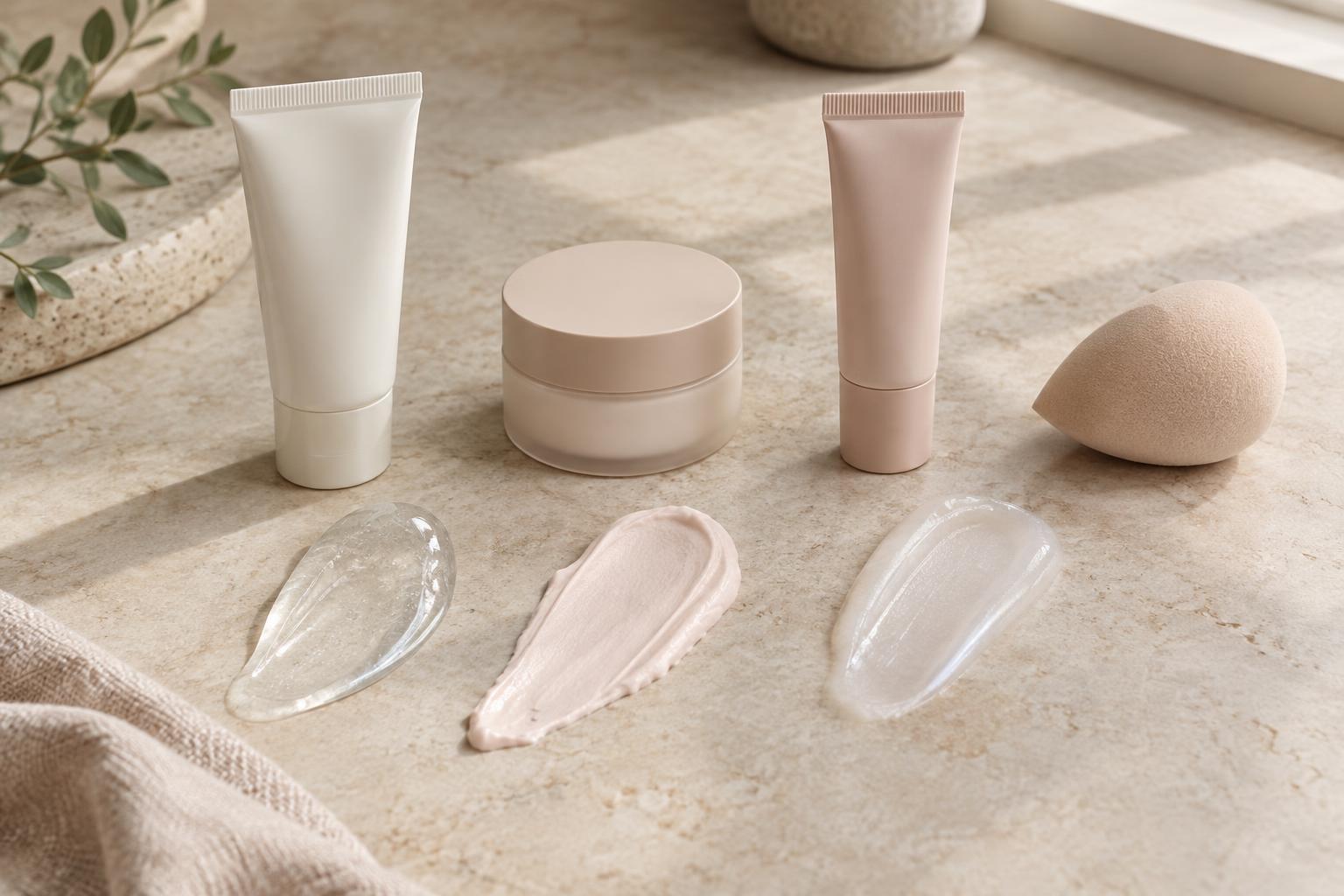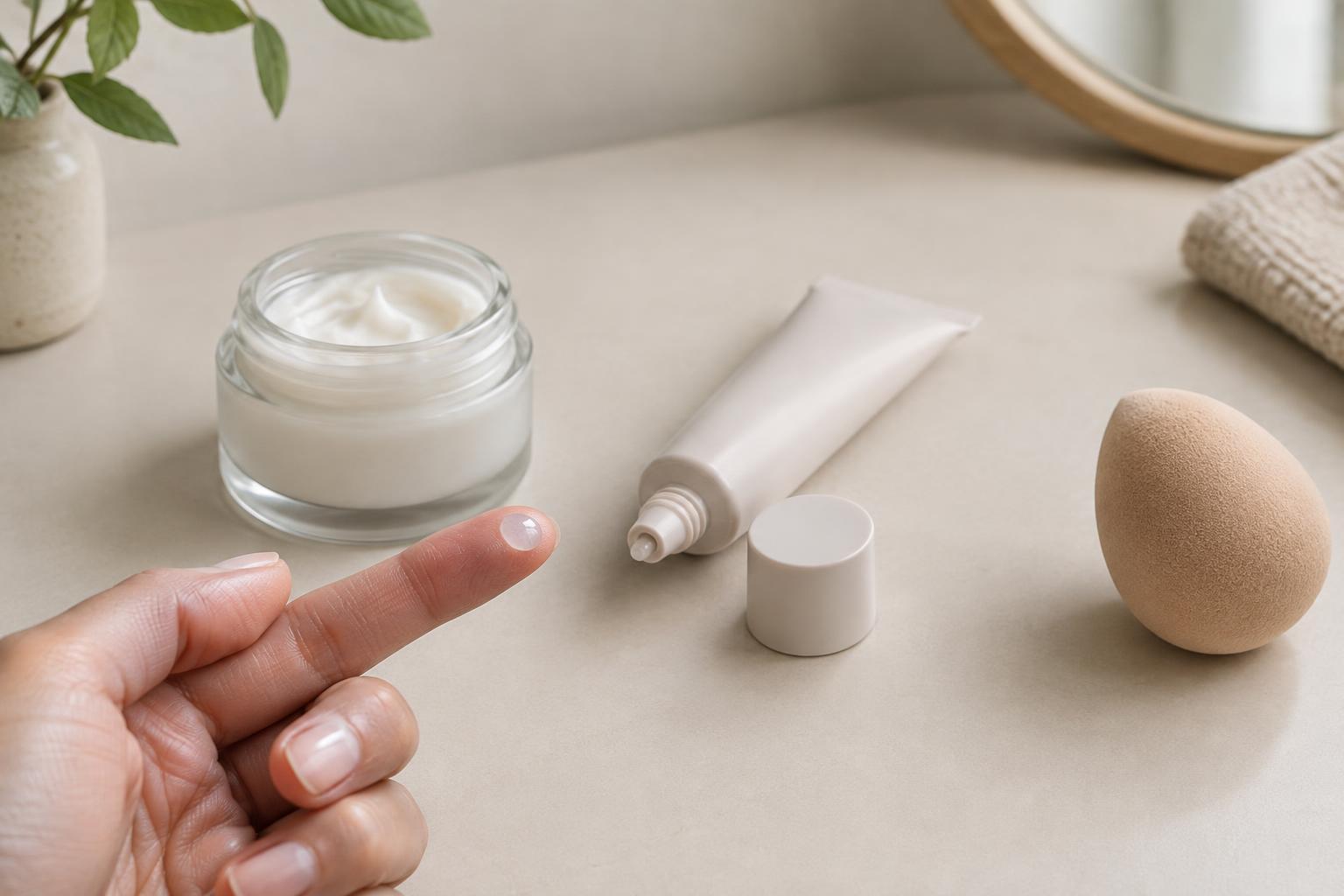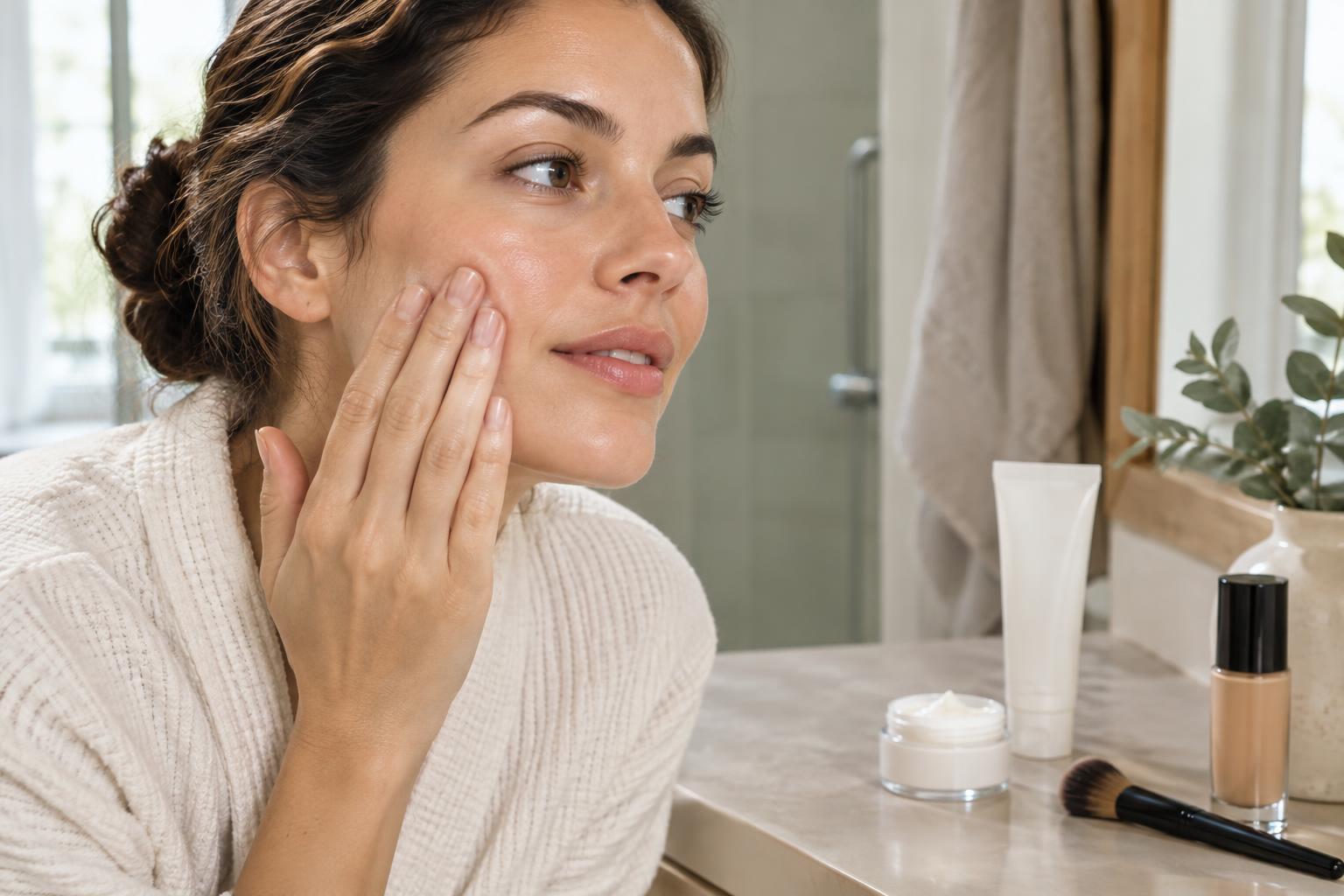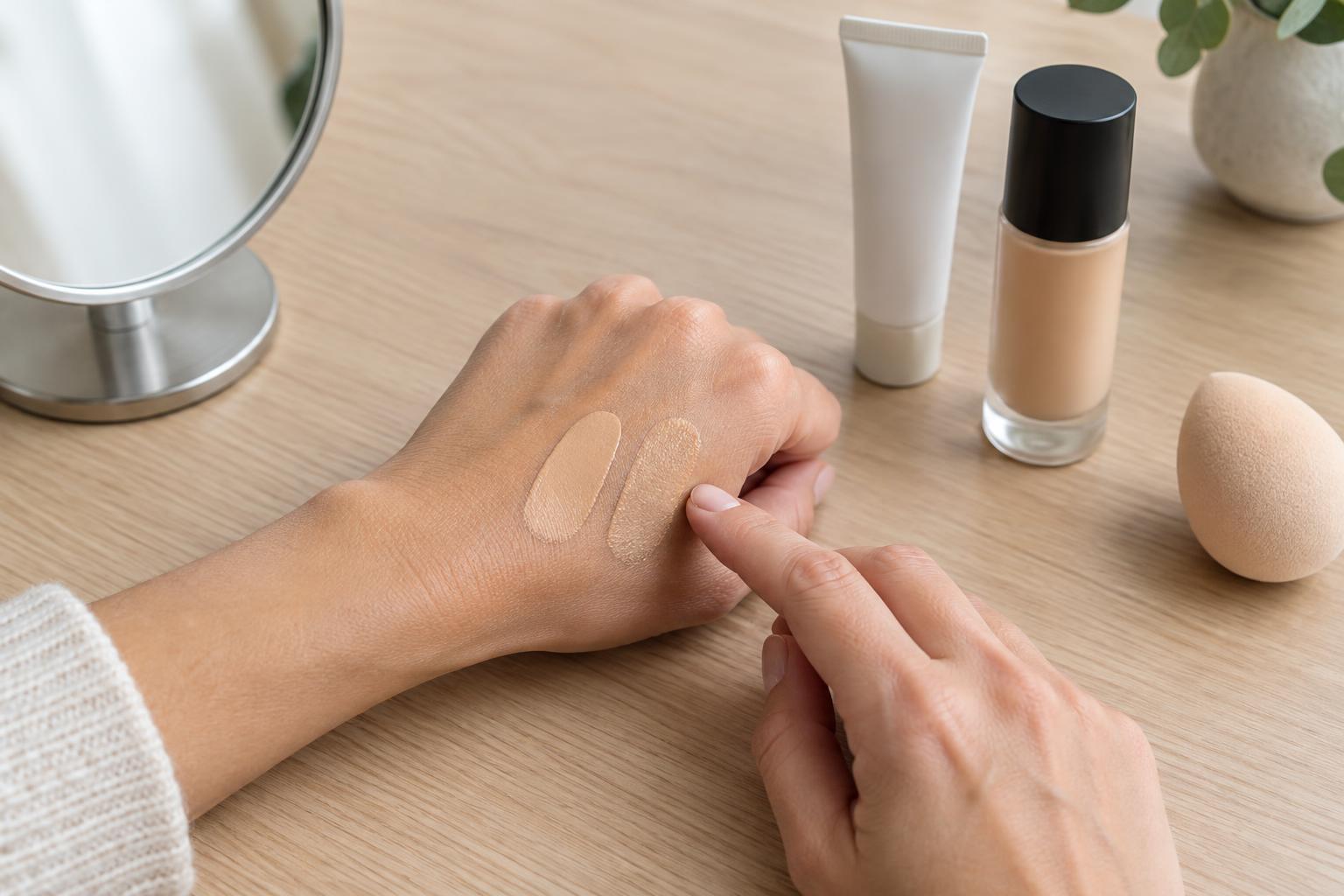
What a good pairing looks like
Primer and foundation do not need to come from the same brand to work well together. The useful question is whether they give you the finish and wear you want when applied over your usual skincare. A good pairing spreads without dragging, looks reasonably even after it settles, and remains comfortable through the part of the day when you normally wear makeup.
Check the result in natural light if possible, both soon after application and several hours later. Look closely around the nose, mouth and any areas where makeup tends to catch. Some shine or fading over time is normal; repeated clumps, visible rolling, patchy separation or an unusually heavy feel are more helpful signs that something in the routine needs adjusting.
Start with a fair side-by-side test
Test on a day when you can use your familiar cleanser, moisturizer and sunscreen. Apply those products as you normally would, allowing each layer to settle enough that the surface no longer feels wet. Then put primer on one side of your face and leave the other side without it. Apply the same foundation, using the same tool and roughly the same amount, on both sides.
This comparison helps you judge what the primer actually changes. Does its side look smoother or wear more evenly? Or does it make the foundation harder to spread? Take a look just after applying, once the makeup has settled, and later in the day. If you also change your moisturizer, foundation amount or application tool, it becomes harder to tell which change caused the result.
Read the clues without relying on ingredient labels alone
You may hear that water-based products should only go with water-based products, or that every silicone-containing product must be paired with another. Those rules are too simple. Many formulas contain both water and silicones, and performance depends on the complete formula, how much you apply and the layers underneath. An ingredient list can offer clues, but an application test is more useful than sorting products by their first ingredient.
Pilling, where small rolls appear as you blend, may mean a layer has not settled, too much product was applied, or repeated rubbing is lifting what is underneath. Separation can look like foundation pulling away into uneven patches; excess moisturizer, a slippery primer or too much foundation may contribute. If foundation catches on dry-looking areas, check whether those areas look that way before makeup, too. These signs point to possible adjustments, not a certain diagnosis of the formula.
Change one application detail at a time
Begin with quantity. A thin layer of primer in the places you want it may work better than a generous layer across the whole face. Give it a moment to settle, then apply a small amount of foundation and build only where needed. If blending creates rolls, try pressing or gently tapping with your usual sponge, brush or fingers instead of repeatedly sweeping over the same spot.
If the base still feels too slick, try primer only where foundation tends to fade. If it looks heavy, compare a lighter foundation layer with your original application. You can also test the foundation without primer over your usual skincare. Avoid mixing sunscreen with primer or foundation to make a new texture; apply sunscreen according to its directions, then assess how makeup layers over it. Changing one detail per test makes the results easier to interpret.
Decide whether the primer earns its place
A primer does not have to improve every part of your makeup to be useful. You might value a smoother-looking finish around the nose, while someone else may care more about comfort or how evenly foundation wears. Compare the primed and unprimed sides against your own priorities rather than expecting a perfectly unchanged face at the end of the day.
If the primer repeatedly makes application harder despite using less product and adjusting your technique, you do not need to force the pairing. It may suit a different foundation, a smaller area or no place in your routine. Likewise, if foundation looks and wears just as well without it, skipping primer is a reasonable choice. The best test is a repeatable one that reflects how you actually get ready and wear your makeup.