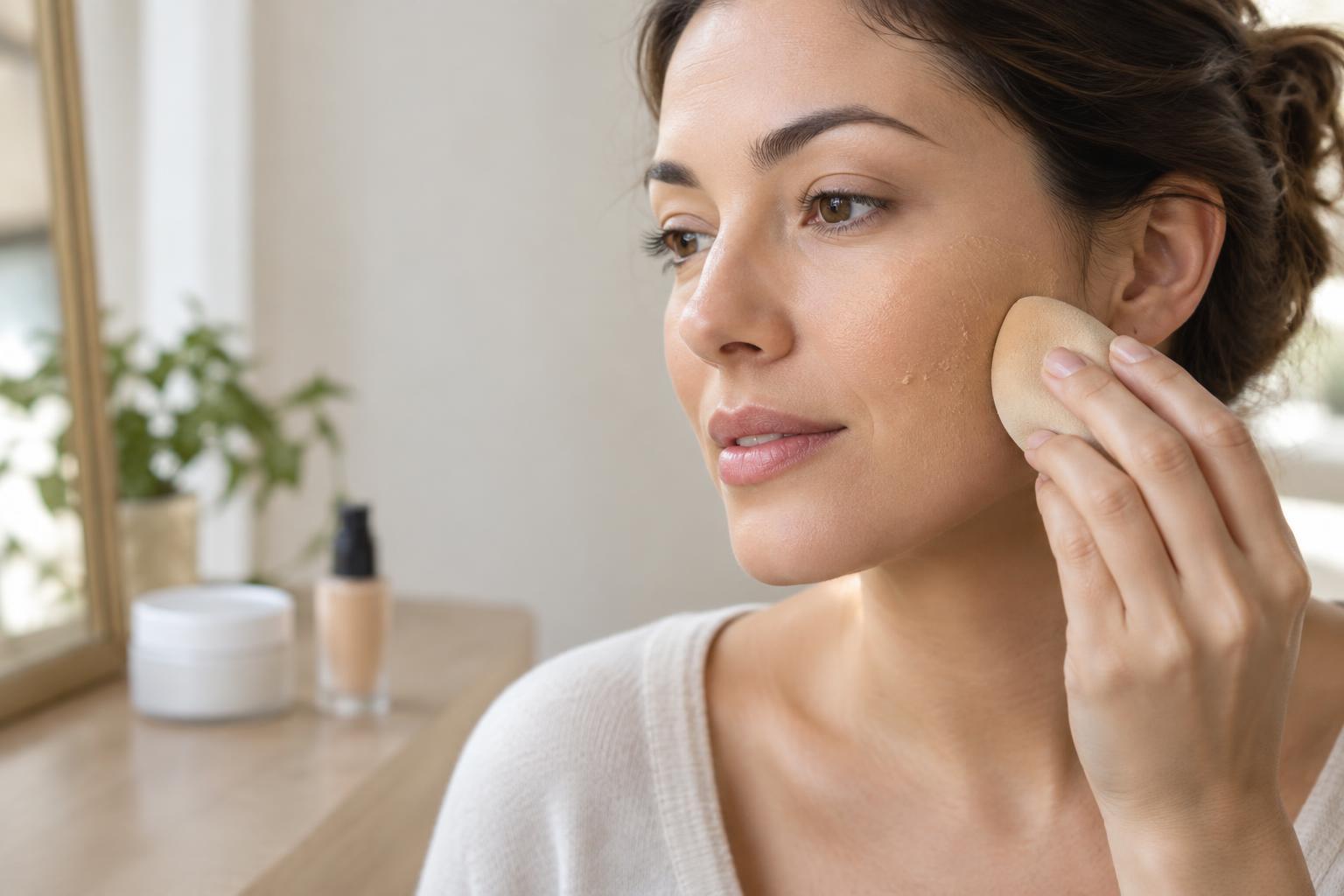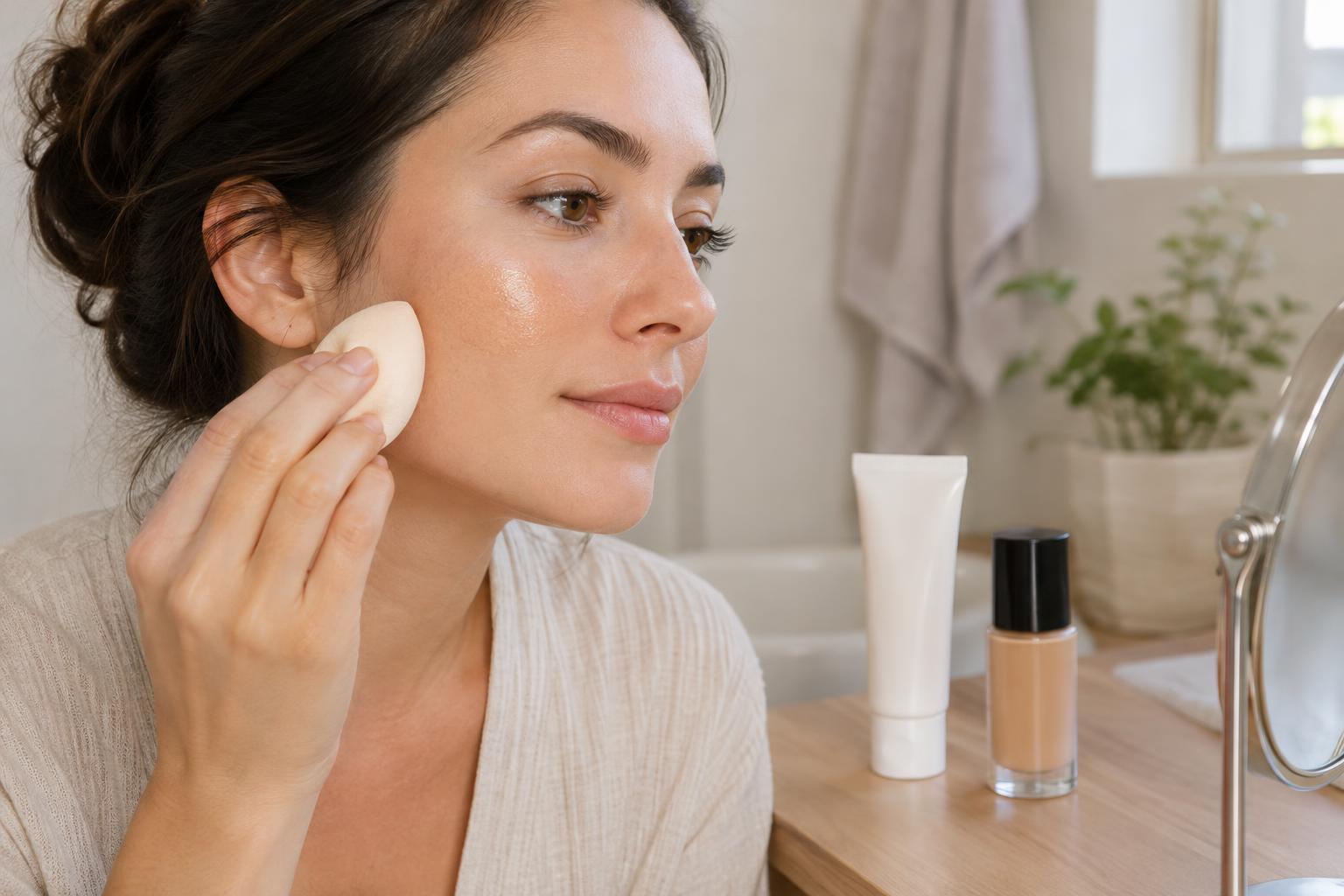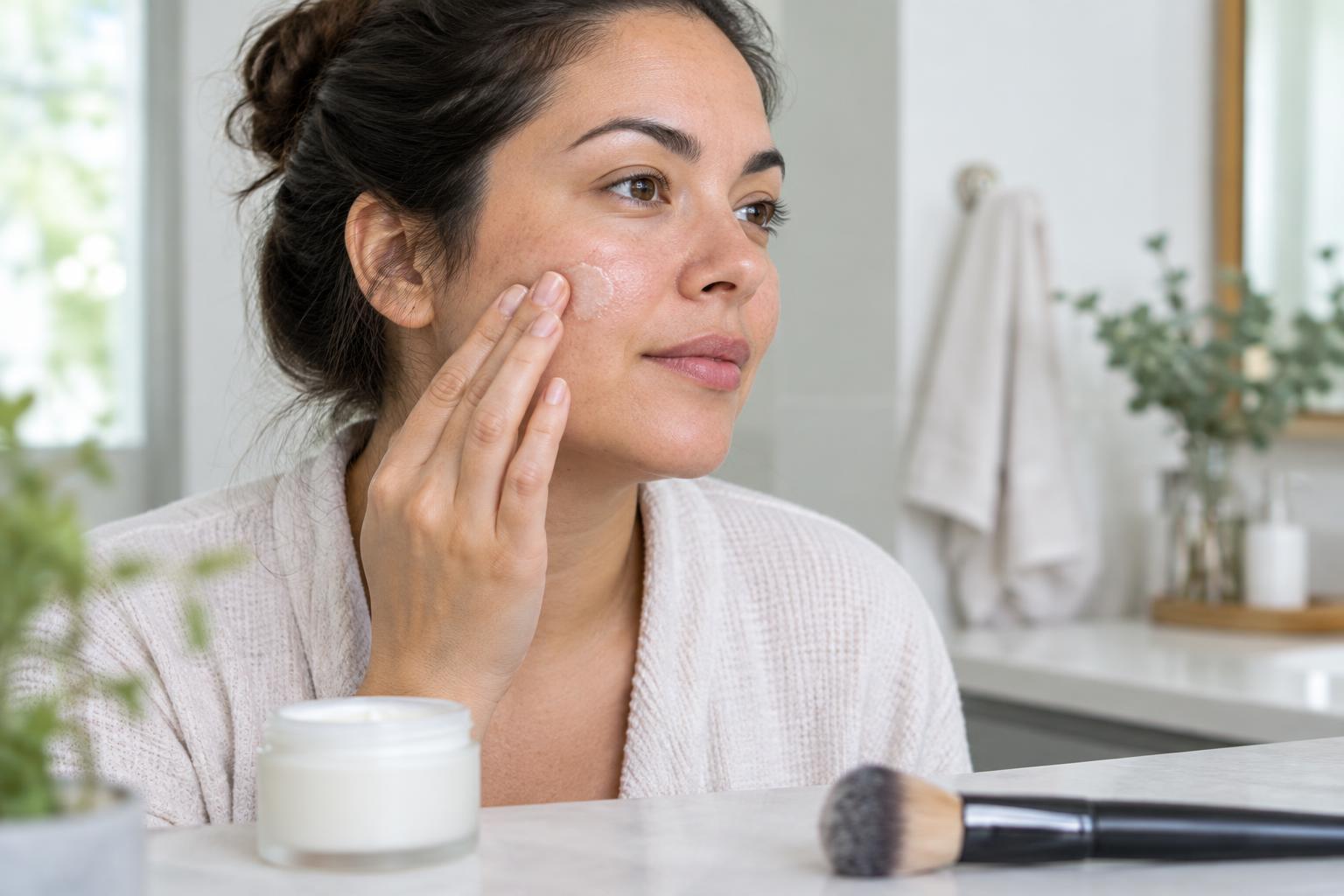
Start by looking at the area
Visibly dry areas can show up as fine flakes, a rough-looking patch or a spot where foundation seems to catch. Before reaching for another product, notice where the texture is and how the skin feels. A small patch beside the nose may need a different approach from a larger area that feels tight across the cheeks. If an area is stinging or irritated, prioritize comfort rather than trying to cover it perfectly.
Makeup preparation works best when it addresses the surface gently. Foundation adds color, but it does not remove flakes or replace moisture. A heavy layer may make uneven texture more noticeable, especially as the makeup settles. The goal is to leave the area comfortable, give moisturizer a chance to settle and apply only as much foundation as you need.
Cleanse gently and avoid last-minute scrubbing
Begin with clean skin, using your usual gentle cleansing method if you need to remove oil, old makeup or other residue. Use lukewarm water and avoid rubbing a washcloth over the dry-looking area. Pat the skin dry rather than dragging a towel across it. If your face is already clean, another full cleanse may be unnecessary; extra washing can leave some skin feeling tighter.
A loose flake can be tempting to buff away just before makeup, but vigorous exfoliation may leave the spot looking more obvious or feeling uncomfortable. If you already use an exfoliating product, follow its directions rather than increasing how often you use it for a quick cosmetic fix. When the area feels tender, skip exfoliation during makeup preparation.
Moisturize the patch, then let it settle
Apply a moisturizer that your skin generally tolerates, paying particular attention to the visibly dry area. A thin, even layer is a good starting point. If the patch still feels tight, a little more product on that spot may be more useful than coating your whole face heavily. Pressing or smoothing the moisturizer on gently can help you avoid lifting flakes through friction.
Give the moisturizer time to settle before foundation. There is no single waiting period that works for every product combination; the practical cue is whether the surface still feels slippery or whether the products roll into little bits when touched. If it does, try using less moisturizer next time or allowing more time between layers. A richer formula may feel comfortable on a dry patch, but too much underneath foundation can make makeup move around.
Apply foundation with a light touch
Start with a small amount of foundation and build only where you want more coverage. On a visibly dry area, gentle tapping with clean fingers, a brush or a damp makeup sponge may disturb the surface less than repeated sweeping. The tool matters less than the pressure and number of passes: try to place the product, blend the edges and then leave the patch alone.
If foundation catches on texture, adding another layer may not solve it. Instead, consider removing the makeup from that small area, moisturizing again and reapplying a thinner layer. You can also leave a particularly flaky spot with less coverage and blend foundation around it. A slightly more visible patch of skin may look smoother overall than a thick patch of makeup.
Adjust the finish without overworking it
Powder can help set makeup, but a generous layer may emphasize visible flakes. If you use it, apply a small amount where you need it rather than automatically covering every dry area. The same restraint applies to primer: it can change how foundation feels or looks, but it is not a substitute for comfortable skin preparation. Try one adjustment at a time so you can tell what helps.
Pay attention to what happens later in the day. If the same area repeatedly looks dry under makeup, consider whether cleansing habits, the amount of moisturizer or the foundation formula could be contributing to the look. If a patch persists, becomes painful or worries you, seek guidance from a qualified professional rather than trying to cover it with increasingly heavy makeup.