Three claims, three different questions
A makeup label can promise long wear, transfer resistance or smudge resistance, but these phrases do not describe the same thing. Long-wear addresses how a product looks after time has passed. Transfer-resistant suggests that less product will come off onto another surface, such as a collar, cup or fingertip. Smudge-proof suggests that the makeup is less likely to smear or shift when touched. A product may perform well in one of these ways without performing equally well in the others.
These claims are useful starting points, not guarantees for every person or situation. Wear can change with skin oil, moisture, application thickness, products layered underneath and how often the makeup is touched. When comparing labels, first ask what you need the product to do. A lipstick that leaves little color on a cup solves a different problem from an eyeliner that stays crisp when you blink or rub near your eyes.
What long-wear does and does not tell you
Long-wear makeup is intended to keep a reasonably consistent appearance over an extended period. Depending on the product, that might mean color remains visible, coverage looks even or an edge stays defined. It does not necessarily mean the finish will look exactly as it did at application. A foundation can retain coverage while becoming shinier, for example, and a lip color can remain noticeable while fading in the center.
If a package gives a wear-time figure, treat it as a description of the brand’s claim rather than a personal timetable. Your result may differ, especially after meals, face touching or changes in temperature and humidity. Look for details about what is meant to last: color, coverage, finish or overall appearance. Those distinctions can make a time-based claim more useful than the number alone.
Transfer-resistant is about contact
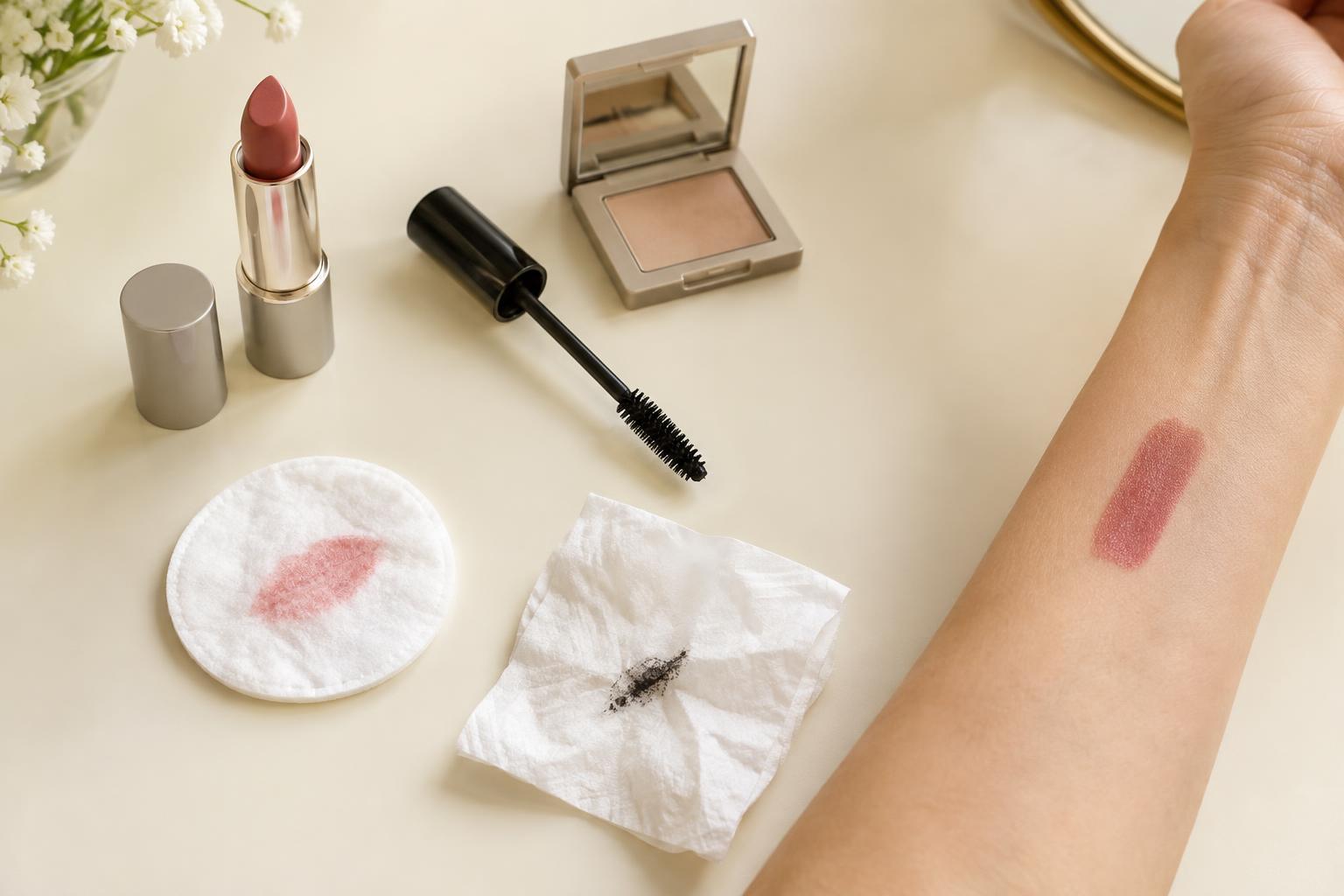
Transfer happens when makeup moves from where it was applied onto something else. A transfer-resistant product is designed to reduce that movement, often after it has had time to dry or settle. The phrase generally leaves room for some transfer. It also does not promise that the makeup will stay perfectly intact: a small amount might come off on a tissue without leaving an obvious gap on the face, or the reverse might happen after repeated rubbing.
Think about the kind of contact you want to manage. Light contact with clothing is different from pressure, friction or contact with food and oils. A lip product may leave little color on a dry cup but still wear away during a meal. If low transfer matters to you, check whether the product needs a settling period and whether a thick application changes its feel or performance.
Smudge-proof describes a different challenge
Smudging is visible spreading or blurring beyond the intended area. This claim often appears on eyeliner, mascara and brow products, where a small shift can noticeably change the look. Smudge-proof suggests resistance to that movement, but it should not be read as a promise that rubbing will have no effect. Repeated touching, skin oil or a creamy product layered nearby may still soften a sharp line.
Smudge resistance is also not automatically the same as water resistance. Moisture can affect a product differently from dry friction, and an oily cleanser can affect it differently again. If your main concern is watery eyes or splashes, look for information about water resistance rather than relying on a smudge-proof claim alone. If your concern is makeup moving onto the upper eyelid, consider how the product behaves after it dries and during normal blinking.
How to evaluate a claim in your own routine
For a fair comparison, apply products in a similar way and give them the settling time directed on the package. Notice what happens at a few ordinary points in your day, rather than judging only the moment after application. Does the color fade, does the product move onto another surface, or does its edge blur? Naming the specific change helps you decide whether the claim addresses your concern.
Skin preparation matters, too. A heavy moisturizer that has not settled, an oily surface or several slippery layers can change how makeup sits. That does not make the preparation wrong; it means performance depends partly on the complete routine. Choose the claim that matches your priority, follow any application and removal directions, and allow for trade-offs. Makeup that stays firmly in place may require more deliberate removal, while a comfortable, easy-to-remove formula may need a touch-up sooner.