Start with the difference between oil and shine
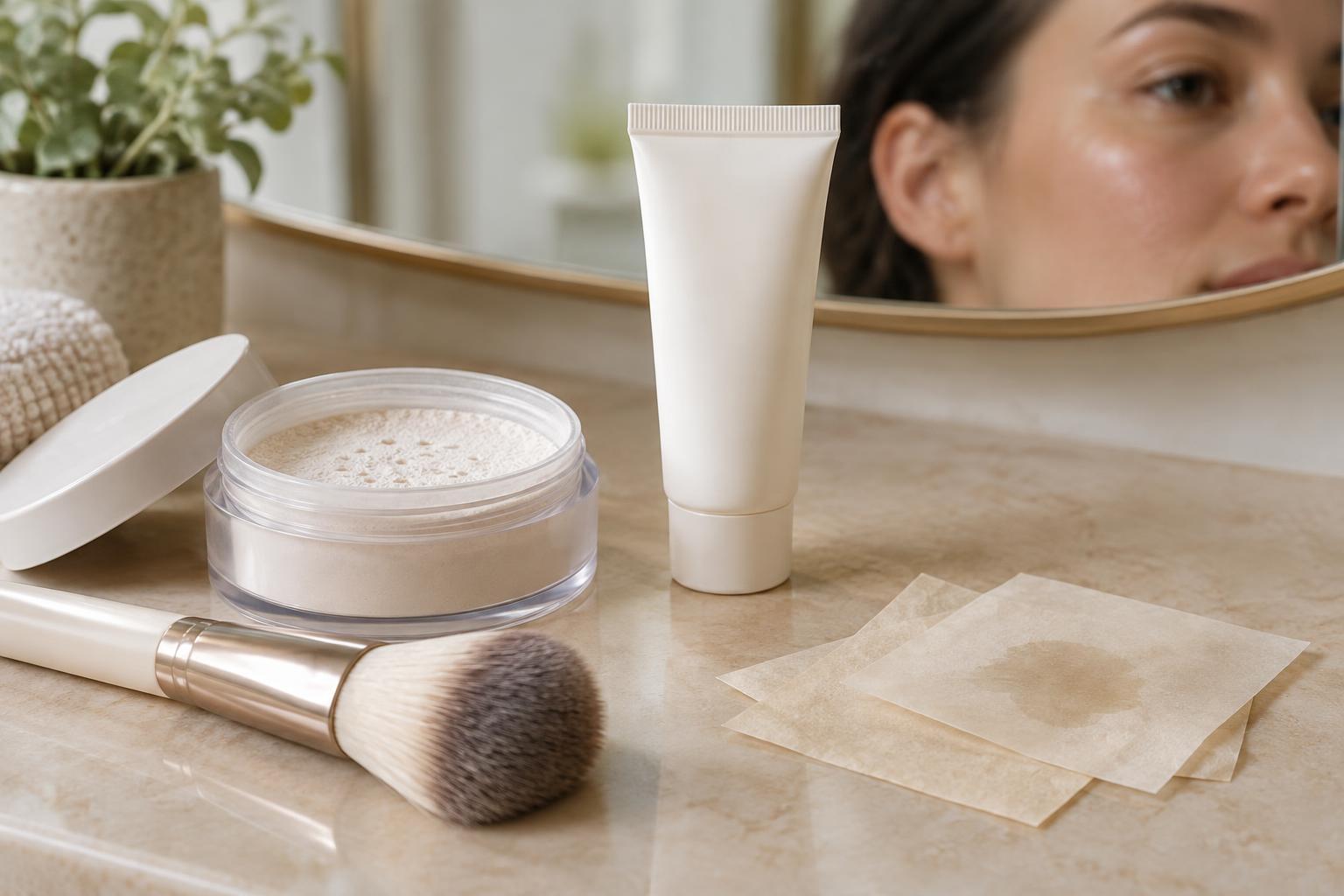
Skin oil, often called sebum, is one contributor to a shiny appearance. But what you see in the mirror also depends on lighting, sweat, the finish of your moisturizer or sunscreen, and how makeup sits on the skin. A dewy product may look shiny even when your skin does not feel particularly oily. A powder can make skin look matte while oil is still present underneath.
That distinction matters when reading a label. “Mattifying” usually describes an appearance: the product is intended to leave a less reflective finish. “Oil control” suggests an effect on the oil you notice or feel, but the phrase alone does not tell you how that effect is achieved. A product might absorb oil, help makeup stay less glossy, or make shine less visible. Neither phrase, by itself, means the product stops skin from producing oil.
Look for the mechanism behind the claim
Many mattifying products rely on ingredients that absorb some surface oil or create a soft-focus finish. Powders, starches, clays and silica are examples of ingredient types you may see in formulas designed to reduce visible shine. Their presence does not guarantee a particular result: the amount used, the rest of the formula, and how much product you apply all affect the finish.
Texture can offer another clue. A powder may take down shine quickly but need reapplication. A primer may smooth the appearance of a glossy area before makeup. A moisturizer labeled “matte” may aim to provide hydration without leaving a noticeably rich finish. These are different jobs, even if their packaging uses similar language. Think about whether you want less shine immediately, a comfortable daytime finish, or makeup that looks less glossy as the day goes on.
Read duration claims as expectations to test
Words such as “all-day,” “long-lasting” or “shine-free” can sound precise, but they may not match every person’s experience. Finish can change with the weather, activity, the products layered underneath, and how much oil appears on your skin over time. Without details about how a claim was assessed, treat it as a description of the intended performance rather than a personal guarantee.
The same caution applies to before-and-after images. Differences in lighting, angle, application and timing can change how reflective skin appears. Images may help you picture a possible finish, but they cannot tell you how the product will feel or wear in your own routine. If a brand gives useful context, such as whether a claim refers to immediate appearance or wear over several hours, use that detail to narrow your expectations.
Judge the whole routine, not one label
A mattifying formula has to work alongside everything else you apply. A rich base underneath may leave a shinier result than the product’s label suggests. Adding several layers of powder, meanwhile, may reduce shine but look heavy or feel uncomfortable. Let each layer settle before judging the finish, and try changing one product or application step at a time so you can tell what makes a difference.
Comfort is part of performance. A very matte look is not automatically a better result if your skin feels tight or your makeup appears uneven. If you prefer a natural finish, consider applying a shine-reducing product only where you want it, such as the forehead or nose, rather than across the entire face. You can also compare how your skin looks shortly after application with how it looks later, in similar lighting.
Choose a claim that matches your goal
Before buying, translate the packaging into a simple question: What do I want this product to do? If the answer is “make my face look less reflective right now,” a matte finish may be the most relevant claim. If it is “help my makeup look consistent for longer,” pay attention to wear and layering as well. If the label promises to “control oil,” look for an explanation of whether that means absorbing surface oil, reducing visible shine, or something else.
The most useful test is a modest one in your usual routine. Note the starting finish, check it again later under comparable conditions, and notice whether the product remains comfortable. Mattifying and oil-control language can help you shortlist products, but your preferred finish and everyday experience are better guides than a bold claim on its own.